
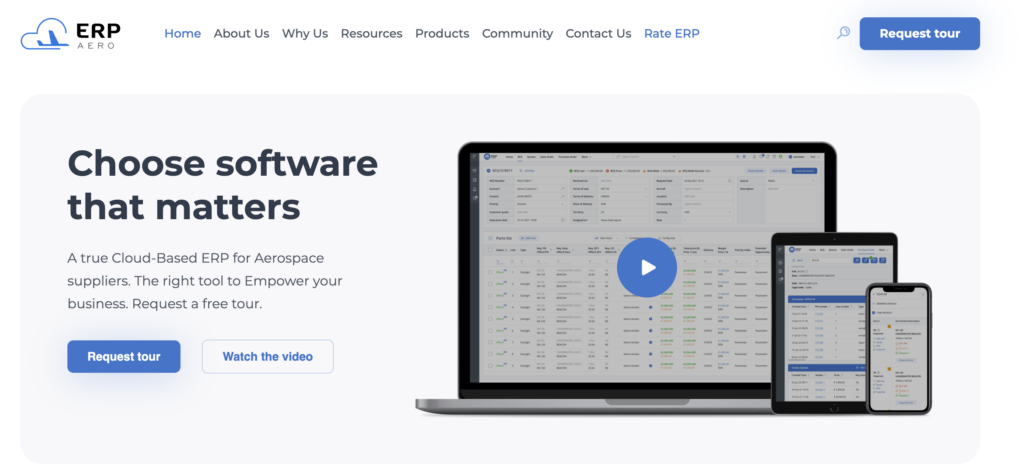
In aviation, speed matters. But speed without accuracy can create serious problems. A company like Air Viper does not simply sell parts, manage quotes, or move inventory. It operates in a high pressure environment where every aircraft component needs documentation, every customer expects fast answers, and every order depends on trust, traceability, and execution.
That is why an aviation focused ERP system like ERP.aero can be so valuable.
A general business software platform might work for a basic distributor, but aviation is not basic. Aircraft parts, APUs, engines, landing gear, rotable components, consumables, repair orders, certificates, compliance records, logistics documents, and customer RFQs all need to be managed with precision. When a company is dealing with airlines, operators, MROs, brokers, repair stations, and global suppliers, scattered spreadsheets and disconnected systems eventually become a bottleneck.
ERP.aero gives aerospace suppliers and aviation businesses a centralized system built specifically for the industry. For a company like Air Viper, that means stronger control over quoting, purchasing, inventory, documentation, shipping, repairs, finance, and customer communication.
Aviation Parts Sales Require More Than a Basic CRM
Aviation sales are not like ordinary e-commerce. A buyer may need a part urgently to keep an aircraft operational. They may ask for condition, trace documentation, certification, alternate part numbers, lead time, repair history, stock availability, and pricing all in one request.
If that information is spread across inboxes, spreadsheets, warehouse notes, PDFs, and separate accounting tools, the sales process slows down. Worse, it becomes easier for mistakes to happen.
An aviation ERP system helps keep the sales team, purchasing team, warehouse team, quality team, and finance team working from the same source of truth. When an RFQ comes in, the team can quickly see whether the part is in stock, whether documentation is available, what the last purchase price was, which vendors may have supply, what margin can be protected, and how fast the order can be fulfilled.
For Air Viper, this kind of visibility can directly improve response time. In aviation, the company that responds accurately and quickly often wins the deal.
Faster RFQ Management
RFQs are the heartbeat of aviation parts sales. A company may receive quote requests from direct customers, brokers, marketplaces, operators, or repair stations. Each request may involve different part numbers, quantities, conditions, documentation needs, shipping requirements, and urgency levels.
Without an organized system, RFQs can pile up fast. Salespeople may miss follow-ups, quote outdated pricing, forget to check available stock, or spend too much time manually searching for information.
ERP.aero is designed around the aviation workflow, which makes RFQ management more efficient. Instead of treating quotes as isolated emails, the system helps connect RFQs to inventory, sourcing, vendor quotes, customer records, documentation, and order history.
For Air Viper, that means the company can handle more opportunities without creating chaos. A stronger RFQ process can help the team quote faster, avoid duplicate work, and keep better records of what was offered, when it was offered, and what happened next.
This matters because aviation customers often send RFQs to multiple suppliers at once. A slow response can mean losing the sale, even if the company has the right part. An ERP system helps reduce that delay.
Better Inventory Control
Inventory is one of the most important assets for an aviation supplier. But it is also one of the easiest areas to mismanage.
A part sitting on the shelf is not just a SKU. It may have a serial number, batch number, condition code, certificate, trace history, location, shelf life, repair status, ownership status, and sales restrictions. Some parts may be ready to ship. Others may need inspection. Some may be consignment inventory. Others may be reserved for a customer or tied to an open quote.
Aviation ERP software helps organize this complexity.
For a company like Air Viper, real-time inventory visibility can prevent overselling, underpricing, misplaced parts, and unnecessary delays. The team can know what is available, where it is located, what paperwork is attached, and whether the part can be sold immediately.
This is especially important if the company is growing. Manual inventory systems may work with a small parts list, but as inventory expands, so does the risk of confusion. ERP software creates a structure that can scale with the business.
Stronger Documentation and Traceability
In aviation, documentation can be just as important as the part itself.
A customer may not be able to use a component without the proper paperwork. Certificates, trace documents, tags, repair records, packing slips, invoices, and quality documentation all need to be accurate and accessible.
If a customer asks for documentation and the team has to search through old emails, shared folders, or physical files, that creates friction. It also creates risk. Missing or incorrect documents can delay shipments, damage trust, or even cause a customer to walk away.
An aviation ERP system helps keep documentation connected to the relevant part, order, quote, vendor, and customer. This allows the team to retrieve records quickly and maintain a clearer audit trail.
For Air Viper, this improves both operational efficiency and customer confidence. When buyers know that documentation is organized and reliable, they are more likely to trust the supplier.
Compliance Needs a System
Aviation companies operate in a regulated and highly detail oriented industry. Even when a supplier is not performing maintenance itself, it still needs to handle records, certifications, quality processes, vendor documentation, and customer requirements carefully.
Compliance is not something that should depend on memory or scattered files.
ERP.aero can help aviation companies create more consistent workflows around quality control, documentation, inspections, approvals, and recordkeeping. This gives management better visibility into what is happening across the business.
For Air Viper, that can be especially valuable when dealing with higher value parts, repair orders, or customers that require strict documentation standards. A strong ERP system can make the company more audit ready, more professional, and more scalable.
Purchasing and Sourcing Become More Efficient
Aviation suppliers often need to source parts from multiple vendors. One customer request may trigger several supplier inquiries. The team may need to compare pricing, lead times, condition, certification, location, and vendor reliability before choosing the best option.
Without an ERP, sourcing can become a messy process of emails, notes, and spreadsheet updates.
With an aviation ERP, vendor quotes and purchase activity can be tied back to the customer RFQ. This makes the workflow more connected. The sales team can see sourcing progress. Purchasing can track vendor responses. Management can review margins and supplier performance.
For Air Viper, this can improve both speed and profitability. Better sourcing helps the company find parts faster, protect margins, and avoid relying on incomplete information.
Repair Orders and Rotables Need Structure
Many aviation businesses deal with repairable components, exchanges, core returns, and rotable inventory. These workflows are more complex than simple buy-and-sell transactions.
A part may be sent to a repair station, returned with new documentation, placed back into inventory, quoted to a customer, or used in an exchange transaction. Each step needs to be tracked.
An ERP system designed for aviation can help manage repair status, vendor communication, cost tracking, expected return dates, and related documents. This gives the company better control over components that are not immediately available for sale but still represent future value.
For a company like Air Viper, this can help prevent repair orders from falling through the cracks. It can also help the team understand the true cost and profitability of each repaired part.
Better Shipping and Logistics Coordination
Aviation parts often move across cities, states, and countries. Customers may need expedited shipping, international documentation, special handling, or careful packaging. If shipping information is disconnected from sales, inventory, and documentation, the order can slow down at the final step.
An ERP system helps connect the entire process. Once an order is confirmed, the warehouse and logistics team can see what needs to ship, what paperwork needs to be included, and what customer requirements need to be followed.
For Air Viper, this can reduce delays and improve the customer experience. Fast quoting is important, but the customer ultimately remembers whether the part arrived correctly, on time, and with the right documentation.
Finance and Operations Stay Aligned
One common problem in growing aviation companies is the gap between operations and finance.
Sales may close a deal. Purchasing may issue a vendor order. Warehouse may ship the part. Accounting may invoice the customer. But if each team is using different systems, financial visibility becomes delayed or incomplete.
ERP.aero helps connect operational activity with billing and financial workflows. This means the company can better understand open quotes, purchase commitments, fulfilled orders, invoices, margins, and outstanding payments.
For Air Viper, this creates better business control. Management can see not only what is being sold, but how profitable those sales are. That matters in aviation, where margins can change quickly based on sourcing cost, repair cost, urgency, and availability.
Leadership Gets Better Visibility
As a company grows, leadership cannot manage everything by checking inboxes or asking each team member for updates. The business needs dashboards, reporting, and real-time visibility.
An aviation ERP system gives managers a clearer view of the operation. They can see RFQ volume, quote response times, inventory movement, open purchase orders, pending shipments, repair activity, customer trends, and financial performance.
For Air Viper, this can support better decisions. Instead of guessing which parts are moving, which customers are most active, or where delays are happening, the company can use data.
This helps leadership identify what is working, where bottlenecks exist, and where the next growth opportunity may be.
Customer Service Improves
Aviation customers value responsiveness. When a buyer asks for an update, they do not want vague answers. They want to know whether the part is available, when it can ship, what documentation is included, and whether the price is still valid.
If the team has to search through multiple tools to answer basic questions, the customer experience suffers.
With an ERP system, customer service becomes more informed. The team can quickly check order status, shipment details, documentation, quote history, and account information. This makes the company look more professional and reliable.
For Air Viper, that can help turn one-time buyers into repeat customers. In aviation, trust is built through consistent execution.
ERP Helps Air Viper Scale Without Losing Control
Growth can expose weak systems. A small team can sometimes survive with manual processes, but as order volume grows, the cracks become more obvious. More RFQs create more follow-ups. More inventory creates more documentation. More customers create more communication. More vendors create more sourcing complexity.
ERP software gives a company the operational foundation to scale.
For Air Viper, using a platform like ERP.aero would not simply be about replacing spreadsheets. It would be about building a more connected business. Sales, purchasing, inventory, quality, logistics, repairs, and finance can all work from one system instead of operating in separate silos.
That kind of structure allows the company to handle more volume while reducing mistakes.
Why Aviation-Specific Software Matters
A generic ERP may be powerful, but aviation companies often need industry-specific workflows. Aircraft parts are not ordinary products. They require traceability, documentation, condition tracking, serial number control, repair visibility, and compliance awareness.
ERP.aero is designed specifically for aerospace suppliers, manufacturers, distributors, and repair organizations. That matters because the system is built around the way aviation companies actually operate.
For Air Viper, this means less time forcing a generic tool to fit an aviation workflow and more time using a platform that already understands the industry’s demands.
The Competitive Advantage
The aviation aftermarket rewards companies that can move quickly, communicate clearly, and deliver accurately. A supplier that can quote faster, source smarter, maintain cleaner documentation, and ship reliably has a real advantage.
ERP.aero can help create that advantage.
For Air Viper, the value would come from better organization, faster execution, stronger traceability, improved customer service, and clearer management visibility. It would help the company operate with the structure of a larger aviation supplier while still staying agile.
In a market where every quote, part, and customer relationship matters, that kind of system can make a measurable difference.
Final Thoughts
A company like Air Viper would use an ERP system like ERP.aero because aviation operations are too important to manage through disconnected tools. The industry demands speed, accuracy, documentation, and accountability at every step.
ERP.aero brings quoting, sourcing, inventory, repairs, compliance, shipping, billing, and customer management into one connected environment. For an aviation supplier, that means fewer blind spots, fewer delays, and better control over the entire operation.
Air Viper’s customers are not just buying parts. They are buying reliability, trust, and execution. A purpose-built aviation ERP system helps deliver all three.