
1. Key Topics Covered in This Article
- What an APU is and how it works
- What an APU does on an aircraft
- Where APUs are located and when they are used
- APU vs ground power units (GPU)
- Maintenance, cost, and operational considerations
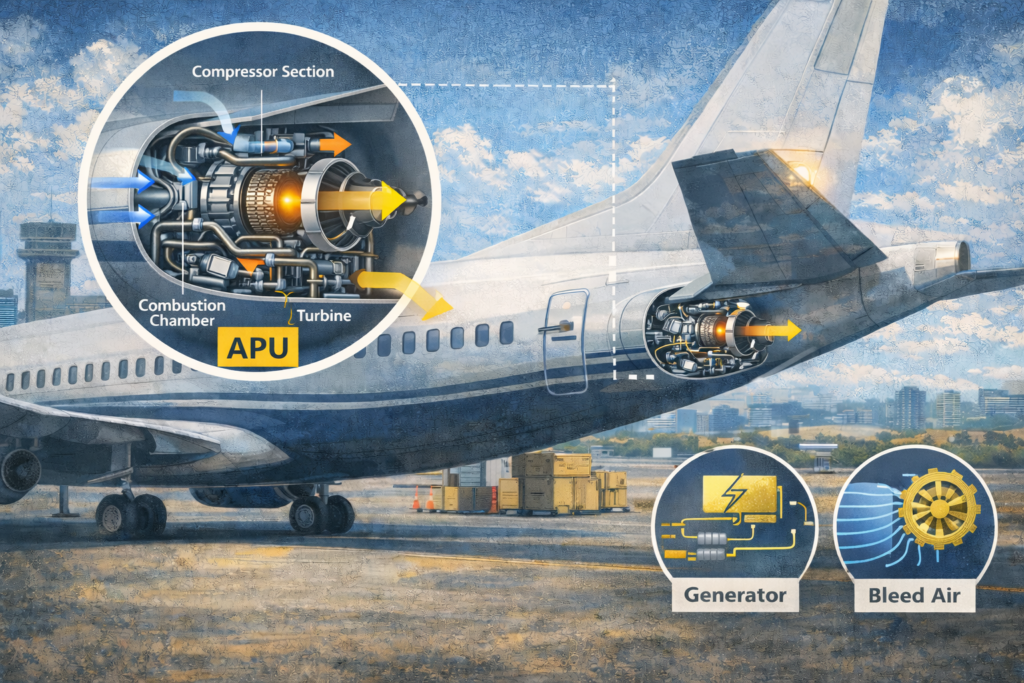
For most passengers, the APU is invisible.
For operators, lessors, and maintenance teams, it is one of the most important systems on the aircraft.
The Auxiliary Power Unit (APU) is a small onboard turbine engine that provides electrical power and compressed air when the main engines are not running. Typically installed in the tail section, it operates independently and allows the aircraft to remain fully functional on the ground without relying on external equipment.
In practice, the APU powers aircraft systems, supports engine start, and maintains cabin conditions without the need to run the main engines. Without it, aircraft operations become dependent on ground infrastructure, which introduces delays, increases coordination requirements, and limits operational flexibility.
2. What Does an APU Do on an Aircraft?
The APU supports multiple core systems that keep the aircraft operational before and after flight.
Electrical Power Generation
It supplies power to:
- Avionics
- Cockpit systems
- Cabin lighting
This allows crews to operate the aircraft without engaging the main engines.
Pneumatic Air Supply
The APU provides compressed air used for:
- Engine start sequences
- Environmental control systems
This function is essential for initiating flight operations.
Cabin Comfort on the Ground
The APU enables:
- Air conditioning
- Heating
- Ventilation
Maintaining a conditioned cabin is critical for both passenger experience and operational readiness.
Operational Independence
Aircraft equipped with APUs can operate in:
- Remote locations
- Airports with limited infrastructure
- Situations where ground equipment is unavailable
Backup Capability
In certain aircraft, the APU can provide limited backup power in-flight, increasing system redundancy.
3. Where Is the APU Located and When Is It Used?
Most APUs are installed in the tail cone of the aircraft.
This placement:
- Reduces cabin noise
- Isolates heat and exhaust
- Optimizes airflow and safety
When the APU Is Used
Pre-flight
Before engine start, the APU powers systems and provides air for ignition.
At the gate
When ground power is unavailable or inefficient, the APU keeps systems running and the cabin conditioned.
During maintenance
Technicians use the APU to operate aircraft systems without external support.
In-flight (limited use)
Some aircraft can use the APU as a backup power source under specific conditions.
4. APU vs GPU (Ground Power Unit)
Balancing APU use with ground power units is a key operational decision.
APU
- Onboard system
- Powered by aircraft fuel
- Available anywhere
GPU
- External equipment
- Lower cost for extended ground use
- Requires airport infrastructure
Operational Tradeoffs
Cost
GPUs are more efficient for long ground times, while APUs consume fuel and increase wear.
Flexibility
APUs provide immediate availability without coordination.
Turnaround Speed
APUs support faster, more predictable operations when timing matters.
Because of this, operators often use GPUs when available and rely on APUs when flexibility or speed is required.
When an APU is unavailable due to maintenance or failure, operations can quickly become constrained. In these situations, having access to a replacement unit can prevent cascading delays and maintain continuity across the operation.
5. APU Maintenance, Costs, and Operational Impact
The APU is one of the highest-cycle systems on an aircraft.
Unlike main engines, which primarily operate in-flight, APUs are used on nearly every ground cycle.
High Cycle Usage
Frequent starts and stops lead to:
- Accelerated wear
- Increased inspection intervals
- Higher maintenance demands
Common Issues
Operators commonly encounter:
- Starter failures
- Exhaust Gas Temperature (EGT) exceedances
- Oil system issues
- Internal component wear
These issues can escalate into operational disruptions if not addressed proactively.
Cost Considerations
Operators must evaluate:
- Repair vs overhaul
- Overhaul vs replacement
- Ownership vs short-term alternatives
In many cases, temporary access to a serviceable APU can bridge operational gaps without requiring immediate capital investment.
Lease and Compliance Impact
APU condition plays a significant role in aircraft leasing and redelivery.
Requirements typically include:
- Complete maintenance records
- Verified component traceability
- Compliance with standards such as ASA-100
Failure to meet these requirements can result in:
- Financial penalties
- Delayed redelivery
- Contract disputes
Maintaining both the physical condition and documentation of the APU is essential for protecting asset value and ensuring smooth transitions.
6. Conclusion
The APU is a foundational system in modern aircraft operations.
It enables:
- Independent ground operations
- Efficient turnarounds
- Passenger comfort
- Reduced reliance on external infrastructure
At the same time, it introduces ongoing maintenance, cost, and compliance considerations that must be actively managed.
Operators who treat the APU as a strategic component rather than a background system are better positioned to reduce downtime, control costs, and maintain consistent operational performance.
Air Viper Support for APU Operations
For operators navigating maintenance events, unexpected failures, or lease requirements, maintaining access to a serviceable APU can be the difference between continuity and delay.
Air Viper supports operators and lessors with both APU sales and leasing options, allowing teams to choose the right approach based on operational and financial needs. Whether the priority is long-term ownership or short-term flexibility, access to certified, traceable units helps keep aircraft moving without disruption.
Flexible leasing terms, rapid deployment, and properly documented units make it possible to bridge gaps in availability without waiting on extended procurement timelines. For operators looking to secure long-term solutions, purchasing options are also available with full support for sourcing and compliance.
In environments where uptime, documentation, and speed all matter, having access to both purchase and lease pathways provides a practical advantage.