
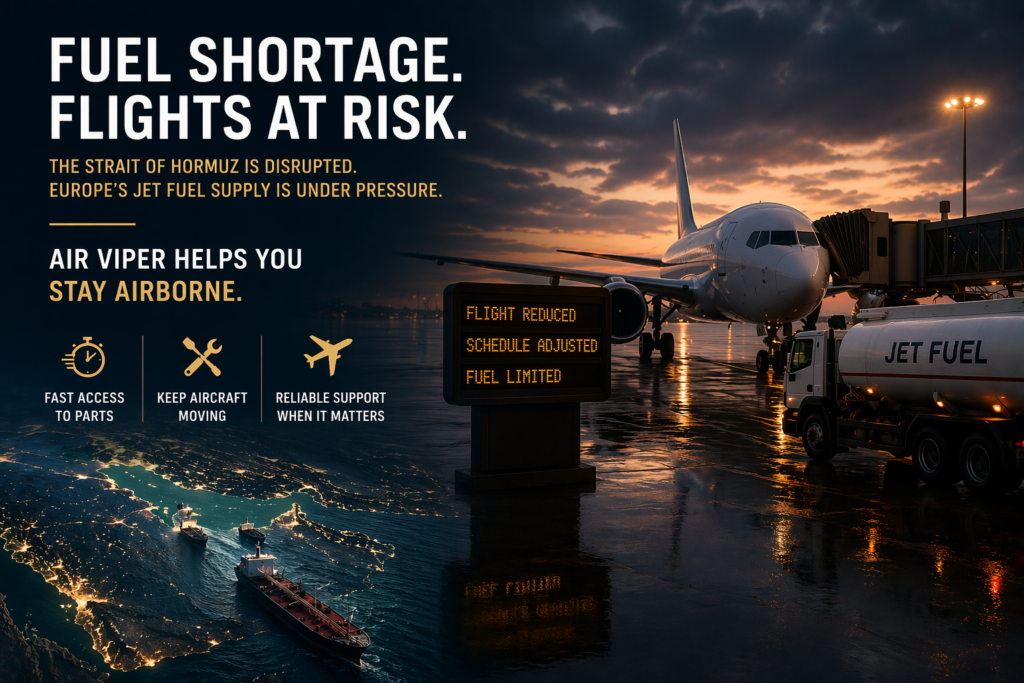
The disruption in the Strait of Hormuz and the resulting jet fuel shortage in Europe is not just another industry headline. It is a real-time stress test for the global aviation system.
Fuel availability is tightening. Prices are rising. Airlines are adjusting schedules, grounding aircraft, and rethinking operations. What used to be a stable input—jet fuel—is now one of the most volatile constraints in aviation.
In environments like this, the difference between disruption and continuity comes down to one thing: execution.
That is where Air Viper, LLC becomes critical.
The Problem: Fuel Constraints Are Creating Operational Instability
The Strait of Hormuz plays a central role in global energy distribution. With a significant portion of oil and refined products moving through this narrow corridor, any disruption creates immediate ripple effects.
Europe is now facing those effects directly.
Jet fuel supply is tightening due to:
- Reduced access to Middle Eastern exports
- Logistical bottlenecks in fuel transportation
- Refining and distribution constraints
- Increased global competition for available supply
Airlines are responding fast:
- Cutting routes
- Consolidating flights
- Prioritizing profitability over coverage
- Adjusting fleet usage based on fuel efficiency
This creates a secondary problem that is often overlooked.
When flight schedules change, the entire aviation support ecosystem becomes unstable.
Maintenance cycles shift. Parts demand becomes unpredictable. Aircraft utilization drops or spikes depending on route strategy.
And that is where most operators start to feel real pressure.
The Hidden Impact: Supply Chain Breakdown
Fuel shortages don’t just affect flights. They affect everything behind the scenes:
- Aircraft sitting longer than expected
- Engines cycling differently than planned
- Maintenance schedules being compressed or delayed
- Increased demand for specific components tied to high-efficiency aircraft
Most operators are not built to handle this level of variability.
They rely on predictable schedules, stable demand patterns, and consistent supply chains.
That predictability is now gone.
What replaces it is a need for speed, flexibility, and access.
Where Air Viper Steps In
Air Viper is built for exactly this type of environment.
Rather than operating as a static supplier, Air Viper functions as a responsive aviation support partner—one that can adapt to shifting market conditions and keep operators moving even when the system around them is unstable.
Rapid Access to Critical Components
When fuel shortages force operational changes, aircraft utilization becomes uneven.
Some aircraft are grounded. Others are pushed harder to maintain critical routes.
This creates urgent, unpredictable demand for:
- Engine components
- Rotables
- High-turn maintenance parts
Air Viper provides rapid sourcing capabilities that allow operators to:
- Reduce downtime
- Maintain operational continuity
- Avoid delays caused by traditional procurement timelines
In a constrained environment, speed is not a luxury—it is a requirement.
Supporting Fleet Efficiency Transitions
Fuel cost is now a primary driver of fleet decisions.
Airlines are shifting toward more fuel-efficient aircraft while reducing reliance on older, less efficient models.
This transition creates immediate demand for:
- Parts supporting newer aircraft platforms
- Engine components tied to high-efficiency systems
- Maintenance support for aircraft being utilized more aggressively
Air Viper is positioned to support this transition by supplying the components and systems needed to keep these aircraft operating at peak performance.
At the same time, older aircraft being phased out create opportunities in teardown and redistribution—another area where Air Viper can provide value.
Flexible Solutions in a Volatile Market
Traditional supply chains struggle in volatile conditions because they are built for consistency.
Air Viper operates differently.
With global sourcing capabilities and a flexible approach, Air Viper can:
- Adapt to sudden changes in demand
- Source components across multiple regions
- Support both urgent and planned maintenance needs
This flexibility becomes a competitive advantage when market conditions are constantly shifting.
Minimizing Downtime in a High-Cost Environment
When fuel prices rise, every minute an aircraft is grounded becomes more expensive.
Operators cannot afford delays caused by missing parts or slow procurement processes.
Air Viper helps minimize downtime by:
- Providing fast turnaround on sourcing
- Ensuring availability of critical components
- Supporting operators under time-sensitive conditions
In a fuel-constrained environment, keeping aircraft operational is directly tied to profitability.
Air Viper as a Strategic Partner, Not Just a Supplier
The current crisis is changing how aviation companies think about partnerships.
It is no longer enough to have vendors. Operators need partners who understand the operational impact of market disruptions.
Air Viper’s role extends beyond supplying parts.
It includes:
- Supporting operational continuity
- Helping operators navigate supply chain uncertainty
- Acting as a resource during periods of rapid change
This shift from transactional to strategic support is where long-term value is created.
Positioning for What Comes Next
Even if the Strait of Hormuz disruption stabilizes, the impact of this crisis will continue to shape the aviation industry.
Operators are already adjusting their strategies:
- Prioritizing fuel efficiency
- Reducing reliance on single-source supply chains
- Building more resilient operational models
Air Viper is aligned with this shift.
By providing flexible, responsive support, the company is positioned to serve operators not just during the current crisis, but in the new operating environment that follows.
Why This Matters Now
Timing matters.
The jet fuel shortage in Europe is unfolding during a critical period for aviation demand. As airlines enter peak travel cycles, the pressure on fuel supply and operational efficiency will only increase.
Operators that can adapt quickly will maintain stability.
Those that cannot will face delays, cancellations, and lost revenue.
Air Viper enables that adaptability.
By ensuring access to the parts, components, and support needed to keep aircraft operational, the company plays a direct role in helping operators navigate one of the most challenging supply environments in recent years.
Conclusion
The Strait of Hormuz crisis and Europe’s jet fuel shortage are not isolated events. They are part of a broader shift in how global aviation operates under pressure.
Fuel is no longer just a cost—it is a constraint that reshapes decisions across the entire industry.
In this environment, the ability to move quickly, source reliably, and adapt to change becomes critical.
Air Viper is built for exactly that.
For operators facing uncertainty, rising costs, and shifting demand, the question is no longer whether disruption will occur.
It is whether they are equipped to handle it.
Air Viper provides that capability.