
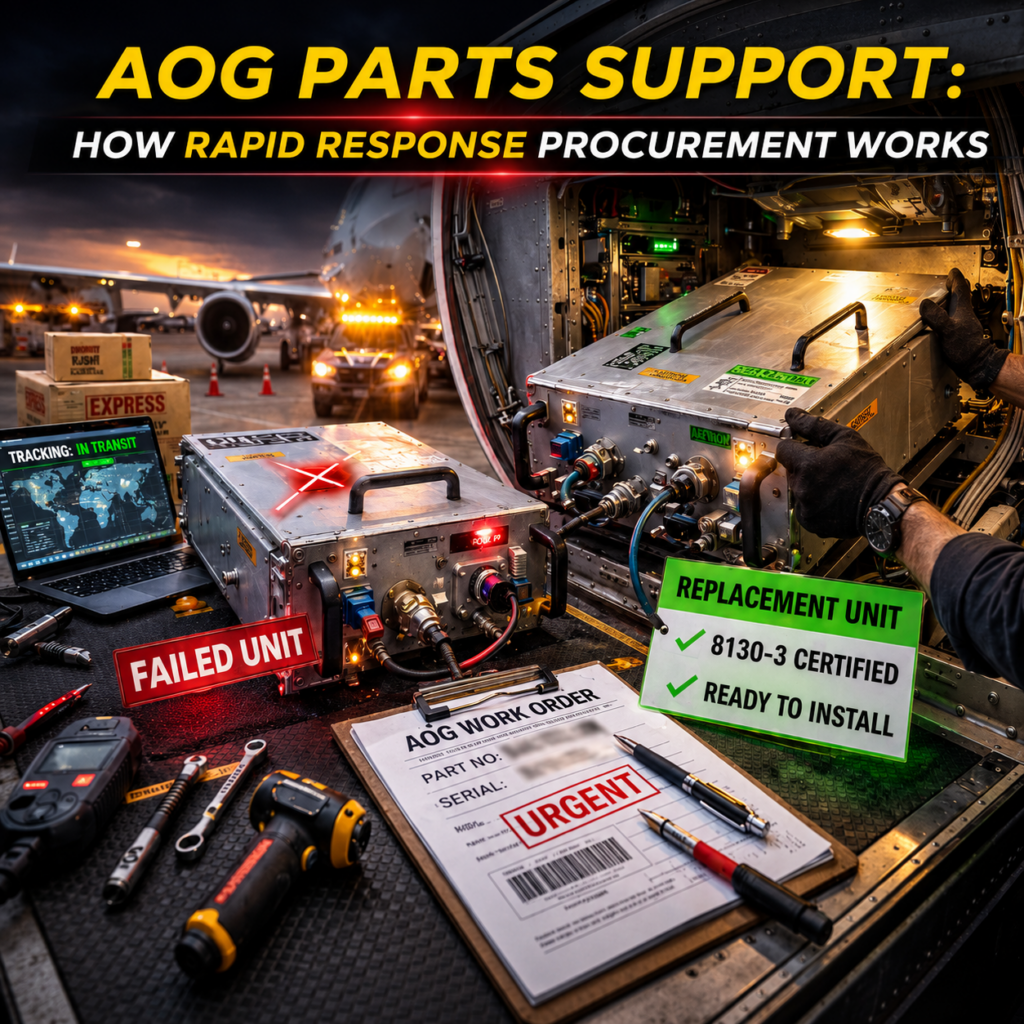
Aircraft on Ground (AOG) events represent one of the most urgent and challenging scenarios in aviation operations. When an aircraft is grounded due to a mechanical issue, every minute matters. Airlines, charter operators, and aircraft owners must locate replacement parts quickly, arrange transportation, and restore the aircraft to service as soon as possible.
Because aircraft generate revenue only when they are flying, extended downtime can result in significant financial losses. For airlines operating on tight schedules, a grounded aircraft can also disrupt flight operations, create delays across the network, and increase operational costs.
To address these challenges, aviation organizations rely on rapid response procurement systems designed specifically for AOG situations. These systems combine global supplier networks, expedited logistics, and technical oversight to locate and deliver replacement components quickly.
Independent aviation technical service providers such as Air Viper, LLC frequently assist operators during AOG events by coordinating procurement efforts, verifying component documentation, and supporting maintenance teams as they return aircraft to service.
This article explains how AOG parts support works and how rapid response procurement systems help minimize aircraft downtime.
Understanding Aircraft on Ground (AOG) Situations
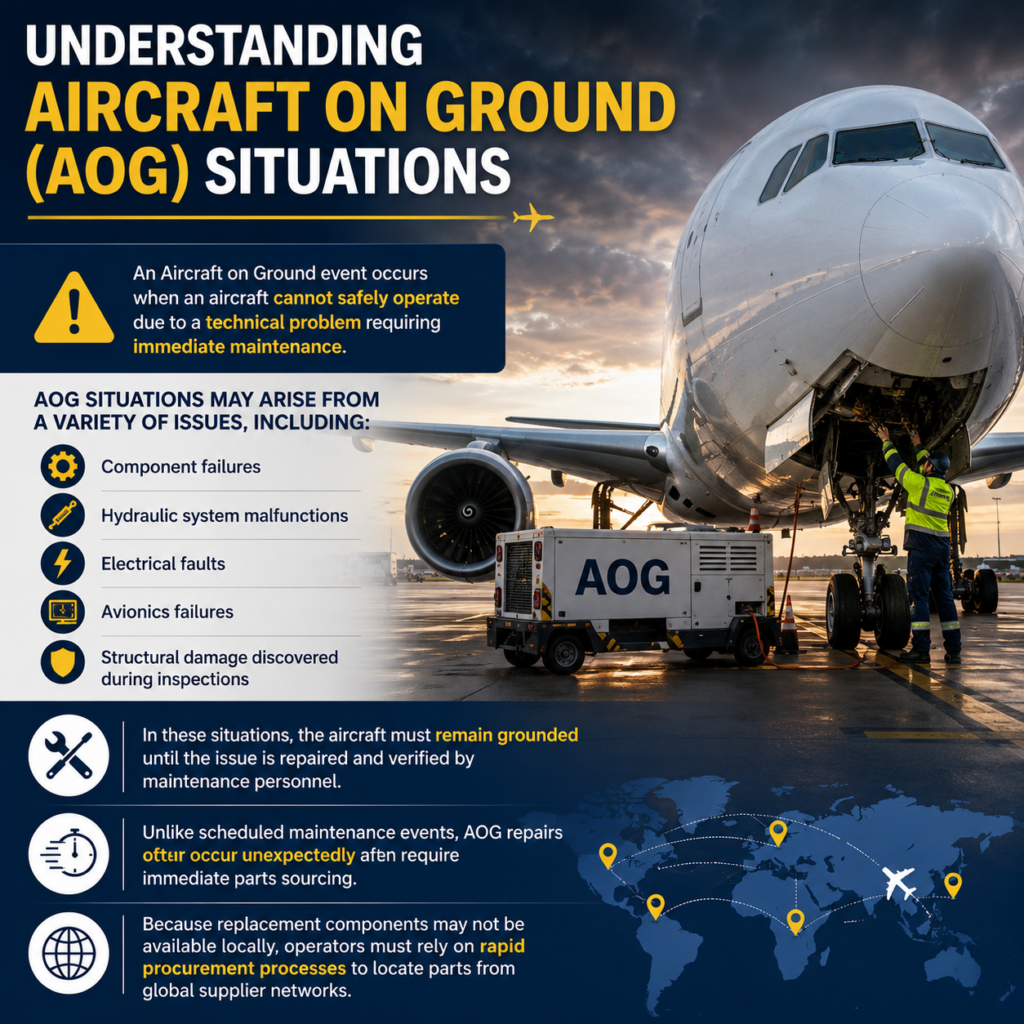
An Aircraft on Ground event occurs when an aircraft cannot safely operate due to a technical problem requiring immediate maintenance.
AOG situations may arise from a variety of issues, including:
- Component failures
- Hydraulic system malfunctions
- Electrical faults
- Avionics failures
- Structural damage discovered during inspections
In these situations, the aircraft must remain grounded until the issue is repaired and verified by maintenance personnel.
Unlike scheduled maintenance events, AOG repairs often occur unexpectedly and require immediate parts sourcing.
Because replacement components may not be available locally, operators must rely on rapid procurement processes to locate parts from global supplier networks.
Why Rapid Response Procurement Is Critical
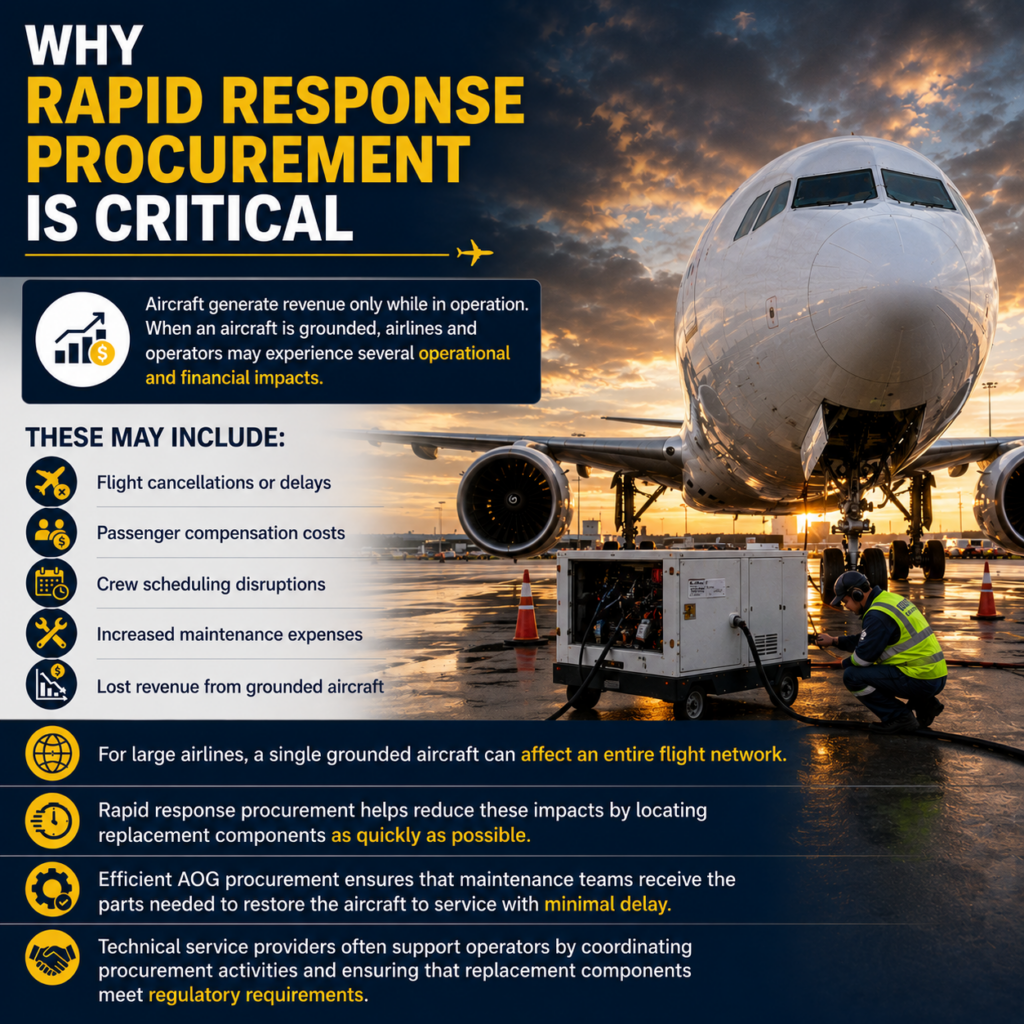
Aircraft generate revenue only while in operation. When an aircraft is grounded, airlines and operators may experience several operational and financial impacts.
These may include:
- Flight cancellations or delays
- Passenger compensation costs
- Crew scheduling disruptions
- Increased maintenance expenses
- Lost revenue from grounded aircraft
For large airlines, a single grounded aircraft can affect an entire flight network.
Rapid response procurement helps reduce these impacts by locating replacement components as quickly as possible.
Efficient AOG procurement ensures that maintenance teams receive the parts needed to restore the aircraft to service with minimal delay.
Technical service providers such as Air Viper, LLC often support operators by coordinating procurement activities and ensuring that replacement components meet regulatory requirements.
The AOG Response Process
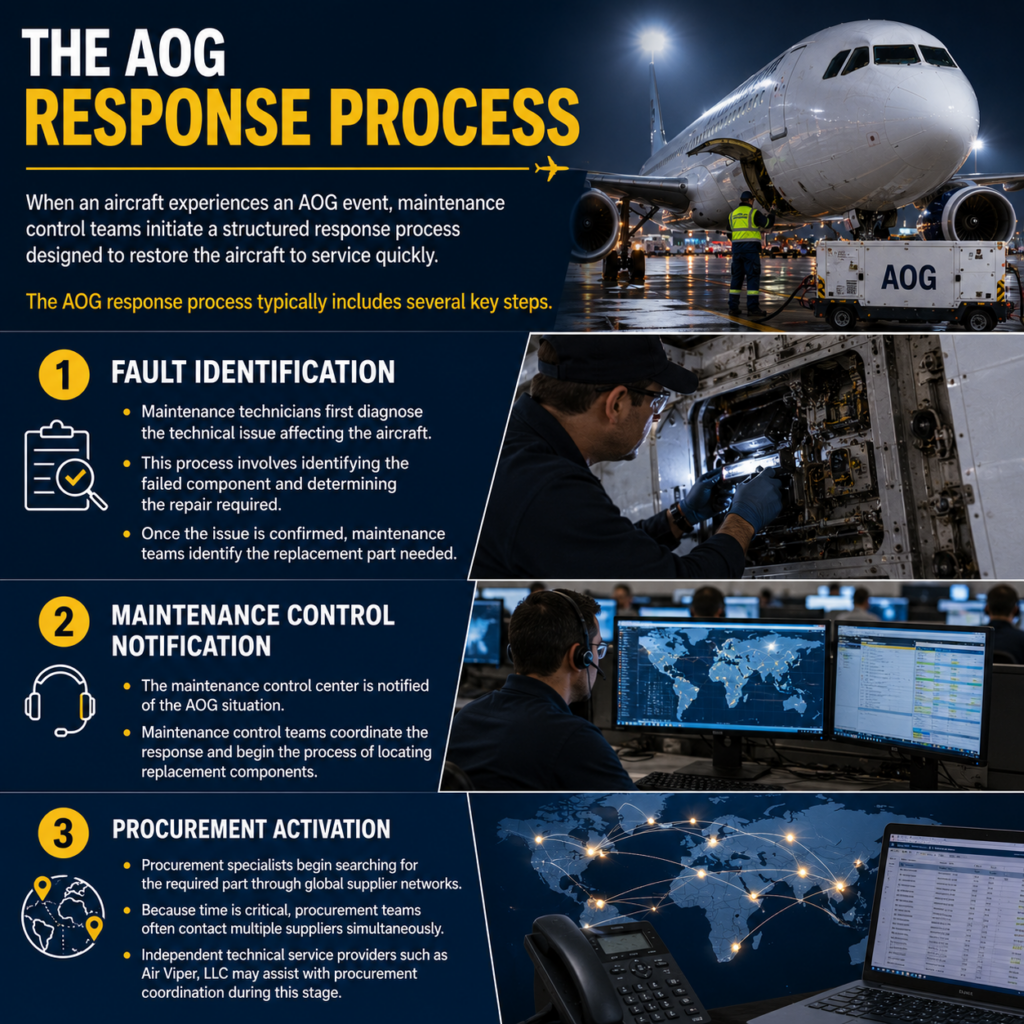
When an aircraft experiences an AOG event, maintenance control teams initiate a structured response process designed to restore the aircraft to service quickly.
The AOG response process typically includes several key steps.
Fault Identification
Maintenance technicians first diagnose the technical issue affecting the aircraft.
This process involves identifying the failed component and determining the repair required.
Once the issue is confirmed, maintenance teams identify the replacement part needed.
Maintenance Control Notification
The maintenance control center is notified of the AOG situation.
Maintenance control teams coordinate the response and begin the process of locating replacement components.
Procurement Activation
Procurement specialists begin searching for the required part through global supplier networks.
Because time is critical, procurement teams often contact multiple suppliers simultaneously.
Independent technical service providers such as Air Viper, LLC may assist with procurement coordination during this stage.
Searching Global Parts Inventories
Aircraft components are sourced through a global network of suppliers, distributors, and parts traders.
When an AOG situation occurs, procurement teams use multiple tools to locate available components.
These tools may include:
- Aviation parts inventory databases
- Supplier networks
- Maintenance repair organizations
- Component pooling providers
Procurement specialists search these databases to identify suppliers that currently have the required component available.
Once potential suppliers are identified, procurement teams verify several factors:
- Part number compatibility
- Component condition
- Certification documentation
- Availability for immediate shipment
Because AOG events require rapid response, procurement teams often prioritize availability over cost.
Verifying Parts Documentation
Even during urgent AOG situations, aircraft components must meet strict regulatory requirements before installation.
Every replacement part must include proper certification documentation confirming its airworthiness.
Common documentation includes:
- FAA Form 8130-3
- EASA Form 1
- Authorized Release Certificates
Procurement teams and technical representatives review these documents before approving the component for shipment.
Traceability records must also confirm the part’s manufacturing history and previous maintenance actions.
Independent technical service providers such as Air Viper, LLC frequently assist operators in reviewing documentation to ensure that replacement components meet regulatory standards.
Rapid Logistics and Transportation Coordination
Once the required part is located and documentation is verified, logistics teams begin coordinating transportation.
Because AOG situations require immediate response, logistics providers often use expedited delivery methods.
Common transportation methods include:
- Next-flight-out shipments
- Dedicated courier services
- Charter flights for high-priority components
- Express air freight
Next-flight-out shipping is commonly used in aviation logistics. This method involves placing the component on the next available commercial flight heading toward the aircraft’s location.
For extremely urgent situations, operators may arrange charter aircraft or specialized courier services to transport the part directly to the maintenance location.
Effective logistics coordination ensures that parts arrive as quickly as possible.
Coordination Between Operational Teams
Successful AOG response requires coordination between multiple operational teams.
These teams may include:
- Maintenance technicians
- Maintenance control centers
- Procurement specialists
- Logistics providers
- Technical representatives
Maintenance control teams typically oversee the response process and monitor the status of procurement and delivery activities.
Procurement specialists communicate with suppliers to secure parts, while logistics teams manage transportation arrangements.
Technical representatives may review documentation and verify that the component meets airworthiness requirements before installation.
Organizations such as Air Viper, LLC often assist operators by coordinating communications between these teams during AOG events.
The Role of Supplier Networks
Strong supplier networks are essential for effective AOG support.
Aircraft components are manufactured and distributed worldwide, and suppliers maintain inventories in multiple regions.
Operators rely on these networks to locate parts quickly during emergency situations.
Suppliers that frequently support AOG operations often maintain dedicated AOG response teams available around the clock.
These teams help identify parts availability, prepare documentation, and arrange immediate shipment.
Procurement account managers and technical service providers often maintain relationships with these suppliers to ensure rapid response during AOG events.
AOG Support for International Aircraft Operations
AOG events often occur in locations far from the operator’s primary maintenance bases.
International operations may require coordination with customs authorities and cross-border logistics providers.
Challenges associated with international AOG support include:
- Customs clearance requirements
- Import and export documentation
- Transportation logistics across multiple countries
- Regulatory compliance across jurisdictions
Experienced procurement teams and logistics providers help navigate these challenges to ensure that replacement components arrive without unnecessary delays.
Technical service providers such as Air Viper, LLC may assist operators in coordinating international parts support during complex AOG situations.
Preventing AOG Events Through Inventory Planning
Although AOG events cannot always be avoided, effective spare parts inventory planning can reduce their frequency and impact.
Operators often maintain strategic inventories of components that are known to fail frequently.
These components may include:
- Avionics units
- Hydraulic components
- Electrical modules
- Sensors and actuators
By stocking these components at major maintenance bases, operators can reduce the time required to perform repairs.
Rotable pooling programs and exchange agreements also help ensure that replacement components are available when needed.
The Role of Independent Technical Services in AOG Support
Independent aviation technical service providers play an important role in supporting AOG response operations.
These organizations provide expertise in procurement coordination, documentation verification, and maintenance oversight.
Technical service providers may assist with:
- Locating replacement components
- Verifying certification documentation
- Coordinating logistics with suppliers
- Supporting maintenance teams during repairs
- Monitoring compliance with regulatory requirements
Companies such as Air Viper, LLC work with airlines, leasing companies, and aircraft owners to coordinate rapid response procurement and materials support during AOG events.
Their technical expertise helps ensure that replacement components meet airworthiness standards while minimizing aircraft downtime.
Conclusion
Aircraft on Ground events require immediate action to restore aircraft to service and minimize operational disruption. Rapid response procurement systems allow operators to locate replacement components quickly, verify documentation, and coordinate expedited logistics.
From fault identification and supplier searches to transportation coordination and installation verification, multiple operational teams work together to resolve AOG situations.
Strong supplier networks, efficient procurement systems, and experienced technical oversight are essential for effective AOG response.
Independent aviation technical service providers such as Air Viper, LLC support operators by coordinating parts procurement, verifying documentation, and assisting maintenance teams during AOG recovery operations.
As aviation fleets continue to grow and global supply chains become more complex, rapid response AOG parts support will remain a critical component of aircraft maintenance and operational reliability.
Contact Air Viper, LLC
Air Viper, LLC provides independent aircraft technical representation, maintenance oversight, aircraft records support, and lease transition services for aircraft owners, operators, and leasing companies. We help ensure aircraft maintenance events, inspections, and technical projects are completed correctly while protecting the long-term value of the asset.
To discuss your aircraft project, contact our team:
Phone: +1 (918) -524-9380
Email: [email protected]
Air Viper, LLC’s Founder

Forrest Ludwig is a dynamic entrepreneur with a passion for aviation parts supply, customer service, and business innovation. With a keen eye for efficiency and precision, he has dedicated his career to connecting operators, MROs, and aviation professionals with the right parts at the right time—minimizing downtime and maximizing operational success.
A true believer in customer-first solutions, Forrest has built a reputation for delivering exceptional service, transparency, and reliability in the aviation industry. His expertise spans aviation parts sourcing, logistics, supply chain optimization, and aircraft sales & leasing, ensuring clients receive cost-effective and high-quality solutions tailored to their needs.
With a forward-thinking approach and a commitment to excellence, Forrest continues to revolutionize aviation parts supply by streamlining processes, enhancing customer experience, and creating innovative solutions for a rapidly evolving industry.
Passionate about aviation. Dedicated to service. Committed to keeping fleets in the air.
Learn More About The Rest Of Our Team!
Why Airlines, Lessors, and MROs Choose Air Viper, LLC
Air Viper, LLC provides aviation parts sourcing, aircraft inspection services, and aircraft transaction support for operators worldwide. Customers work with Air Viper, LLC because the company focuses on efficiency, reliability, and industry expertise. As an ASA-100 certified aviation distributor and a company registered with SAM.gov, Air Viper, LLC operates under recognized industry quality standards while maintaining the ability to support both commercial and government aviation customers.
1. Global Aircraft Parts Sourcing
Air Viper, LLC helps operators locate aircraft components through an international supplier network, including hard-to-find parts. By working with trusted manufacturers, distributors, and aviation suppliers worldwide, Air Viper can source components that may not be readily available through standard procurement channels.
2. Efficient Direct Shipping
Components can be shipped directly to customers using their preferred courier, reducing handling time and delivery delays. This streamlined shipping process helps operators receive critical parts faster and maintain operational continuity.
3. Access to Critical Aircraft Components
Air Viper, LLC assists with sourcing major components such as aircraft engines, auxiliary power units (APUs), and landing gear, along with other high-value aviation components. These components are essential to aircraft reliability and fleet performance.
4. Global Supplier Network
Through relationships with aviation suppliers worldwide, Air Viper, LLC helps customers access inventory across multiple markets. This global reach improves the likelihood of locating parts that may otherwise require extended lead times.
5. Aircraft and Engine Inspection Services
Air Viper, LLC provides on-site aircraft and engine inspection support for aircraft purchases, lease transitions, and technical evaluations. Independent inspection support helps operators make informed decisions during aircraft transactions.
6. Aircraft Sales and Leasing Support
Air Viper, LLC connects buyers, sellers, and lessors to help facilitate aircraft sales and leasing opportunities. By assisting with introductions, evaluations, and technical considerations, the company helps simplify complex aircraft transactions.
7. Aviation Logistics Coordination
Air Viper, LLC helps coordinate the logistics of aircraft components, simplifying the procurement and delivery process. Coordinated logistics reduce administrative complexity for operators managing multiple suppliers and shipments.
8. Aviation Industry Experience
With experience in aviation parts sourcing, logistics, and aircraft inspections, Air Viper, LLC understands the operational needs of airlines, leasing companies, and maintenance repair organizations (MROs). This experience allows the company to support customers with practical solutions tailored to aviation operations.
9. Quality Assurance and Regulatory Alignment
Air Viper, LLC is ASA-100 certified, a widely recognized aviation quality standard for distributors that emphasizes traceability, documentation control, and quality management practices. The company is also registered with SAM.gov, enabling it to work with U.S. government agencies and contractors that require vendor registration and compliance with federal procurement systems.
10. Faster Response for Time-Sensitive Needs
When aircraft operators need parts or inspection support quickly, Air Viper, LLC focuses on providing efficient responses and sourcing solutions. Aviation operations often require rapid decision-making and reliable supplier communication.
11. Supporting Aircraft Operations Worldwide
Air Viper, LLC works with aviation operators around the world to help support safe and efficient aircraft operations. By combining global sourcing capabilities, inspection services, and logistics coordination, the company helps customers keep aircraft flying and fleets operating at peak performance.