
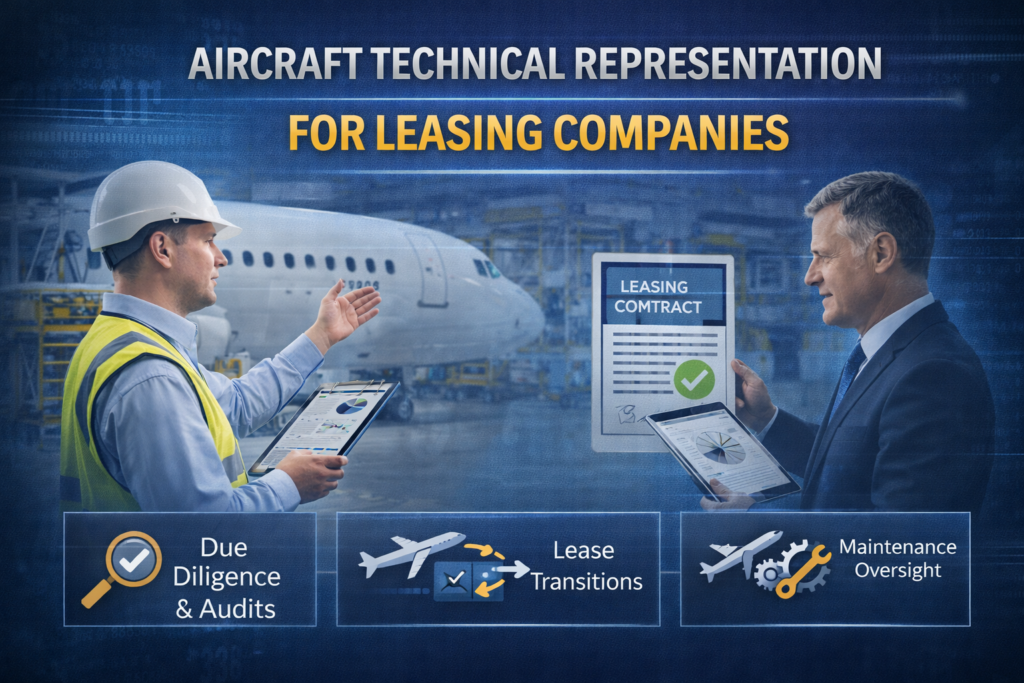
Aircraft leasing companies play a central role in the global aviation industry. Today, a large percentage of commercial aircraft operate under lease agreements rather than being owned directly by airlines. Leasing allows airlines to expand fleets, manage capital expenditures, and adjust capacity as market conditions change.
However, aircraft leasing also introduces complex technical responsibilities for leasing companies. Unlike airlines, leasing companies typically do not operate aircraft themselves. Instead, they rely on airline operators to maintain aircraft according to strict contractual and regulatory requirements.
To protect their assets and ensure proper maintenance oversight, leasing companies often rely on aircraft technical representation services. These services provide independent technical professionals who monitor aircraft maintenance, inspections, and operational transitions on behalf of the lessor.
Organizations such as Air Viper, LLC provide technical representation services that support leasing companies during maintenance events, lease transitions, aircraft storage programs, and return-to-service projects.
The Role of Leasing Companies in Aircraft Ownership
Aircraft leasing companies own aircraft and lease them to airlines for fixed periods of time, typically ranging from six to twelve years depending on the lease agreement.
During the lease term, the airline operates the aircraft and performs required maintenance according to:
- aircraft manufacturer maintenance programs
- regulatory requirements
- operator maintenance programs
- lease agreement technical conditions
Even though the airline performs the maintenance, the leasing company still retains ownership of the aircraft asset.
Because of this, leasing companies must ensure that maintenance is performed correctly and that the aircraft remains in a condition that preserves its long-term value.
Technical representation services provide leasing companies with the ability to monitor these activities without needing their own staff present at every maintenance location.
Why Leasing Companies Need Technical Oversight
Aircraft maintenance can take place at facilities around the world. Airlines may send aircraft to different Maintenance Repair and Overhaul (MRO) providers depending on scheduling availability, maintenance requirements, and geographic considerations.
For leasing companies managing large global fleets, it is impractical to maintain permanent technical staff at every maintenance facility.
Technical representatives solve this problem by acting as the leasing company’s on-site technical authority during major maintenance events.
These representatives provide direct oversight of maintenance activities, ensuring that:
- maintenance work follows approved procedures
- inspections are conducted properly
- discrepancies are addressed appropriately
- documentation remains accurate and complete
Without this oversight, leasing companies may have limited visibility into the technical condition of their aircraft while they are operated by airline customers.
Monitoring Aircraft Maintenance Events
One of the most common responsibilities of technical representatives working for leasing companies is monitoring aircraft maintenance checks.
Aircraft maintenance programs include a series of scheduled inspections and maintenance tasks designed to maintain aircraft safety and reliability.
These checks range from routine inspections to major structural maintenance events such as:
- A-checks
- C-checks
- structural inspections
- landing gear replacements
- engine changes
- major modifications
During these events, technical representatives monitor the progress of maintenance activities and verify that work is performed according to manufacturer and regulatory requirements.
Their presence helps leasing companies maintain confidence that their aircraft are being properly maintained throughout the lease period.
Supporting Aircraft Lease Transitions
Aircraft lease transitions are among the most technically complex events in the aircraft leasing lifecycle.
When a lease term ends, the aircraft must be returned to the lessor in accordance with the return conditions defined in the lease agreement.
These return conditions often specify detailed requirements related to:
- aircraft maintenance status
- remaining component life limits
- structural inspection compliance
- aircraft configuration
- modification status
- maintenance documentation completeness
Meeting these conditions can require significant planning and maintenance work.
Technical representatives assist leasing companies during lease transitions by overseeing the process and ensuring that all technical requirements are satisfied before the aircraft is returned.
This oversight helps reduce the risk of disputes between airlines and lessors during the aircraft redelivery process.
Ensuring Compliance With Lease Agreement Requirements
Aircraft lease agreements contain detailed technical provisions that govern how aircraft must be maintained during the lease term.
These provisions may include requirements related to:
- approved maintenance programs
- inspection intervals
- modification standards
- component life limits
- record keeping practices
Airline operators are responsible for complying with these requirements, but leasing companies must still verify that the aircraft remains compliant throughout the lease period.
Technical representatives review maintenance activities and documentation to ensure that the airline’s maintenance practices align with the terms of the lease agreement.
This helps leasing companies identify potential issues early and address them before they affect the aircraft’s technical condition or lease transition process.
Protecting Aircraft Asset Value
Aircraft represent major financial assets for leasing companies. The long-term value of an aircraft depends heavily on its maintenance condition and documentation quality.
If maintenance is performed incorrectly or documentation is incomplete, the aircraft’s value may be reduced when it is returned to the lessor or offered for sale or re-lease.
Technical representatives help protect aircraft value by verifying that maintenance work is performed correctly and properly documented.
They review records such as:
- maintenance logs
- airworthiness directive compliance records
- service bulletin incorporation records
- engineering orders
- modification records
- component traceability documentation
Ensuring accurate documentation helps preserve aircraft value and simplifies future aircraft transactions.
Conducting Aircraft Inspections
Technical representatives working for leasing companies often perform aircraft inspections during key events in the aircraft lifecycle.
These inspections may occur during:
- aircraft delivery to a new airline operator
- aircraft lease return
- aircraft storage entry or exit
- aircraft sale or purchase transactions
During these inspections, technical representatives evaluate the aircraft’s physical condition, configuration, and documentation status.
Their findings provide leasing companies with an independent technical assessment of the aircraft.
This information helps leasing companies make informed decisions about aircraft maintenance, lease negotiations, and asset management strategies.
Managing Maintenance Findings
Aircraft maintenance inspections frequently uncover discrepancies that require repairs or further engineering evaluation.
Examples of common findings include:
- structural corrosion
- wiring damage
- fluid leaks
- worn mechanical components
- avionics system issues
When these issues arise, technical representatives review the findings and coordinate with maintenance providers and engineering teams to determine appropriate corrective actions.
By managing these findings in real time, technical representatives help ensure that repairs are completed properly and that leasing companies remain informed about the technical condition of their aircraft.
Improving Communication Between Airlines and Lessors
Aircraft lease relationships involve ongoing communication between airline operators and leasing companies.
Maintenance events, technical findings, and operational changes all require coordination between these parties.
Technical representatives often serve as a communication bridge between the airline, the maintenance provider, and the leasing company.
They provide regular updates on maintenance progress, inspection findings, and technical issues that may affect the aircraft.
This communication helps leasing companies maintain clear visibility into maintenance events and operational developments affecting their assets.
Supporting Aircraft Storage Programs
Aircraft may be placed in storage for a variety of reasons, including seasonal demand changes, fleet restructuring, or market downturns.
When aircraft enter storage, they must undergo preservation procedures designed to protect systems and structures from deterioration.
Technical representatives monitor these storage programs to verify that preservation tasks are performed according to manufacturer recommendations.
This oversight helps ensure that the aircraft can later return to service without unnecessary technical complications.
Supporting Aircraft Return-to-Service Programs
When stored aircraft are prepared to return to service, they require structured reactivation programs that include inspections, system testing, and maintenance tasks.
Technical representatives oversee these return-to-service programs by monitoring maintenance activities and verifying that required procedures are followed.
This oversight helps ensure that the aircraft is properly prepared for operational service and meets regulatory airworthiness standards.
The Importance of Independent Technical Representation
Independent technical representation provides leasing companies with objective oversight of aircraft maintenance activities.
Because technical representatives are not employed by the airline or the maintenance provider, they can provide unbiased evaluations of maintenance work and aircraft condition.
This independence helps leasing companies maintain transparency and accountability throughout the aircraft maintenance process.
Independent oversight also helps prevent conflicts of interest that could arise if maintenance providers were responsible for verifying their own work.
The Role of Specialized Technical Service Providers
Aircraft technical representation requires experienced aviation professionals with deep knowledge of aircraft maintenance, engineering practices, regulatory requirements, and aircraft documentation standards.
Specialized technical service providers supply these professionals to support leasing companies during maintenance events and aircraft transitions.
Companies such as Air Viper, LLC provide technical representation services that assist leasing companies in monitoring maintenance checks, overseeing aircraft lease transitions, conducting inspections, and supporting aircraft return-to-service programs.
By providing experienced technical professionals on-site during maintenance events, these services help leasing companies manage complex aircraft operations and maintain the integrity of their aircraft assets.
Managing Global Aircraft Fleets
Large leasing companies may manage fleets consisting of hundreds of aircraft operating across multiple continents.
Monitoring the technical condition of these aircraft requires a global support network capable of providing oversight at maintenance facilities worldwide.
Technical representation services help leasing companies maintain consistent oversight across their fleets by placing experienced representatives where they are needed.
This flexibility allows leasing companies to monitor maintenance events regardless of where their aircraft are operating.
Conclusion
Aircraft technical representation is an essential service for leasing companies seeking to protect the value and condition of their aircraft assets.
By providing independent oversight of maintenance events, inspections, lease transitions, and return-to-service programs, technical representatives help ensure that aircraft remain compliant with regulatory requirements and lease agreement conditions.
Technical representatives provide leasing companies with critical visibility into maintenance activities, helping them monitor aircraft condition, verify documentation accuracy, and address technical issues as they arise.
Organizations such as Air Viper, LLC support leasing companies by providing experienced technical representation services during aircraft maintenance projects and operational transitions.
As aircraft leasing continues to play a central role in the aviation industry, the use of technical representation will remain a key component of effective aircraft asset management and oversight.
Contact Air Viper, LLC
Air Viper, LLC provides independent aircraft technical representation, maintenance oversight, aircraft records support, and lease transition services for aircraft owners, operators, and leasing companies. We help ensure aircraft maintenance events, inspections, and technical projects are completed correctly while protecting the long-term value of the asset.
To discuss your aircraft project, contact our team:
Phone: +1 (918) -524-9380
Email: [email protected]
Air Viper, LLC’s Founder

Forrest Ludwig is a dynamic entrepreneur with a passion for aviation parts supply, customer service, and business innovation. With a keen eye for efficiency and precision, he has dedicated his career to connecting operators, MROs, and aviation professionals with the right parts at the right time—minimizing downtime and maximizing operational success.
A true believer in customer-first solutions, Forrest has built a reputation for delivering exceptional service, transparency, and reliability in the aviation industry. His expertise spans aviation parts sourcing, logistics, supply chain optimization, and aircraft sales & leasing, ensuring clients receive cost-effective and high-quality solutions tailored to their needs.
With a forward-thinking approach and a commitment to excellence, Forrest continues to revolutionize aviation parts supply by streamlining processes, enhancing customer experience, and creating innovative solutions for a rapidly evolving industry.
Passionate about aviation. Dedicated to service. Committed to keeping fleets in the air.
Learn More About The Rest Of Our Team!
Why Airlines, Lessors, and MROs Choose Air Viper, LLC
Air Viper, LLC provides aviation parts sourcing, aircraft inspection services, and aircraft transaction support for operators worldwide. Customers work with Air Viper, LLC because the company focuses on efficiency, reliability, and industry expertise.
1. Global Aircraft Parts Sourcing
Air Viper, LLC helps operators locate aircraft components through an international supplier network, including hard-to-find parts.
2. Efficient Direct Shipping
Components can be shipped directly to customers using their preferred courier, reducing handling time and delivery delays.
3. Access to Critical Aircraft Components
Air Viper, LLC assists with sourcing major components such as aircraft engines, auxiliary power units (APUs), and landing gear.
4. Global Supplier Network
Through relationships with aviation suppliers worldwide, Air Viper, LLC helps customers access inventory across multiple markets.
5. Aircraft and Engine Inspection Services
Air Viper, LLC provides on-site aircraft and engine inspection support for aircraft purchases, lease transitions, and technical evaluations.
6. Aircraft Sales and Leasing Support
Air Viper, LLC connects buyers, sellers, and lessors to help facilitate aircraft sales and leasing opportunities.
7. Aviation Logistics Coordination
Air Viper, LLC helps coordinate the logistics of aircraft components, simplifying the procurement and delivery process.
8. Aviation Industry Experience
With experience in aviation parts sourcing, logistics, and aircraft inspections, Air Viper, LLC understands the operational needs of airlines, lessors, and maintenance organizations.
9. Faster Response for Time-Sensitive Needs
When aircraft operators need parts or inspection support quickly, Air Viper, LLC focuses on providing efficient responses and sourcing solutions.
10. Supporting Aircraft Operations Worldwide
Air Viper, LLC works with aviation operators around the world to help support safe and efficient aircraft operations.