
Aircraft do not always operate continuously throughout their service lives. Airlines frequently place aircraft into storage during periods of reduced demand, fleet transitions, maintenance planning cycles, or operational restructuring. When aircraft are parked for extended periods, preservation procedures are required to maintain the condition of the aircraft and prevent deterioration of systems, structures, and components.
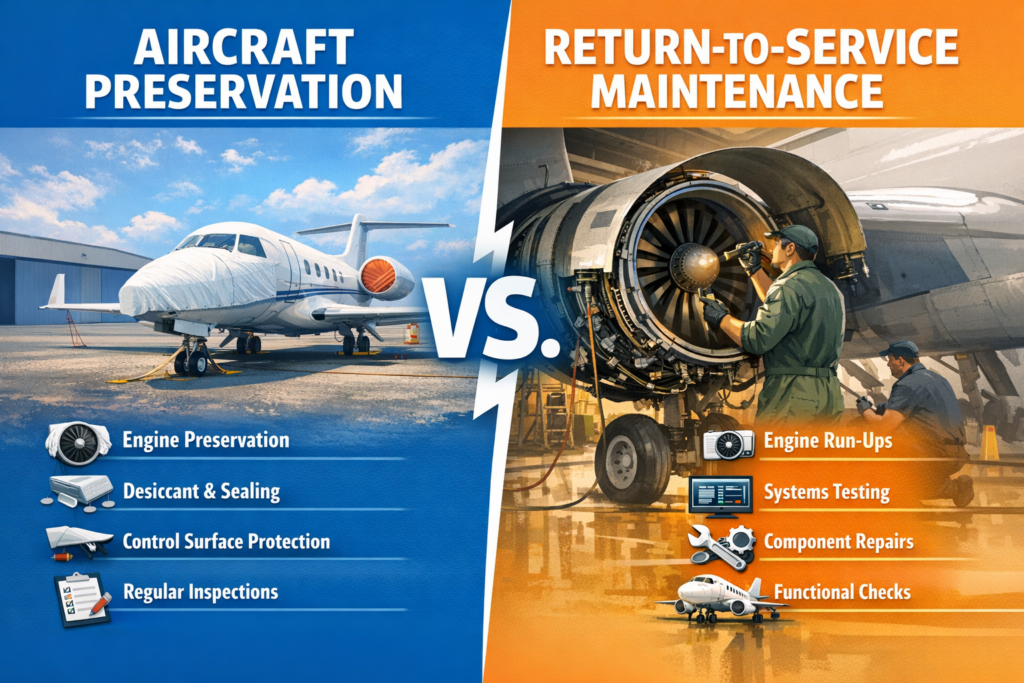
However, preserving an aircraft and returning it to service are two very different technical processes. Aircraft preservation focuses on protecting systems while the aircraft remains inactive, while return-to-service maintenance focuses on restoring the aircraft to full operational status.
Understanding the differences between aircraft preservation and return-to-service maintenance is essential for airlines, lessors, and maintenance organizations involved in fleet management. Both phases require structured procedures, detailed documentation, and technical coordination to ensure aircraft remain airworthy and compliant with regulatory requirements.
Organizations such as Air Viper, LLC provide technical oversight services that help coordinate both preservation programs and return-to-service activities, ensuring that maintenance actions align with manufacturer guidance and operator requirements.
Understanding Aircraft Preservation
Aircraft preservation refers to the maintenance procedures performed when an aircraft is placed into temporary or long-term storage. These procedures are designed to protect the aircraft from environmental damage, corrosion, contamination, and system degradation while it is not operating.
Aircraft preservation procedures are typically defined by the aircraft manufacturer and outlined in the Aircraft Maintenance Manual (AMM) or storage maintenance program documentation.
The goal of preservation maintenance is to ensure that the aircraft remains in a condition that allows it to be safely returned to service when needed.
Preservation procedures are particularly important because modern aircraft contain numerous sensitive systems that can deteriorate quickly when not in use. Hydraulic systems, fuel systems, avionics components, and environmental systems all require specific preservation actions to prevent damage during storage.
Why Aircraft Preservation Is Necessary
When aircraft remain inactive for extended periods, several environmental and mechanical factors can affect their condition.
Some of the most common risks during aircraft storage include:
- Corrosion caused by humidity and environmental exposure
- Contamination within fuel systems and hydraulic systems
- Degradation of lubricants and protective fluids
- Electrical system deterioration
- Tire deformation due to prolonged weight loads
- Wildlife intrusion into open ports and air inlets
Without preservation procedures, these risks can significantly increase the amount of maintenance required before the aircraft can return to service.
Preservation programs help mitigate these risks and protect aircraft assets during periods of inactivity.
Common Aircraft Preservation Procedures
Aircraft preservation involves a wide range of preventive maintenance tasks designed to protect critical systems and structures.
Typical preservation procedures may include:
Engine Preservation
Aircraft engines require special preservation measures when placed into storage.
These procedures often include:
- Applying preservation oils to internal engine components
- Installing protective covers on engine inlets and exhausts
- Rotating engines periodically to maintain lubrication
- Monitoring engine humidity levels
These steps help prevent corrosion and internal damage to engine components.
Fuel System Protection
Fuel systems must be protected to prevent contamination, microbial growth, and moisture accumulation.
Preservation procedures may involve:
- Draining fuel tanks or maintaining specific fuel levels
- Adding fuel system preservatives
- Performing periodic fuel sampling
- Sealing fuel system access points
Proper fuel system preservation helps avoid contamination issues that could affect engine performance when the aircraft returns to service.
Hydraulic System Protection
Hydraulic systems must remain free of contamination and moisture during storage.
Preservation activities may include:
- Pressurizing hydraulic systems periodically
- Checking fluid levels and condition
- Inspecting hydraulic components for leaks or deterioration
Maintaining hydraulic system integrity helps ensure proper operation when the aircraft is reactivated.
Environmental and Structural Protection
Aircraft stored outdoors are exposed to environmental conditions that can accelerate corrosion and deterioration.
Structural preservation procedures may include:
- Installing protective covers over sensors and openings
- Sealing pitot tubes and static ports
- Applying corrosion inhibitors to exposed surfaces
- Inspecting structures for early signs of corrosion
These procedures help protect the aircraft structure and sensitive components.
Landing Gear and Tire Protection
Aircraft landing gear and tires must be protected during long-term storage.
Common procedures include:
- Maintaining proper tire inflation pressure
- Periodically towing or repositioning the aircraft
- Inspecting landing gear components for corrosion or leaks
These measures help prevent structural stress and component degradation.
Preservation Maintenance Programs
Aircraft in storage must still undergo periodic maintenance inspections even when they are not flying.
Preservation maintenance programs typically include:
- Scheduled system checks
- environmental inspections
- fluid condition monitoring
- protective cover inspections
- structural corrosion inspections
These inspections help ensure that preservation procedures remain effective throughout the storage period.
Maintenance intervals may vary depending on whether the aircraft is placed in short-term, intermediate, or long-term storage.
What Is Return-to-Service Maintenance?
Return-to-service maintenance refers to the maintenance procedures required to restore an aircraft from storage to full operational status.
This process reverses preservation procedures and ensures that all aircraft systems are functioning correctly before the aircraft resumes flight operations.
Return-to-service maintenance is typically more extensive than preservation procedures because it requires:
- system reactivation
- functional testing
- inspections
- regulatory compliance verification
- documentation review
Airlines must ensure that the aircraft meets all airworthiness requirements before returning it to service.
Reversing Preservation Measures
One of the first steps in return-to-service maintenance is removing the protective measures applied during aircraft preservation.
This may involve:
- removing protective covers from sensors and ports
- draining preservation oils from engines
- reconnecting disconnected systems
- removing environmental seals
- restoring electrical system configurations
Technicians must follow manufacturer procedures carefully to ensure systems are restored correctly.
System Functional Testing
After preservation measures are removed, aircraft systems must undergo detailed functional testing.
These tests confirm that all aircraft systems operate as intended after the storage period.
Common system tests include:
- flight control operational checks
- hydraulic system testing
- avionics system verification
- environmental control system testing
- fuel system functionality checks
- landing gear retraction and extension tests
These tests help identify any issues that may have developed during storage.
Structural and Component Inspections
Aircraft returning from storage require detailed inspections of structures and components.
Maintenance teams often inspect:
- aircraft structures for corrosion
- control surfaces and linkages
- engine components
- landing gear systems
- electrical wiring and avionics equipment
Any discrepancies discovered during these inspections must be resolved before the aircraft can return to operational service.
Aircraft Records and Documentation Review
Return-to-service maintenance also requires a detailed review of aircraft records.
Maintenance documentation must verify that:
- preservation procedures were performed correctly
- scheduled inspections were completed during storage
- airworthiness directives remain compliant
- life-limited components are properly tracked
- maintenance records are complete and accurate
Incomplete documentation can delay aircraft reactivation even if the physical maintenance work has been completed.
Technical representatives may assist with reviewing records and identifying documentation discrepancies before the aircraft is returned to service.
Maintenance Planning and Coordination
Return-to-service programs involve extensive planning and coordination between multiple departments.
Maintenance planners must coordinate:
- inspection schedules
- maintenance task sequencing
- parts procurement
- engineering support
- maintenance facility scheduling
Effective planning ensures that return-to-service programs proceed efficiently and without unnecessary delays.
Organizations such as Air Viper, LLC support these efforts by providing technical oversight and coordination throughout the return-to-service process.
Key Differences Between Preservation and Return-to-Service Maintenance
Although both processes involve maintenance activities, aircraft preservation and return-to-service maintenance serve very different purposes.
Aircraft preservation focuses on protecting the aircraft during periods of inactivity, while return-to-service maintenance focuses on restoring operational readiness.
Key differences include:
| Aircraft Preservation | Return-to-Service Maintenance |
| Protects aircraft during storage | Restores aircraft to operational condition |
| Prevents corrosion and system degradation | Reactivates aircraft systems |
| Applies protective measures | Removes preservation protections |
| Includes periodic maintenance checks | Includes functional system testing |
| Maintains aircraft condition | Verifies airworthiness before flight |
Both phases are essential parts of aircraft lifecycle management.
The Role of Technical Oversight
Aircraft preservation and return-to-service programs involve numerous maintenance tasks, inspections, and documentation requirements.
Technical oversight helps ensure that these programs are completed correctly and in accordance with applicable procedures.
Technical representatives may assist with:
- monitoring preservation activities
- verifying maintenance compliance
- coordinating maintenance providers
- reviewing aircraft records
- supporting return-to-service inspections
Air Viper, LLC provides technical representation services that can assist aircraft owners, operators, and lessors during preservation programs and aircraft reactivation projects.
Independent technical oversight helps ensure that maintenance activities are properly coordinated and that aircraft meet regulatory and operational requirements when returning to service.
Why Proper Preservation Improves Return-to-Service Efficiency
Aircraft that undergo proper preservation procedures are typically easier and faster to return to service.
Well-maintained preservation programs help reduce:
- corrosion damage
- system contamination
- component failures
- unexpected maintenance findings
When preservation procedures are followed consistently, the return-to-service process often requires fewer repairs and less corrective maintenance.
This can significantly reduce aircraft downtime and reactivation costs.
Conclusion
Aircraft preservation and return-to-service maintenance are two interconnected phases of aircraft lifecycle management. Preservation procedures protect aircraft during periods of inactivity, while return-to-service maintenance restores the aircraft to operational readiness.
Both processes require structured maintenance procedures, detailed documentation, and careful coordination between maintenance teams and operators.
Proper preservation helps protect aircraft assets and ensures that return-to-service programs can be completed efficiently when aircraft are needed again.
Organizations such as Air Viper, LLC support aircraft operators and asset owners by providing technical oversight and coordination services during preservation programs and aircraft return-to-service projects, helping ensure that maintenance activities align with operational and regulatory requirements.
Contact Air Viper, LLC
Air Viper, LLC provides independent aircraft technical representation, maintenance oversight, aircraft records support, and lease transition services for aircraft owners, operators, and leasing companies. We help ensure aircraft maintenance events, inspections, and technical projects are completed correctly while protecting the long-term value of the asset.
To discuss your aircraft project, contact our team:
Phone: +1 (918) -524-9380
Email: [email protected]
Air Viper, LLC’s Founder

Forrest Ludwig is a dynamic entrepreneur with a passion for aviation parts supply, customer service, and business innovation. With a keen eye for efficiency and precision, he has dedicated his career to connecting operators, MROs, and aviation professionals with the right parts at the right time—minimizing downtime and maximizing operational success.
A true believer in customer-first solutions, Forrest has built a reputation for delivering exceptional service, transparency, and reliability in the aviation industry. His expertise spans aviation parts sourcing, logistics, supply chain optimization, and aircraft sales & leasing, ensuring clients receive cost-effective and high-quality solutions tailored to their needs.
With a forward-thinking approach and a commitment to excellence, Forrest continues to revolutionize aviation parts supply by streamlining processes, enhancing customer experience, and creating innovative solutions for a rapidly evolving industry.
Passionate about aviation. Dedicated to service. Committed to keeping fleets in the air.
Learn More About The Rest Of Our Team!
Why Airlines, Lessors, and MROs Choose Air Viper, LLC
Air Viper, LLC provides aviation parts sourcing, aircraft inspection services, and aircraft transaction support for operators worldwide. Customers work with Air Viper, LLC because the company focuses on efficiency, reliability, and industry expertise.
1. Global Aircraft Parts Sourcing
Air Viper, LLC helps operators locate aircraft components through an international supplier network, including hard-to-find parts.
2. Efficient Direct Shipping
Components can be shipped directly to customers using their preferred courier, reducing handling time and delivery delays.
3. Access to Critical Aircraft Components
Air Viper, LLC assists with sourcing major components such as aircraft engines, auxiliary power units (APUs), and landing gear.
4. Global Supplier Network
Through relationships with aviation suppliers worldwide, Air Viper, LLC helps customers access inventory across multiple markets.
5. Aircraft and Engine Inspection Services
Air Viper, LLC provides on-site aircraft and engine inspection support for aircraft purchases, lease transitions, and technical evaluations.
6. Aircraft Sales and Leasing Support
Air Viper, LLC connects buyers, sellers, and lessors to help facilitate aircraft sales and leasing opportunities.
7. Aviation Logistics Coordination
Air Viper, LLC helps coordinate the logistics of aircraft components, simplifying the procurement and delivery process.
8. Aviation Industry Experience
With experience in aviation parts sourcing, logistics, and aircraft inspections, Air Viper, LLC understands the operational needs of airlines, lessors, and maintenance organizations.
9. Faster Response for Time-Sensitive Needs
When aircraft operators need parts or inspection support quickly, Air Viper, LLC focuses on providing efficient responses and sourcing solutions.
10. Supporting Aircraft Operations Worldwide
Air Viper, LLC works with aviation operators around the world to help support safe and efficient aircraft operations.