
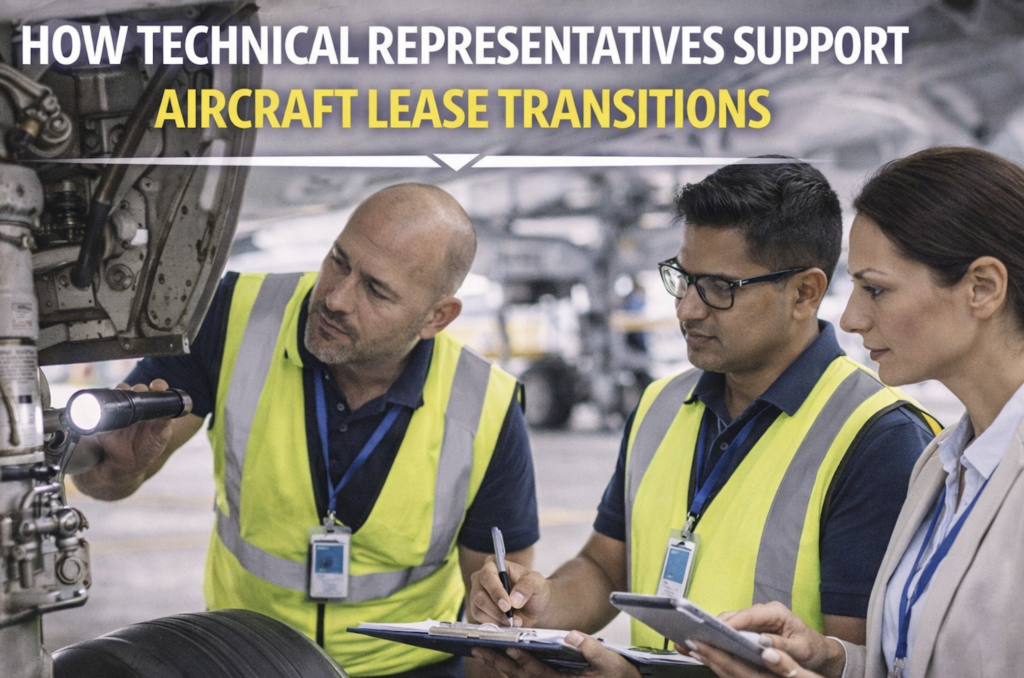
Aircraft lease transitions are among the most complex operational events in commercial aviation. When an aircraft moves from one operator to another at the end of a lease, the process involves extensive technical inspections, records reviews, maintenance coordination, and regulatory compliance checks.
Because of the scale and complexity of these tasks, lessors and airlines rely heavily on technical representatives to oversee the transition process.
Technical representatives act as the operational bridge between lessors, airlines, maintenance organizations, and regulatory authorities. Their role is to ensure the aircraft meets lease return conditions, maintenance standards, and documentation requirements before it is delivered to the next operator.
Without this technical oversight, lease transitions can quickly become delayed, costly, and operationally disruptive.
The Role of Technical Representatives in Aircraft Lease Transitions
Technical representatives are aviation professionals responsible for monitoring the technical condition of an aircraft during lease transitions.
They typically represent one of three parties:
- Aircraft lessors
- Incoming airline operators
- Asset management firms
Their primary objective is to ensure that the aircraft complies with lease return conditions and airworthiness requirements.
Technical representatives oversee several key aspects of the transition:
- Physical aircraft inspections
- Maintenance planning oversight
- Aircraft records review
- Compliance verification with lease agreements
- Coordination with maintenance, repair, and overhaul (MRO) facilities
Because aircraft leases often involve assets worth tens of millions of dollars, technical representatives play a critical role in protecting the interests of all stakeholders involved.
Why Technical Oversight Is Critical During Lease Transitions
Aircraft lease transitions involve multiple organizations working simultaneously under strict timelines.
Key participants typically include:
- The current airline operator
- The incoming airline
- The aircraft lessor
- Maintenance providers
- Regulatory authorities
Each group has different priorities.
Airlines want to minimize downtime. Lessors want the aircraft returned in the condition required by the lease agreement. Maintenance providers focus on completing technical work efficiently.
Technical representatives ensure these interests remain aligned.
Without proper technical oversight, several issues may occur:
- Undocumented maintenance discrepancies
- Missing aircraft records
- Non-compliance with lease return conditions
- Delays in redelivery timelines
- Unexpected maintenance costs
By maintaining constant technical supervision, representatives help ensure the transition proceeds according to plan.
Monitoring Lease Return Conditions
One of the most important responsibilities of technical representatives is verifying compliance with lease return conditions.
Lease agreements specify detailed requirements regarding the aircraft’s condition at the end of the lease. These conditions often include requirements related to:
- Engine performance and maintenance status
- Landing gear overhaul intervals
- Airframe structural inspections
- Cabin configuration requirements
- Service bulletin and airworthiness directive compliance
Technical representatives track these requirements throughout the transition process.
They confirm that maintenance work has been completed correctly and that all technical requirements outlined in the lease agreement have been satisfied.
This verification helps prevent disputes between the airline returning the aircraft and the aircraft owner.
Conducting Aircraft Physical Inspections
Aircraft inspections are a central part of the lease transition process.
Technical representatives typically perform multiple inspections throughout the redelivery timeline.
Initial Technical Assessment
The first inspection usually occurs several months before the scheduled lease return.
This assessment helps identify potential technical discrepancies that must be addressed before the aircraft can be returned.
Areas commonly reviewed during this phase include:
- Structural condition of the airframe
- Cabin interior configuration and condition
- Landing gear status
- Engine maintenance status
- Avionics equipment functionality
Identifying discrepancies early allows airlines to schedule maintenance work in advance, reducing the risk of last-minute delays.
Redelivery Inspection
The final redelivery inspection takes place once maintenance work has been completed.
Technical representatives confirm that:
- All required maintenance tasks have been completed
- Any previously identified discrepancies have been resolved
- The aircraft meets the lease return conditions
Only after this inspection can the aircraft typically proceed to the final delivery stage.
Reviewing Aircraft Maintenance Records
Aircraft records are just as important as the physical aircraft itself.
During lease transitions, technical representatives conduct a detailed review of the aircraft’s maintenance documentation.
Aircraft records typically include:
- Maintenance logs
- Airworthiness directive compliance records
- Service bulletin status reports
- Component traceability documentation
- Engine and landing gear maintenance history
These records must demonstrate that the aircraft has been maintained in accordance with regulatory and manufacturer requirements.
Missing or incomplete documentation can delay the transition significantly.
Technical representatives ensure all required records are properly organized and available before the aircraft is transferred to the next operator.
Coordinating Maintenance Activities
Lease transitions often require significant maintenance work before redelivery.
This may include:
- Scheduled heavy maintenance checks
- Cabin refurbishment
- Component replacements
- Compliance with service bulletins or airworthiness directives
Technical representatives coordinate closely with maintenance, repair, and overhaul (MRO) facilities responsible for completing this work.
Their responsibilities may include:
- Monitoring maintenance progress
- Verifying work scope compliance
- Ensuring maintenance documentation is accurate
- Confirming quality control standards are met
Because lease transitions typically operate under strict schedules, technical representatives play a crucial role in preventing maintenance delays.
Managing Technical Communication Between Stakeholders
Lease transitions require constant communication between multiple organizations.
Technical representatives often serve as the central point of communication for technical matters.
They regularly interact with:
- Airline engineering teams
- Aircraft lessor asset managers
- MRO project managers
- Regulatory authorities
Their responsibilities include:
- Providing technical status updates
- Reporting inspection findings
- Coordinating resolution of discrepancies
- Ensuring all parties remain informed about progress
Clear communication helps prevent misunderstandings and ensures that technical issues are addressed quickly.
Ensuring Regulatory Compliance
Aircraft lease transitions must comply with aviation regulatory requirements in addition to lease conditions.
Technical representatives verify that the aircraft complies with the regulations of the relevant aviation authorities.
These authorities may include:
- Federal Aviation Administration (FAA)
- European Union Aviation Safety Agency (EASA)
- Other national civil aviation authorities
Regulatory compliance checks may involve:
- Verifying airworthiness directive compliance
- Confirming maintenance programs meet regulatory standards
- Ensuring proper aircraft registration documentation
Failure to meet regulatory requirements can delay the aircraft’s entry into service with the next operator.
Technical representatives help prevent these issues by ensuring all compliance requirements are satisfied.
Supporting Aircraft Acceptance by the Next Operator
Technical representatives also support the aircraft acceptance process for the incoming airline.
The new operator must confirm that the aircraft meets their operational and maintenance standards before it enters service.
Technical representatives assist with this process by:
- Providing technical documentation
- Supporting aircraft acceptance inspections
- Answering technical questions from the incoming airline
- Verifying configuration compatibility with the new operator’s fleet
This step ensures the aircraft can be integrated smoothly into the next operator’s operations.
Managing Technical Discrepancies and Disputes
Discrepancies are common during aircraft lease transitions.
These discrepancies may involve:
- Maintenance items not completed according to lease requirements
- Component life limits approaching expiration
- Cabin configuration differences
- Missing documentation
Technical representatives help identify these discrepancies and coordinate their resolution.
In some cases, disagreements may arise between the returning airline and the lessor regarding responsibility for certain maintenance items.
Technical representatives provide the technical analysis needed to resolve these disputes fairly.
Reducing Risk for Aircraft Lessors
Aircraft owners rely heavily on technical representatives to protect the value of their assets.
An improperly maintained aircraft can lose significant value and may require costly repairs before it can be leased again.
Technical representatives reduce this risk by:
- Ensuring proper maintenance compliance
- Identifying technical issues early
- Confirming the aircraft meets contractual return conditions
- Monitoring maintenance quality
By protecting the aircraft’s technical condition, representatives help preserve the long-term value of the asset.
The Importance of Experience in Technical Representation
Aircraft lease transitions require extensive technical knowledge and industry experience.
Technical representatives often have backgrounds such as:
- Licensed aircraft maintenance engineers
- Airline maintenance managers
- Aviation technical consultants
- Former MRO technical supervisors
Their experience allows them to identify potential issues quickly and provide practical solutions.
Because lease transitions often involve tight schedules and significant financial stakes, experienced technical oversight is essential.
How Technical Representation Supports Efficient Lease Transitions
When managed effectively, technical representatives help ensure lease transitions proceed smoothly and efficiently.
Their work helps airlines and lessors achieve several key objectives:
- Minimizing aircraft downtime
- Preventing costly technical disputes
- Ensuring regulatory compliance
- Protecting aircraft asset value
- Facilitating smooth delivery to the next operator
In an industry where aircraft represent high-value assets and operational reliability is critical, professional technical representation plays a vital role.
Conclusion
Aircraft lease transitions are complex processes involving detailed inspections, maintenance oversight, documentation review, and coordination between multiple aviation stakeholders.
Technical representatives provide the expertise and oversight needed to manage these transitions effectively.
By monitoring lease return conditions, conducting inspections, reviewing aircraft records, coordinating maintenance activities, and ensuring regulatory compliance, technical representatives help ensure aircraft are returned and delivered in the required condition.
For lessors and airlines alike, technical representation is a critical component of successful aircraft lease transitions. Their involvement reduces risk, protects asset value, and helps ensure that aircraft can return to service quickly with their next operator.
Contact Air Viper, LLC
Air Viper, LLC provides independent aircraft technical representation, maintenance oversight, aircraft records support, and lease transition services for aircraft owners, operators, and leasing companies. We help ensure aircraft maintenance events, inspections, and technical projects are completed correctly while protecting the long-term value of the asset.
To discuss your aircraft project, contact our team:
Phone: +1 (918) -524-9380
Email: [email protected]
Air Viper, LLC’s Founder

Forrest Ludwig is a dynamic entrepreneur with a passion for aviation parts supply, customer service, and business innovation. With a keen eye for efficiency and precision, he has dedicated his career to connecting operators, MROs, and aviation professionals with the right parts at the right time—minimizing downtime and maximizing operational success.
A true believer in customer-first solutions, Forrest has built a reputation for delivering exceptional service, transparency, and reliability in the aviation industry. His expertise spans aviation parts sourcing, logistics, supply chain optimization, and aircraft sales & leasing, ensuring clients receive cost-effective and high-quality solutions tailored to their needs.
With a forward-thinking approach and a commitment to excellence, Forrest continues to revolutionize aviation parts supply by streamlining processes, enhancing customer experience, and creating innovative solutions for a rapidly evolving industry.
Passionate about aviation. Dedicated to service. Committed to keeping fleets in the air.
Learn More About The Rest Of Our Team!
Why Airlines, Lessors, and MROs Choose Air Viper, LLC
Air Viper, LLC provides aviation parts sourcing, aircraft inspection services, and aircraft transaction support for operators worldwide. Customers work with Air Viper, LLC because the company focuses on efficiency, reliability, and industry expertise.
1. Global Aircraft Parts Sourcing
Air Viper, LLC helps operators locate aircraft components through an international supplier network, including hard-to-find parts.
2. Efficient Direct Shipping
Components can be shipped directly to customers using their preferred courier, reducing handling time and delivery delays.
3. Access to Critical Aircraft Components
Air Viper, LLC assists with sourcing major components such as aircraft engines, auxiliary power units (APUs), and landing gear.
4. Global Supplier Network
Through relationships with aviation suppliers worldwide, Air Viper, LLC helps customers access inventory across multiple markets.
5. Aircraft and Engine Inspection Services
Air Viper, LLC provides on-site aircraft and engine inspection support for aircraft purchases, lease transitions, and technical evaluations.
6. Aircraft Sales and Leasing Support
Air Viper, LLC connects buyers, sellers, and lessors to help facilitate aircraft sales and leasing opportunities.
7. Aviation Logistics Coordination
Air Viper, LLC helps coordinate the logistics of aircraft components, simplifying the procurement and delivery process.
8. Aviation Industry Experience
With experience in aviation parts sourcing, logistics, and aircraft inspections, Air Viper, LLC understands the operational needs of airlines, lessors, and maintenance organizations.
9. Faster Response for Time-Sensitive Needs
When aircraft operators need parts or inspection support quickly, Air Viper, LLC focuses on providing efficient responses and sourcing solutions.
10. Supporting Aircraft Operations Worldwide
Air Viper, LLC works with aviation operators around the world to help support safe and efficient aircraft operations.