
Common Problems That Delay Aircraft Redelivery
Aircraft redelivery is a critical phase in the aviation leasing lifecycle. When a lease ends, the aircraft must be returned to the lessor in a condition that meets the requirements outlined in the lease agreement. This process involves technical inspections, maintenance verification, documentation reviews, and coordination among multiple stakeholders. While the redelivery process is designed […]
How Technical Representatives Support Aircraft Lease Transitions
Aircraft lease transitions are among the most complex operational events in commercial aviation. When an aircraft moves from one operator to another at the end of a lease, the process involves extensive technical inspections, records reviews, maintenance coordination, and regulatory compliance checks. Because of the scale and complexity of these tasks, lessors and airlines rely […]
The Aircraft Redelivery Process Explained Step-by-Step
Aircraft redelivery is one of the most important technical events in the lifecycle of a leased aircraft. When an airline’s lease term is coming to an end, the aircraft must be returned to the lessor in accordance with the technical and contractual conditions defined in the lease agreement. This is not a simple administrative handoff. […]
What Happens During an Aircraft Lease Return
Aircraft leasing has become one of the most common ways airlines acquire and manage their fleets. Today, a large percentage of the global commercial aircraft fleet operates under lease agreements rather than direct ownership. Leasing allows airlines to scale fleets, manage capital expenditure, and maintain operational flexibility. However, when a lease agreement approaches its end […]
Aircraft Technical Services Lease Transitions & Redelivery
Aircraft lease transitions and redeliveries are among the most complex technical events in commercial aviation. When a lease expires, an aircraft must be returned to the leasing company in accordance with strict return conditions outlined in the lease agreement. These conditions ensure that the aircraft remains airworthy, properly maintained, and ready to be placed with […]
Aircraft Lease Transitions & Redelivery: The Complete Guide to Managing Aircraft Returns, Technical Oversight, and Return-to-Service Programs
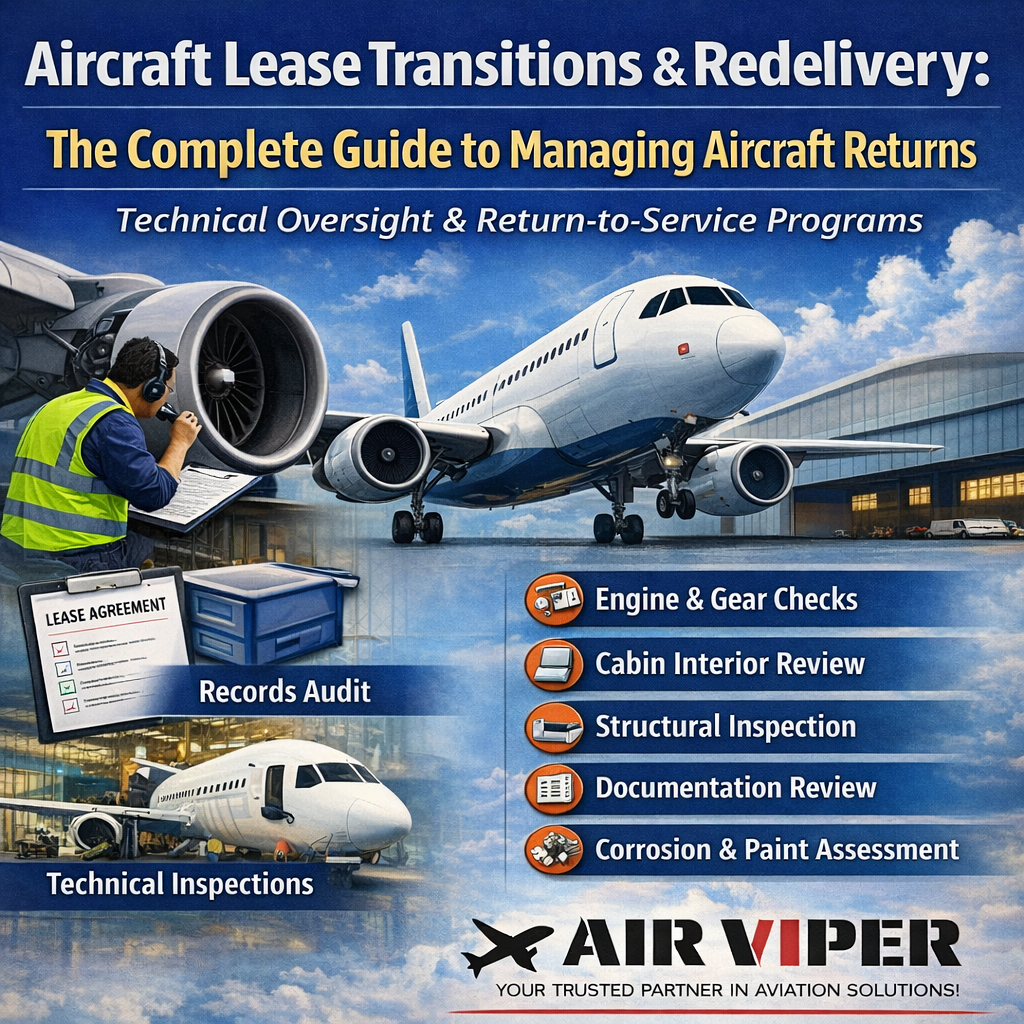
Aircraft leasing plays a central role in the global aviation industry. Today, a large percentage of the world’s commercial aircraft fleet operates under lease agreements rather than direct airline ownership. Leasing allows airlines to expand fleets, manage capital expenditure, and adjust capacity as market conditions change. However, the end of a lease introduces one of […]
Why Air Viper, LLC’s Active SAM.gov Registration Matters to Buyers
If you’re a government agency, prime contractor, or organization supporting federally funded aviation programs, working with a SAM.gov-registered supplier isn’t optional—it’s a requirement. Vendor eligibility, procurement compliance, and payment authorization all depend on verified registration within the System for Award Management (SAM). Air Viper, LLC is actively registered on SAM.gov, meaning we are fully eligible […]
What ASA-100 Certification Means — And Why It Matters When Choosing Air Viper, LLC
In aviation, trust is built on documentation, traceability, and proven quality systems. Whether sourcing aircraft engines, auxiliary power units (APUs), landing gear, or other regulated components, buyers must rely on suppliers who operate within recognized aviation standards. One of the most widely respected distribution quality standards in the aerospace industry is ASA-100 certification. Air Viper, […]
Engines, APUs & Landing Gear By Air Viper, LLC Your Trusted Partner For Aviation Solutions
Aircraft engines, auxiliary power units (APUs), and landing gear systems are among the most critical and tightly regulated assets in any aviation platform. For commercial operators and government buyers, these systems directly influence mission readiness, operational efficiency, safety performance, regulatory compliance, and lifecycle costs. Procuring and sustaining them requires technical accuracy, certified sourcing, and strict […]