Aircraft maintenance requires a constant and reliable supply of spare parts. From routine inspections to heavy maintenance checks, operators must ensure that the correct components are available at the right time and with proper certification. Without efficient spare parts sourcing, maintenance events can be delayed, aircraft availability can be reduced, and operational costs can increase significantly.
Aircraft operators therefore rely on structured procurement processes, global supplier networks, inventory planning, and technical oversight to source spare parts during maintenance. Whether the maintenance event is planned months in advance or triggered by an unexpected failure, spare parts sourcing plays a critical role in maintaining aircraft airworthiness and operational readiness.
Technical service providers such as Air Viper, LLC often assist operators by coordinating procurement, verifying documentation, and supporting maintenance teams during complex maintenance projects.
This article explains how aircraft operators source spare parts during maintenance and the systems used to ensure parts availability.
Understanding Aircraft Maintenance Parts Requirements
Before spare parts can be sourced, operators must first identify which components will be required during a maintenance event.
Aircraft maintenance programs are highly structured and include detailed inspection schedules. These schedules are based on manufacturer maintenance planning documents, regulatory requirements, and operational experience.
Maintenance checks typically fall into several categories:
- Line maintenance – routine inspections performed between flights
- A-checks – light scheduled maintenance performed regularly
- C-checks – heavy maintenance inspections requiring significant downtime
- D-checks – major structural inspections performed every several years
Each type of maintenance event requires a different level of spare parts preparation.
During maintenance planning, engineering and maintenance teams review the work scope and identify parts that will likely need replacement. These may include:
- Life-limited components approaching expiration
- Wear items such as seals, filters, and bearings
- Consumables like lubricants and hardware
- Rotable components expected to be exchanged
This planning stage allows procurement teams to begin sourcing parts well before the maintenance event begins.
Maintenance Planning and Parts Forecasting
Effective spare parts sourcing begins with accurate maintenance planning.
Maintenance planners analyze aircraft records and forecast which components may require replacement. Several data sources are used during this process:
- Aircraft maintenance tracking systems
- Component life limits
- Reliability reports
- Historical maintenance records
By reviewing these records, planners can anticipate which parts will likely be needed.
Forecasting helps reduce unexpected delays during maintenance because procurement teams can secure parts in advance.
For example, if a component is approaching its service life limit, planners may schedule its replacement during the upcoming maintenance check. Procurement teams can then begin sourcing that component before the aircraft enters the maintenance facility.
Independent technical services providers like Air Viper, LLC often assist operators by reviewing maintenance planning data and helping coordinate parts sourcing for major maintenance events.
Aircraft Spare Parts Procurement Process
Once maintenance planners identify required components, procurement teams begin the process of sourcing spare parts.
Aircraft parts procurement must follow strict regulatory requirements. Every part installed on an aircraft must meet airworthiness standards and include proper certification documentation.
The procurement process typically includes several steps.
Supplier Identification
Procurement teams first identify approved suppliers that carry the required component.
These suppliers may include:
- Original Equipment Manufacturers (OEMs)
- Authorized distributors
- Maintenance repair organizations (MROs)
- Aftermarket suppliers
Operators maintain approved supplier lists to ensure parts come from trusted sources.
Documentation Verification
Before purchasing a part, procurement teams verify that the component includes proper airworthiness documentation.
Common documentation includes:
- FAA Form 8130-3
- EASA Form 1
- Authorized Release Certificates
These documents certify that the component is airworthy and eligible for installation.
Condition Evaluation
Parts may be available in several conditions, including:
- New
- Serviceable
- Overhauled
- Repaired
Procurement teams evaluate the condition of each component and determine whether it meets maintenance requirements.
Pricing and Lead Time Evaluation
Procurement teams also evaluate supplier pricing and delivery timelines.
In many cases, operators must balance cost with availability. A less expensive part may not be available quickly enough to meet maintenance deadlines.
Technical representatives from organizations like Air Viper, LLC often assist operators by reviewing part documentation and verifying supplier credibility.
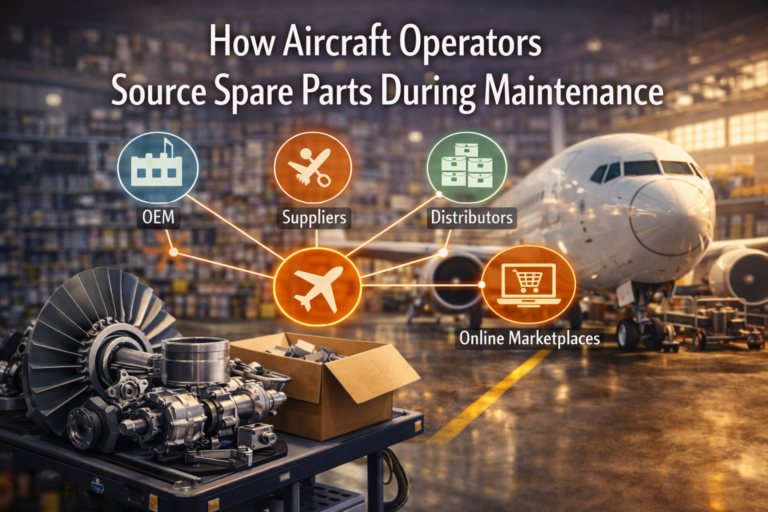
Common Sources of Aircraft Spare Parts
Aircraft operators source spare parts from a variety of suppliers around the world. Each source plays a specific role in the aviation supply chain.
Original Equipment Manufacturers
OEMs produce original components used in aircraft manufacturing.
Purchasing directly from OEMs ensures the highest level of traceability and quality assurance.
However, OEM parts are often the most expensive and may have longer lead times.
Authorized Distributors
Authorized distributors maintain inventories of OEM parts and can often deliver components more quickly than manufacturers.
These distributors act as intermediaries between OEMs and operators.
Aftermarket Suppliers
Aftermarket suppliers provide serviceable components that have been removed from aircraft and repaired or overhauled by certified maintenance organizations.
These parts are typically less expensive than new components while still meeting regulatory requirements.
Parts Pooling Providers
Some operators participate in parts pooling programs.
Pooling providers maintain large inventories of rotable components that multiple airlines can access.
This allows operators to reduce their own spare parts inventories while still maintaining access to critical components.
Technical services providers such as Air Viper, LLC often assist operators in evaluating sourcing options and selecting reliable suppliers.
Coordinating Spare Parts During Scheduled Maintenance
Scheduled maintenance events require careful coordination between multiple operational teams.
These teams may include:
- Airline maintenance planners
- Procurement specialists
- MRO facilities
- Technical representatives
- Logistics providers
The coordination process begins well before the aircraft arrives at the maintenance facility.
Pre-Maintenance Parts Preparation
Prior to the maintenance event, procurement teams source and stage the parts that are expected to be required.
These components are often shipped directly to the maintenance facility.
Having parts available at the start of the maintenance event helps reduce downtime.
Work Scope Adjustments
During maintenance, technicians may discover additional issues requiring replacement components.
When this occurs, procurement teams must quickly locate and source additional parts.
Documentation Control
Technical representatives verify that all installed components have proper documentation and traceability records.
Independent technical oversight from firms like Air Viper, LLC helps ensure compliance with regulatory requirements during maintenance.
Handling Unexpected Maintenance Findings
Even the most carefully planned maintenance events can reveal unexpected issues.
Technicians may discover worn components, corrosion, or damage that requires immediate repair.
When these findings occur, operators must quickly source replacement parts.
Procurement teams often rely on global supplier networks to locate components.
This process may involve:
- Contacting multiple suppliers
- Searching global inventory databases
- Requesting repair services for removed components
Rapid sourcing is essential to prevent maintenance delays.
Technical service providers such as Air Viper, LLC often assist operators by coordinating communications between maintenance teams and procurement specialists.
Logistics and Delivery of Aircraft Parts
Once a spare part has been sourced, logistics coordination becomes the next critical step.
Aircraft parts must be delivered safely and quickly to the maintenance location.
Logistics planning may involve several transportation methods:
- Commercial air freight
- Courier services
- Ground transportation
- Next-flight-out shipments
Some components require specialized shipping conditions.
For example, sensitive avionics equipment may require protective packaging and temperature control.
Operators must also ensure that shipping documentation is accurate and compliant with international customs regulations.
Effective logistics coordination helps ensure that parts arrive on time and in proper condition.
AOG Parts Sourcing During Maintenance
Aircraft on Ground (AOG) situations represent the most urgent spare parts sourcing scenario.
An AOG event occurs when an aircraft cannot operate due to a mechanical failure requiring immediate repair.
When an AOG occurs during maintenance, procurement teams must quickly locate the required component.
Global Inventory Searches
Procurement specialists search supplier databases and global inventory networks to find available parts.
Rapid Supplier Coordination
Once a component is located, procurement teams confirm availability and documentation with the supplier.
Emergency Logistics
High-priority shipments may require expedited delivery through next-flight-out services or dedicated courier transport.
Technical Verification
Even during urgent situations, technical representatives must verify that parts meet certification requirements before installation.
Companies such as Air Viper, LLC often support operators during AOG situations by coordinating procurement and verifying documentation.
Ensuring Compliance and Traceability
Aircraft spare parts sourcing must comply with strict regulatory standards.
Every installed component must be fully traceable to its manufacturing origin and maintenance history.
Procurement teams therefore maintain detailed records for every purchased component.
These records typically include:
- Certification documents
- Maintenance history
- Installation records
- Supplier information
Traceability is critical for regulatory compliance and aircraft safety.
If a component lacks proper documentation, it cannot be installed on the aircraft.
Technical service providers such as Air Viper, LLC frequently assist operators by reviewing documentation and ensuring parts meet regulatory requirements.
The Role of Technical Service Providers in Parts Sourcing
Many aircraft operators rely on independent technical service providers to support spare parts sourcing during maintenance.
These organizations provide specialized expertise in aircraft maintenance oversight, procurement coordination, and documentation verification.
Technical service providers may assist with:
- Maintenance planning support
- Supplier coordination
- Parts documentation review
- Logistics coordination
- Maintenance oversight
Independent representatives also provide an additional layer of quality assurance during maintenance events.
Companies such as Air Viper, LLC work with aircraft owners, leasing companies, and operators to coordinate materials support and ensure that spare parts sourcing processes meet industry standards.
Conclusion
Sourcing spare parts during aircraft maintenance is a complex process that requires coordination between maintenance teams, procurement specialists, suppliers, and logistics providers.
From forecasting maintenance requirements to verifying documentation and coordinating deliveries, operators must carefully manage every step of the spare parts sourcing process.
Efficient parts sourcing helps prevent maintenance delays, reduce aircraft downtime, and maintain regulatory compliance.
Independent technical service providers such as Air Viper, LLC support aircraft operators by coordinating procurement, verifying part documentation, and assisting with materials management during maintenance events.
As aviation fleets grow and maintenance programs become more complex, effective spare parts sourcing will remain essential for maintaining aircraft reliability and protecting asset value.
Contact Air Viper, LLC
Air Viper, LLC provides independent aircraft technical representation, maintenance oversight, aircraft records support, and lease transition services for aircraft owners, operators, and leasing companies. We help ensure aircraft maintenance events, inspections, and technical projects are completed correctly while protecting the long-term value of the asset.
To discuss your aircraft project, contact our team:
Phone: +1 (918) -524-9380
Email: [email protected]
Air Viper, LLC’s Founder

Forrest Ludwig is a dynamic entrepreneur with a passion for aviation parts supply, customer service, and business innovation. With a keen eye for efficiency and precision, he has dedicated his career to connecting operators, MROs, and aviation professionals with the right parts at the right time—minimizing downtime and maximizing operational success.
A true believer in customer-first solutions, Forrest has built a reputation for delivering exceptional service, transparency, and reliability in the aviation industry. His expertise spans aviation parts sourcing, logistics, supply chain optimization, and aircraft sales & leasing, ensuring clients receive cost-effective and high-quality solutions tailored to their needs.
With a forward-thinking approach and a commitment to excellence, Forrest continues to revolutionize aviation parts supply by streamlining processes, enhancing customer experience, and creating innovative solutions for a rapidly evolving industry.
Passionate about aviation. Dedicated to service. Committed to keeping fleets in the air.
Learn More About The Rest Of Our Team!
Why Airlines, Lessors, and MROs Choose Air Viper, LLC
Air Viper, LLC provides aviation parts sourcing, aircraft inspection services, and aircraft transaction support for operators worldwide. Customers work with Air Viper, LLC because the company focuses on efficiency, reliability, and industry expertise.
1. Global Aircraft Parts Sourcing
Air Viper, LLC helps operators locate aircraft components through an international supplier network, including hard-to-find parts.
2. Efficient Direct Shipping
Components can be shipped directly to customers using their preferred courier, reducing handling time and delivery delays.
3. Access to Critical Aircraft Components
Air Viper, LLC assists with sourcing major components such as aircraft engines, auxiliary power units (APUs), and landing gear.
4. Global Supplier Network
Through relationships with aviation suppliers worldwide, Air Viper, LLC helps customers access inventory across multiple markets.
5. Aircraft and Engine Inspection Services
Air Viper, LLC provides on-site aircraft and engine inspection support for aircraft purchases, lease transitions, and technical evaluations.
6. Aircraft Sales and Leasing Support
Air Viper, LLC connects buyers, sellers, and lessors to help facilitate aircraft sales and leasing opportunities.
7. Aviation Logistics Coordination
Air Viper, LLC helps coordinate the logistics of aircraft components, simplifying the procurement and delivery process.
8. Aviation Industry Experience
With experience in aviation parts sourcing, logistics, and aircraft inspections, Air Viper, LLC understands the operational needs of airlines, lessors, and maintenance organizations.
9. Faster Response for Time-Sensitive Needs
When aircraft operators need parts or inspection support quickly, Air Viper, LLC focuses on providing efficient responses and sourcing solutions.
10. Supporting Aircraft Operations Worldwide
Air Viper, LLC works with aviation operators around the world to help support safe and efficient aircraft operations.