
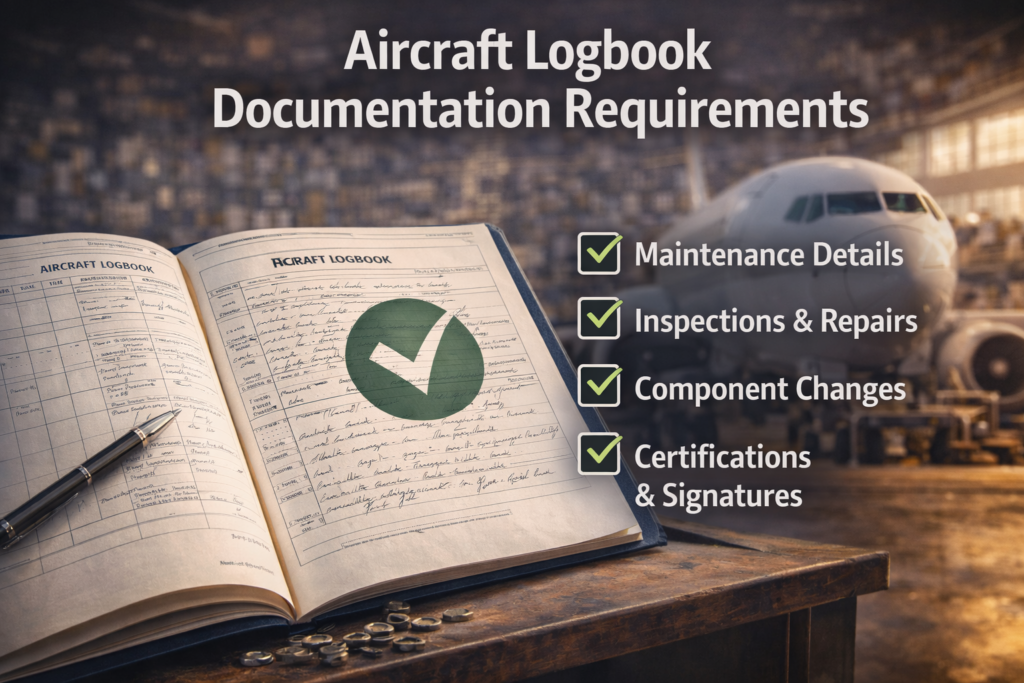
Aircraft logbooks are among the most critical documents associated with any aircraft. They provide the official historical record of an aircraft’s maintenance, inspections, modifications, and operational status. For regulators, aircraft owners, buyers, leasing companies, and maintenance providers, the logbooks serve as the primary source of verification that the aircraft complies with airworthiness standards and regulatory requirements.
Without complete and properly documented logbooks, an aircraft’s airworthiness status can be called into question. Missing or inaccurate entries can lead to regulatory complications, delays during aircraft sales or lease transitions, and significant reductions in asset value.
Because of their importance, aircraft logbooks must be maintained in strict accordance with aviation regulations and industry best practices. Proper documentation ensures that the aircraft’s maintenance history is traceable, verifiable, and compliant with applicable regulatory authorities.
This article explains the essential aircraft logbook documentation requirements, common logbook entries, and best practices for maintaining complete and accurate records. It also discusses how aviation technical services providers such as Air Viper, LLC support aircraft owners in maintaining organized and compliant aircraft documentation.
What Are Aircraft Logbooks?
Aircraft logbooks are the official record of an aircraft’s technical history. These logbooks document the aircraft’s maintenance activities, inspections, repairs, modifications, and operational hours over the life of the aircraft.
Most aircraft documentation systems include several different logbooks, typically covering:
- Airframe logbooks
- Engine logbooks
- Propeller logbooks (if applicable)
- Auxiliary Power Unit (APU) logbooks
- Component tracking records
Each logbook records maintenance activities specific to that part of the aircraft system.
These records are used by:
- Aviation regulatory authorities
- Aircraft owners and operators
- Maintenance repair organizations (MROs)
- Aircraft buyers and leasing companies
- Technical auditors
Maintaining accurate and complete logbooks is therefore essential to demonstrating the aircraft’s airworthiness and regulatory compliance.
Regulatory Requirements for Aircraft Logbooks
Aircraft logbook documentation requirements are defined by aviation authorities such as the Federal Aviation Administration (FAA), the European Union Aviation Safety Agency (EASA), and other global regulators.
While specific regulatory language varies by jurisdiction, the fundamental requirement is that aircraft maintenance and inspection activities must be properly recorded and traceable.
Typical regulatory requirements include documenting:
- All maintenance performed on the aircraft
- Inspection results and approvals for return to service
- Airworthiness directive compliance
- Major repairs and alterations
- Replacement of life-limited components
- Time in service for the aircraft and major components
Maintenance personnel performing work on the aircraft must record these activities in the aircraft logbooks along with their certification credentials.
Failure to properly document maintenance activities can result in regulatory violations and may require records reconstruction to restore compliance.
Types of Aircraft Logbooks
Aircraft records systems typically contain several types of logbooks, each serving a different purpose.
Airframe Logbooks
The airframe logbook documents maintenance and inspections related to the aircraft’s structural components and systems.
Typical airframe logbook entries include:
- Routine inspections
- Structural repairs
- Modification installations
- Landing gear maintenance
- Airframe component replacements
The airframe logbook also records the aircraft’s total time in service, which is a key metric used for maintenance planning.
Engine Logbooks
Engine logbooks record maintenance and operational history for each engine installed on the aircraft.
These logbooks typically document:
- Engine operating hours and cycles
- Engine inspections and overhauls
- Component replacements
- Service bulletin compliance
- Major engine repairs
Accurate engine logbook documentation is particularly important because engine maintenance history significantly affects aircraft value and operating costs.
Propeller Logbooks
For aircraft equipped with propellers, propeller logbooks document the maintenance and operational history of each propeller system.
Entries may include:
- Propeller inspections
- Overhaul events
- Blade repairs or replacements
- Component installations
Maintaining accurate propeller logbooks helps ensure safe operation and compliance with manufacturer maintenance requirements.
Auxiliary Power Unit (APU) Logbooks
Many aircraft are equipped with an auxiliary power unit used to provide electrical power and air conditioning when the aircraft is on the ground.
APU logbooks track:
- Operating hours
- Maintenance events
- Component replacements
- Inspections and repairs
Because APUs operate independently of the main engines, their maintenance history must be tracked separately.
Required Information in Logbook Entries
Every logbook entry must contain specific information to meet regulatory documentation requirements.
Typical logbook entries include:
- Description of maintenance performed
- Date the work was completed
- Aircraft total time in service
- Identification of replaced components
- Reference to maintenance manuals or procedures used
- Signature of the authorized maintenance technician
- Certificate number of the technician performing the work
This information ensures that maintenance activities are fully traceable and verifiable.
Incomplete or unclear logbook entries can create compliance issues and may require clarification or additional documentation.
Technical records specialists, including those working with Air Viper, LLC, often assist aircraft owners in reviewing logbook entries to ensure they meet documentation standards.
Recording Inspections and Return to Service
Aircraft inspections must be documented in the logbooks along with a statement confirming the aircraft’s airworthiness status.
When maintenance or inspections are completed, the responsible technician must include a return-to-service statement confirming that the aircraft is approved for operation.
This statement typically includes language indicating that the work was completed in accordance with applicable regulations and maintenance procedures.
Without this approval, the aircraft may not be considered legally airworthy.
Ensuring proper inspection documentation is therefore one of the most critical aspects of aircraft logbook maintenance.
Documenting Major Repairs and Alterations
Major repairs and alterations must be carefully documented within the aircraft records.
These modifications may involve structural repairs, avionics upgrades, or other significant changes to the aircraft configuration.
Documentation typically includes:
- Engineering approval documentation
- Supplemental Type Certificates (STCs)
- Installation records
- Inspection and certification statements
These records are often stored alongside logbook entries and must clearly reference the work performed.
During aircraft sales or lease transactions, buyers often review these records closely to confirm that modifications were performed in accordance with regulatory requirements.
Independent aviation technical services providers such as Air Viper, LLC often assist aircraft owners in organizing documentation related to major repairs and alterations.
Tracking Time in Service
Accurate tracking of time in service is essential for maintenance planning and regulatory compliance.
Logbooks must record operating hours and cycles for:
- The aircraft airframe
- Engines
- Propellers
- APUs
- Life-limited components
Maintenance intervals are often based on operating hours or flight cycles, making accurate time tracking essential.
Discrepancies in time tracking can create significant complications during aircraft technical audits or transactions.
Maintaining Legibility and Permanence
Aircraft logbook entries must be legible and permanent. Regulatory guidance generally requires that entries be recorded in ink or permanent digital formats that cannot be easily altered.
Entries should be clear, detailed, and easy to read.
Illegible handwriting, unclear descriptions, or incomplete entries can create challenges during regulatory inspections or aircraft transactions.
Modern aviation records systems increasingly rely on digital documentation systems that improve legibility and accessibility.
Organizations such as Air Viper, LLC often assist aircraft owners in transitioning from traditional paper logbooks to structured digital records management systems.
Preventing Missing Logbooks
One of the most serious documentation issues in aviation is missing aircraft logbooks.
Missing logbooks can significantly reduce the value of an aircraft because buyers cannot verify the maintenance history.
If logbooks are lost or incomplete, records reconstruction may be required. This process involves collecting maintenance documentation from various sources to rebuild the aircraft’s maintenance history.
Records reconstruction can be time-consuming and expensive, making proper logbook management extremely important.
Digital Logbook Management
Many aircraft owners are transitioning toward digital logbook management systems that allow maintenance records to be stored electronically.
Digital systems offer several advantages, including:
- Faster document retrieval
- Improved organization
- Secure data storage
- Easier sharing during aircraft transactions
- Protection against physical document loss
However, digital records systems must still meet regulatory requirements for maintenance documentation.
Aviation technical services firms such as Air Viper, LLC often assist aircraft owners with digitizing logbooks and implementing secure digital records management systems.
Preparing Logbooks for Aircraft Transactions
Aircraft logbooks are one of the first areas reviewed during aircraft sales or lease transactions.
Buyers and lessors will examine logbooks to verify:
- Maintenance history
- Inspection compliance
- Airworthiness directive compliance
- Major repair documentation
- Aircraft operating hours
Incomplete or poorly organized logbooks can delay transactions or reduce aircraft valuation.
Preparing logbooks in advance of a transaction ensures that documentation is complete, organized, and ready for technical due diligence review.
Technical services providers such as Air Viper, LLC often assist aircraft owners in preparing logbooks and supporting documentation before aircraft sales or lease placements.
Conclusion
Aircraft logbooks serve as the official historical record of an aircraft’s maintenance and operational history. Maintaining complete and accurate logbook documentation is essential for regulatory compliance, safe aircraft operation, and preserving aircraft value.
Proper logbook management includes recording all maintenance activities, inspections, component replacements, and modifications in accordance with regulatory documentation requirements.
Clear, organized logbooks not only support ongoing maintenance oversight but also play a critical role during aircraft sales, lease transitions, and regulatory inspections.
Professional aviation technical services providers such as Air Viper, LLC assist aircraft owners in maintaining organized aircraft records, verifying logbook documentation, and preparing records for technical audits or aircraft transactions. Through proper documentation practices and structured records management, aircraft owners can ensure that their aircraft remain compliant, traceable, and ready for the next stage of their operational lifecycle.
Contact Air Viper, LLC
Air Viper, LLC provides independent aircraft technical representation, maintenance oversight, aircraft records support, and lease transition services for aircraft owners, operators, and leasing companies. We help ensure aircraft maintenance events, inspections, and technical projects are completed correctly while protecting the long-term value of the asset.
To discuss your aircraft project, contact our team:
Phone: +1 (918) -524-9380
Email: [email protected]
Air Viper, LLC’s Founder

Forrest Ludwig is a dynamic entrepreneur with a passion for aviation parts supply, customer service, and business innovation. With a keen eye for efficiency and precision, he has dedicated his career to connecting operators, MROs, and aviation professionals with the right parts at the right time—minimizing downtime and maximizing operational success.
A true believer in customer-first solutions, Forrest has built a reputation for delivering exceptional service, transparency, and reliability in the aviation industry. His expertise spans aviation parts sourcing, logistics, supply chain optimization, and aircraft sales & leasing, ensuring clients receive cost-effective and high-quality solutions tailored to their needs.
With a forward-thinking approach and a commitment to excellence, Forrest continues to revolutionize aviation parts supply by streamlining processes, enhancing customer experience, and creating innovative solutions for a rapidly evolving industry.
Passionate about aviation. Dedicated to service. Committed to keeping fleets in the air.
Learn More About The Rest Of Our Team!
Why Airlines, Lessors, and MROs Choose Air Viper, LLC
Air Viper, LLC provides aviation parts sourcing, aircraft inspection services, and aircraft transaction support for operators worldwide. Customers work with Air Viper, LLC because the company focuses on efficiency, reliability, and industry expertise.
1. Global Aircraft Parts Sourcing
Air Viper, LLC helps operators locate aircraft components through an international supplier network, including hard-to-find parts.
2. Efficient Direct Shipping
Components can be shipped directly to customers using their preferred courier, reducing handling time and delivery delays.
3. Access to Critical Aircraft Components
Air Viper, LLC assists with sourcing major components such as aircraft engines, auxiliary power units (APUs), and landing gear.
4. Global Supplier Network
Through relationships with aviation suppliers worldwide, Air Viper, LLC helps customers access inventory across multiple markets.
5. Aircraft and Engine Inspection Services
Air Viper, LLC provides on-site aircraft and engine inspection support for aircraft purchases, lease transitions, and technical evaluations.
6. Aircraft Sales and Leasing Support
Air Viper, LLC connects buyers, sellers, and lessors to help facilitate aircraft sales and leasing opportunities.
7. Aviation Logistics Coordination
Air Viper, LLC helps coordinate the logistics of aircraft components, simplifying the procurement and delivery process.
8. Aviation Industry Experience
With experience in aviation parts sourcing, logistics, and aircraft inspections, Air Viper, LLC understands the operational needs of airlines, lessors, and maintenance organizations.
9. Faster Response for Time-Sensitive Needs
When aircraft operators need parts or inspection support quickly, Air Viper, LLC focuses on providing efficient responses and sourcing solutions.
10. Supporting Aircraft Operations Worldwide
Air Viper, LLC works with aviation operators around the world to help support safe and efficient aircraft operations.