
Aircraft technical records are one of the most critical components of aviation asset management. While the physical condition of an aircraft is obviously important, the documentation that proves the aircraft’s maintenance history, configuration status, and regulatory compliance is equally vital.
Aircraft records determine whether an aircraft can legally operate, whether it complies with regulatory requirements, and whether it retains its full financial value in the market. In many cases, incomplete or inaccurate records can delay aircraft transactions, reduce asset value, or require costly reconstruction efforts.
For aircraft owners, operators, and leasing companies, effective records management and compliance oversight is essential throughout the entire lifecycle of the aircraft.
Technical services providers such as Air Viper LLC assist aviation stakeholders with aircraft records reviews, compliance verification, and documentation preparation to help ensure that aircraft records remain complete, organized, and transaction-ready.
Why Aircraft Records Management Matters for Asset Value
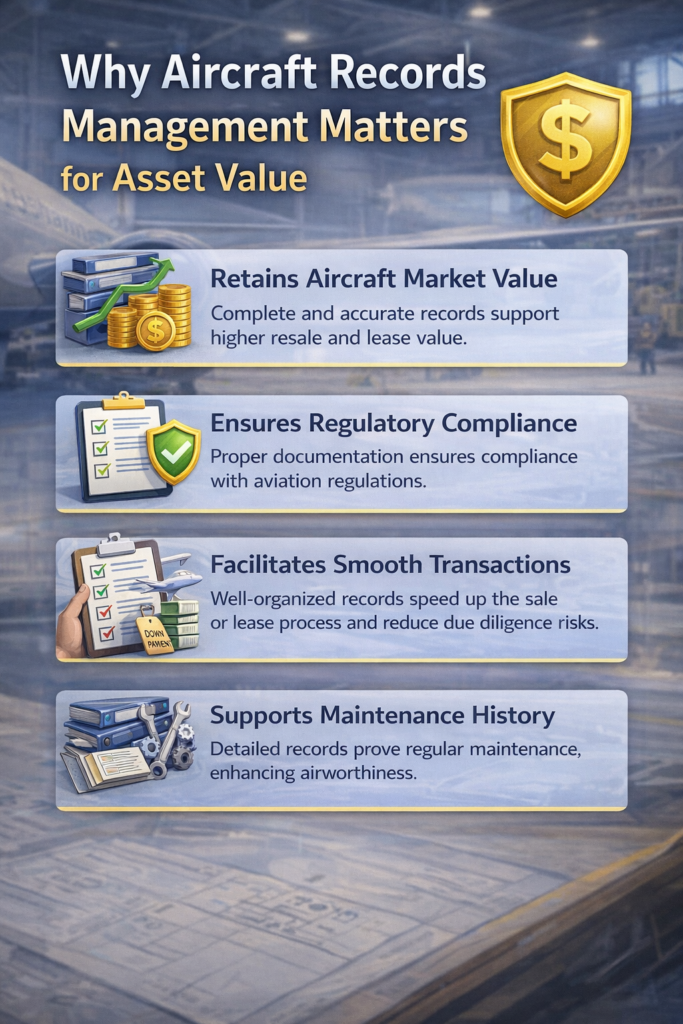
Aircraft technical records are essentially the legal and technical history of the aircraft. They document every major maintenance action, inspection, modification, and operational milestone that has occurred throughout the aircraft’s life.
For aircraft owners and lessors, these records play a direct role in protecting asset value.
Proof of Airworthiness
Aviation regulators require aircraft operators to maintain complete and accurate records to demonstrate continued airworthiness. These records confirm that required inspections, maintenance tasks, and regulatory directives have been completed.
Without this documentation, an aircraft may not be able to legally operate.
Verification of Maintenance History
Aircraft buyers, leasing companies, and financial institutions rely on records to verify that the aircraft has been properly maintained according to approved maintenance programs.
Well-organized records provide confidence that the aircraft has been maintained in accordance with regulatory and manufacturer standards.
Protection of Financial Value
Aircraft transactions can involve tens or even hundreds of millions of dollars. Missing or incomplete records can significantly impact the value of the aircraft because buyers may be forced to assume technical uncertainty or invest in costly records reconstruction.
For this reason, aviation stakeholders often perform detailed records audits during transactions.
Organizations such as Air Viper LLC support aircraft owners by assisting with technical records reviews that help maintain documentation quality and readiness for inspections or transactions.
What Aircraft Technical Records Buyers Expect to See
When an aircraft is sold, leased, or transferred between operators, buyers and lessors conduct detailed reviews of the aircraft’s records.
These reviews confirm that the aircraft has been maintained correctly and that its technical history is fully documented.
Maintenance Records
Buyers expect to see detailed documentation of all scheduled and unscheduled maintenance performed on the aircraft. This includes:
- Line maintenance activities
- Heavy maintenance checks
- Structural inspections
- Component replacements
Each maintenance event must be properly recorded and certified.
Airworthiness Directive Compliance
Airworthiness Directives (ADs) issued by aviation authorities must be complied with within specified timelines. Records must demonstrate that these directives have been completed and properly documented.
Component Life Tracking
Many aircraft components have defined life limits or overhaul intervals. Buyers expect to see accurate tracking of these components to confirm that they remain within allowable limits.
Modification Records
Aircraft often undergo modifications during their operational life. Buyers review documentation confirming that modifications were installed in accordance with approved engineering data.
Aircraft Configuration Documentation
The aircraft’s configuration—including avionics, cabin layout, and installed systems—must match the documentation contained in the records.
Technical services providers like Air Viper LLC assist aircraft owners in organizing and reviewing these records prior to aircraft transactions.
Aircraft Records Audits Explained
An aircraft records audit is a systematic review of an aircraft’s technical documentation to verify completeness, accuracy, and regulatory compliance.
Records audits are commonly conducted during:
- Aircraft acquisitions
- Aircraft lease transitions
- Aircraft redeliveries
- Aircraft financing transactions
- Pre-purchase inspections
Objectives of a Records Audit
The goal of a records audit is to identify discrepancies or missing documentation before they become operational or financial issues.
Audits typically focus on verifying:
- Maintenance compliance
- Airworthiness directive compliance
- Component life status
- Modification documentation
- Aircraft configuration records
Identifying Documentation Gaps
Records audits often uncover missing paperwork, incomplete logbook entries, or discrepancies between maintenance records and aircraft configuration.
These issues must usually be resolved before an aircraft can be sold or transferred.
Supporting Technical Due Diligence
Aircraft investors and leasing companies rely heavily on records audits as part of their due diligence process.
Independent technical services firms such as Air Viper LLC assist aviation stakeholders by performing records reviews and identifying potential documentation gaps.
Digital Aircraft Records Management Best Practices
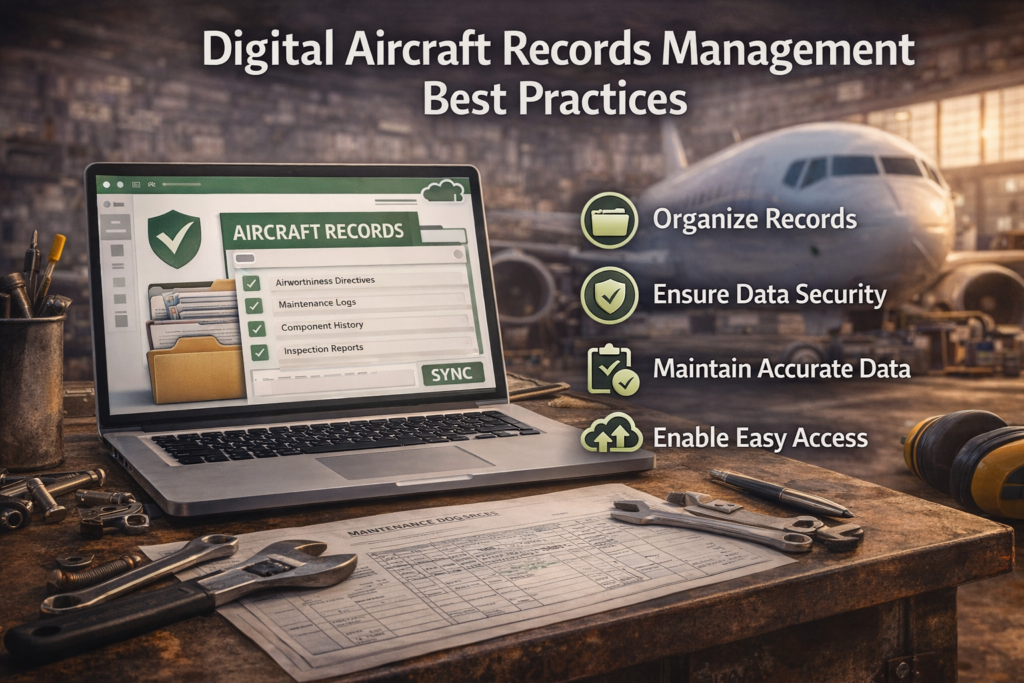
Modern aviation increasingly relies on digital records management systems to store and organize aircraft documentation.
While paper records were historically the standard, digital systems now offer significant advantages.
Centralized Documentation Storage
Digital platforms allow operators to store all aircraft records in centralized databases, making it easier to locate and review documentation.
Improved Accessibility
Technical teams, engineers, and aircraft owners can access digital records remotely, which is especially valuable when aircraft operate in multiple locations.
Reduced Risk of Document Loss
Paper records can be damaged, misplaced, or lost over time. Digital storage reduces the risk of losing critical documentation.
Version Control and Updates
Digital records systems allow updates to be tracked and documented more effectively than traditional paper-based systems.
Despite the benefits of digital records systems, careful management is still required to ensure that documentation remains complete and properly organized.
Technical service providers such as Air Viper LLC can assist aircraft owners with reviewing and organizing digital records to ensure they meet regulatory and transaction requirements.
Preparing Aircraft Records for Sale or Lease
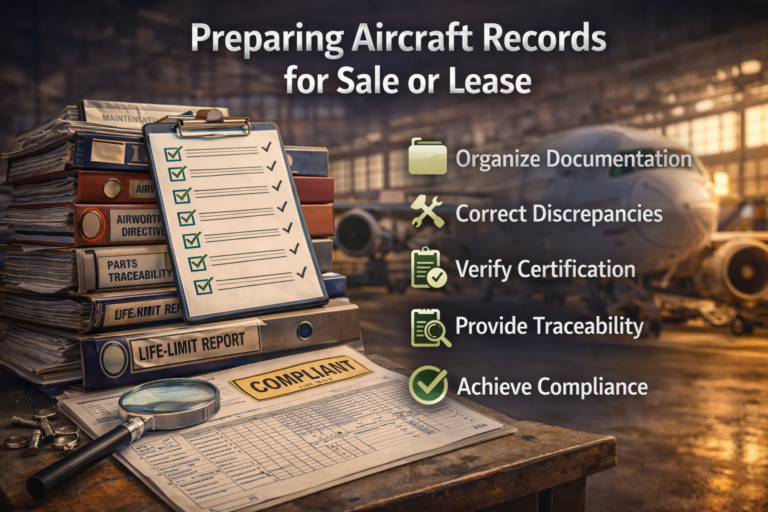
When aircraft are prepared for sale or lease placement, the condition of the aircraft’s records becomes extremely important.
Incomplete documentation can delay or even prevent a transaction.
Records Organization
Before marketing an aircraft for sale, owners typically review the organization of their records to ensure that documentation is easy for potential buyers to review.
Maintenance Status Verification
Aircraft records must clearly demonstrate the aircraft’s maintenance status, including upcoming maintenance requirements.
Compliance Verification
Records must show that all applicable regulatory requirements and maintenance program requirements have been met.
Documentation of Major Maintenance Events
Major maintenance checks such as C-checks or structural inspections must be clearly documented with supporting paperwork.
Companies like Air Viper LLC assist aircraft owners in preparing technical documentation and reviewing records before aircraft transactions.
Aircraft Logbook Documentation Requirements
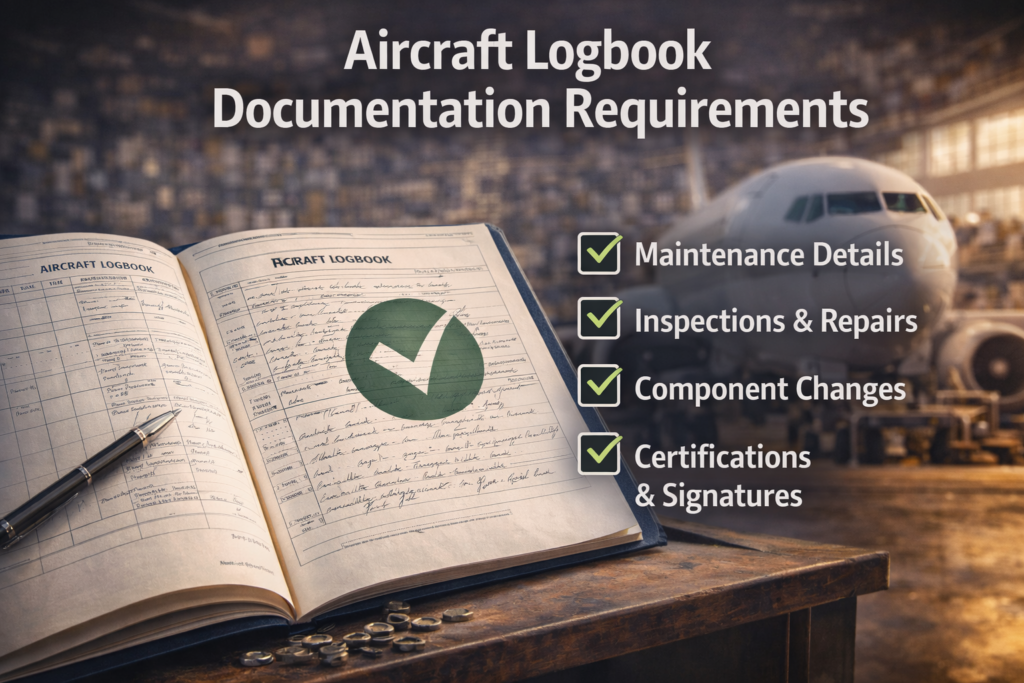
Aircraft logbooks are a central component of the aircraft’s records system. These logbooks provide a chronological history of maintenance actions performed on the aircraft.
Typical aircraft logbooks include:
- Airframe logbooks
- Engine logbooks
- Auxiliary power unit (APU) logbooks
- Propeller logbooks (where applicable)
Maintenance Entries
Each maintenance action must be recorded with sufficient detail to identify the work performed and the certification of the person or organization performing the work.
Inspection Documentation
Required inspections must be recorded in the logbooks to demonstrate continued airworthiness.
Component Installations and Removals
Logbooks often record the installation and removal of major components, ensuring that the aircraft’s configuration history remains traceable.
Accurate logbook documentation is essential for maintaining aircraft airworthiness and supporting aircraft transactions.
Common Aircraft Records Problems That Delay Transactions
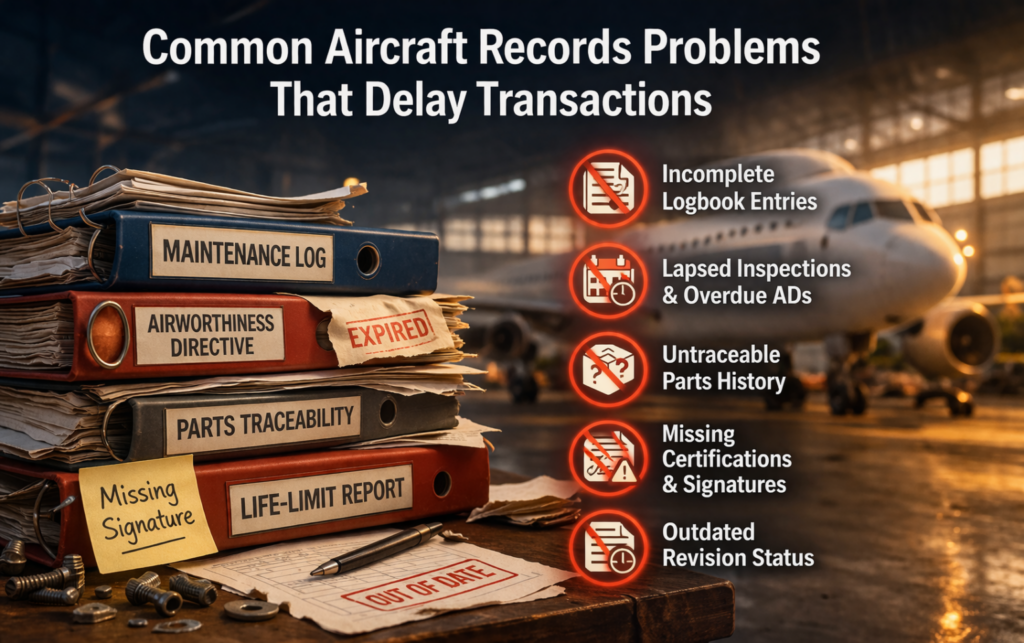
Aircraft records issues are one of the most common causes of delays during aircraft sales, leasing transactions, or redeliveries.
Some of the most frequent problems include:
Missing Documentation
Missing maintenance records or incomplete logbook entries can create uncertainty regarding the aircraft’s maintenance history.
Inconsistent Records
Discrepancies between different record sources—such as logbooks and digital systems—can raise questions during records audits.
Incomplete Airworthiness Directive Tracking
If compliance with airworthiness directives cannot be verified, additional research or maintenance work may be required.
Configuration Mismatches
If the aircraft’s physical configuration does not match the records, corrective documentation or engineering approvals may be needed.
These types of issues can delay aircraft transactions while records are reviewed and corrected.
Independent technical services providers such as Air Viper LLC help identify and resolve records issues before they impact aircraft transactions.
Aircraft Maintenance Records Compliance Checklist
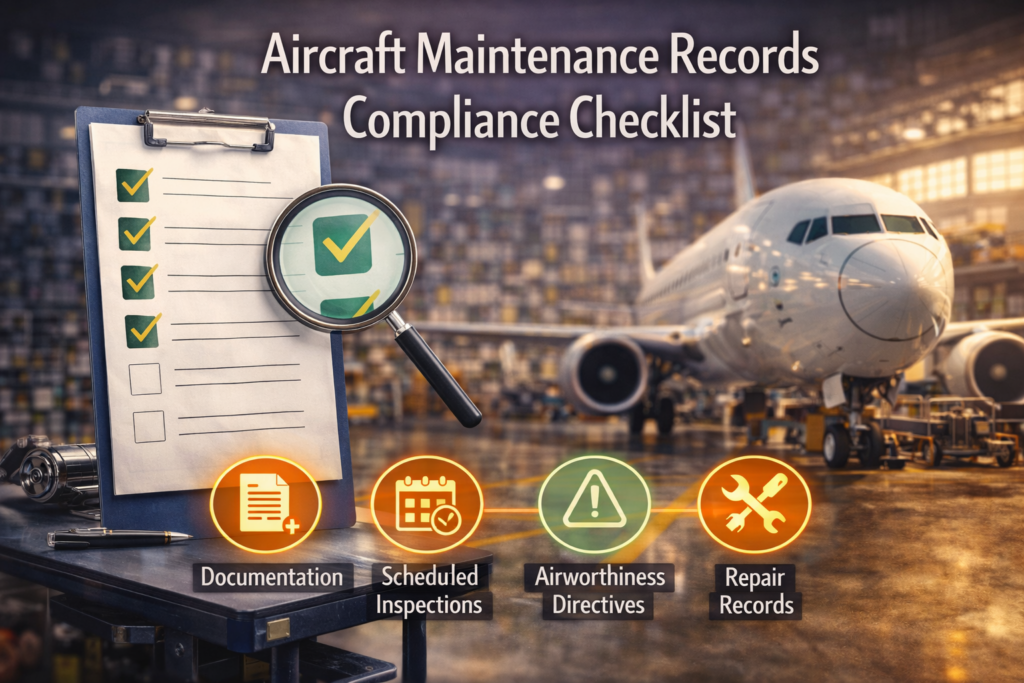
Maintaining compliant aircraft records requires consistent oversight and organization.
Aircraft owners and operators often rely on structured compliance checklists to ensure that records remain complete.
A typical aircraft records compliance checklist may include verifying:
- Aircraft logbooks are complete and up to date
- Maintenance program compliance is documented
- Airworthiness directives are fully tracked
- Component life limits are accurately recorded
- Modification documentation is properly filed
- Major maintenance events are fully documented
- Aircraft configuration records match the physical aircraft
- Records are organized for audit or transaction review
Regular reviews of aircraft records help prevent documentation gaps from accumulating over time.
Technical services providers such as Air Viper LLC assist aircraft owners and leasing companies with records reviews and compliance verification to support long-term asset management.
Contact Air Viper, LLC
Air Viper, LLC provides independent aircraft technical representation, maintenance oversight, aircraft records support, and lease transition services for aircraft owners, operators, and leasing companies. We help ensure aircraft maintenance events, inspections, and technical projects are completed correctly while protecting the long-term value of the asset.
To discuss your aircraft project, contact our team:
Phone: +1 (918) -524-9380
Email: [email protected]
Air Viper, LLC’s Founder

Forrest Ludwig is a dynamic entrepreneur with a passion for aviation parts supply, customer service, and business innovation. With a keen eye for efficiency and precision, he has dedicated his career to connecting operators, MROs, and aviation professionals with the right parts at the right time—minimizing downtime and maximizing operational success.
A true believer in customer-first solutions, Forrest has built a reputation for delivering exceptional service, transparency, and reliability in the aviation industry. His expertise spans aviation parts sourcing, logistics, supply chain optimization, and aircraft sales & leasing, ensuring clients receive cost-effective and high-quality solutions tailored to their needs.
With a forward-thinking approach and a commitment to excellence, Forrest continues to revolutionize aviation parts supply by streamlining processes, enhancing customer experience, and creating innovative solutions for a rapidly evolving industry.
Passionate about aviation. Dedicated to service. Committed to keeping fleets in the air.
Learn More About The Rest Of Our Team!
Why Airlines, Lessors, and MROs Choose Air Viper, LLC
Air Viper, LLC provides aviation parts sourcing, aircraft inspection services, and aircraft transaction support for operators worldwide. Customers work with Air Viper, LLC because the company focuses on efficiency, reliability, and industry expertise.
1. Global Aircraft Parts Sourcing
Air Viper, LLC helps operators locate aircraft components through an international supplier network, including hard-to-find parts.
2. Efficient Direct Shipping
Components can be shipped directly to customers using their preferred courier, reducing handling time and delivery delays.
3. Access to Critical Aircraft Components
Air Viper, LLC assists with sourcing major components such as aircraft engines, auxiliary power units (APUs), and landing gear.
4. Global Supplier Network
Through relationships with aviation suppliers worldwide, Air Viper, LLC helps customers access inventory across multiple markets.
5. Aircraft and Engine Inspection Services
Air Viper, LLC provides on-site aircraft and engine inspection support for aircraft purchases, lease transitions, and technical evaluations.
6. Aircraft Sales and Leasing Support
Air Viper, LLC connects buyers, sellers, and lessors to help facilitate aircraft sales and leasing opportunities.
7. Aviation Logistics Coordination
Air Viper, LLC helps coordinate the logistics of aircraft components, simplifying the procurement and delivery process.
8. Aviation Industry Experience
With experience in aviation parts sourcing, logistics, and aircraft inspections, Air Viper, LLC understands the operational needs of airlines, lessors, and maintenance organizations.
9. Faster Response for Time-Sensitive Needs
When aircraft operators need parts or inspection support quickly, Air Viper, LLC focuses on providing efficient responses and sourcing solutions.
10. Supporting Aircraft Operations Worldwide
Air Viper, LLC works with aviation operators around the world to help support safe and efficient aircraft operations.