
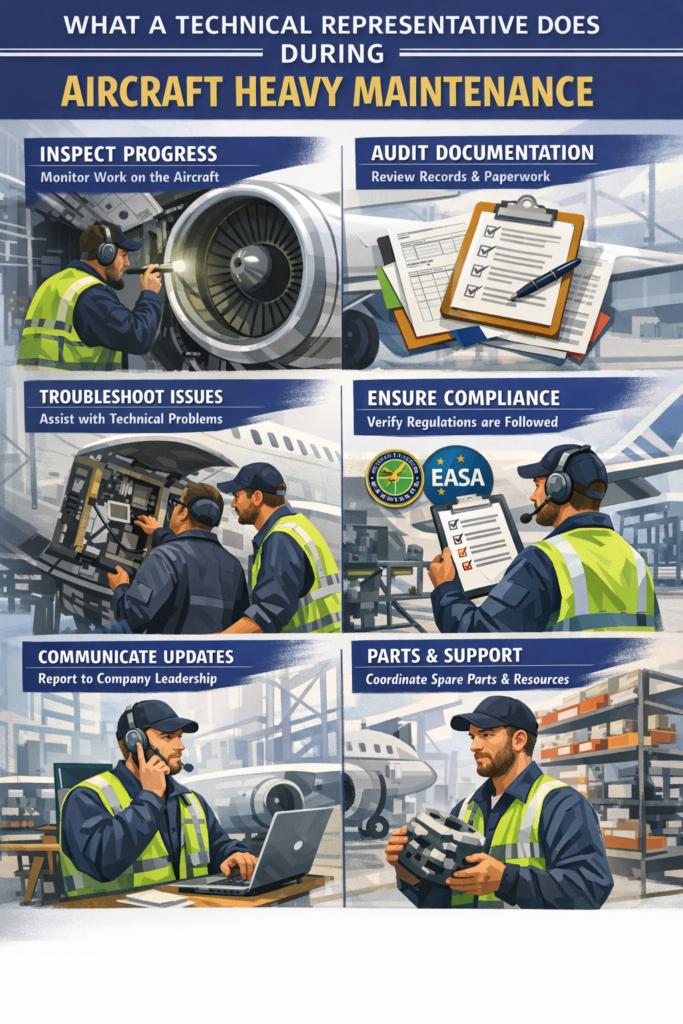
Aircraft heavy maintenance events are among the most complex and resource-intensive activities in aviation. These checks involve deep inspections, structural examinations, system testing, component replacements, and extensive documentation review. Because of the scale and technical complexity involved, airlines, lessors, and aircraft owners often rely on technical representatives to oversee the process and ensure that maintenance work is performed correctly, efficiently, and in accordance with regulatory and contractual requirements.
Technical representatives act as the eyes and ears of the aircraft owner or operator during heavy maintenance visits. They monitor work progress, verify compliance with maintenance programs, manage communication between multiple parties, and protect the financial and technical interests of the aircraft stakeholder.
Organizations such as Air Viper LLC provide experienced aviation technical representatives who support operators, lessors, and asset managers throughout major maintenance events, helping ensure aircraft return to service safely and on schedule.
Understanding Aircraft Heavy Maintenance
Heavy maintenance checks occur at scheduled intervals during an aircraft’s lifecycle. These checks are more extensive than routine line maintenance and typically involve taking the aircraft out of service for an extended period.
Types of Heavy Maintenance Checks
Heavy maintenance can include several categories of inspections:
C Checks
C checks typically occur every 18–24 months and require the aircraft to be removed from service for several days to weeks.
D Checks (Heavy Structural Checks)
A D check is the most comprehensive type of aircraft maintenance and usually occurs every 6–10 years depending on aircraft type and maintenance program.
During these checks, technicians may:
- Remove major aircraft components
- Inspect structural areas
- Test aircraft systems
- Repair corrosion or fatigue damage
- Replace time-limited parts
- Perform modifications or service bulletins
Because these maintenance events involve thousands of individual tasks, strong technical oversight is critical.
The Role of a Technical Representative
A technical representative serves as the liaison between the aircraft owner, airline operator, maintenance organization, and other stakeholders involved in the heavy maintenance event.
Their role focuses on three primary objectives:
- Ensuring maintenance work meets required standards
- Protecting the aircraft asset value
- Keeping the project on schedule and within scope
Technical representatives provide independent oversight during maintenance events and help verify that work performed aligns with regulatory requirements, maintenance programs, and lease conditions.
Air Viper LLC provides technical representatives who work directly with maintenance teams and stakeholders to help monitor these complex maintenance events.
Pre-Maintenance Planning and Preparation
A technical representative’s involvement often begins before the aircraft enters the maintenance facility.
Reviewing the Maintenance Work Scope
Prior to induction into heavy maintenance, the technical representative reviews the planned work package to understand the scope of tasks scheduled during the visit.
This includes evaluating:
- Scheduled maintenance checks
- Service bulletins
- Airworthiness directives
- Structural inspections
- Component replacements
- Modification programs
By reviewing the maintenance plan early, technical representatives can identify potential risks or scheduling challenges.
Coordinating With Maintenance Facilities
Technical representatives also participate in coordination meetings with the maintenance repair organization (MRO) performing the work.
These meetings help establish:
- Project timelines
- Work milestones
- Inspection schedules
- Reporting procedures
Effective planning reduces the likelihood of delays once the aircraft enters the maintenance facility.
Oversight During Aircraft Induction
The aircraft induction phase marks the start of the heavy maintenance event.
During this stage, the aircraft is formally transferred into the maintenance facility and the initial inspection process begins.
Verifying Aircraft Condition
Technical representatives may participate in or observe the aircraft arrival inspection, which confirms the aircraft’s physical condition and maintenance status.
Key checks may include:
- Exterior aircraft condition
- Cabin configuration
- Installed components
- Aircraft documentation
This baseline assessment provides a reference point for the maintenance work that follows.
Confirming Documentation and Records
Aircraft records are critical during heavy maintenance events.
Technical representatives verify that documentation such as:
- Maintenance logbooks
- Component status reports
- Airworthiness directive compliance
- Modification records
are complete and aligned with the aircraft’s maintenance program.
Incomplete or inaccurate records can lead to delays, so this review is an important early step.
Monitoring Maintenance Work Progress
Once heavy maintenance work begins, technical representatives provide ongoing oversight of maintenance activities.
Observing Inspection and Repair Work
Technical representatives monitor key maintenance tasks as they are performed.
This may involve observing:
- Structural inspections
- Non-destructive testing
- Corrosion assessments
- Component removals
- System testing
Their presence helps ensure that work is carried out according to approved procedures and that findings are properly documented.
Reviewing Maintenance Findings
Heavy maintenance checks frequently uncover unexpected issues such as:
- Structural fatigue
- Corrosion damage
- System malfunctions
- Worn components
When these findings occur, technical representatives review the proposed repair actions and coordinate with the operator or aircraft owner if additional approvals are required.
Managing Communication Between Stakeholders
Aircraft heavy maintenance involves many parties working together simultaneously.
These stakeholders may include:
- Aircraft operators
- Lessors
- asset managers
- Maintenance repair organizations
- regulatory authorities
- parts suppliers
Technical representatives help manage communication between these groups to ensure everyone remains informed about the progress of the maintenance visit.
Daily Maintenance Reports
Technical representatives often provide daily or periodic reports summarizing:
- Work completed
- Outstanding tasks
- Technical findings
- schedule updates
These reports allow aircraft owners and operators to monitor the progress of the maintenance event even if they are not physically present at the maintenance facility.
Monitoring Compliance With Maintenance Programs
One of the most important responsibilities of a technical representative is ensuring that maintenance work complies with applicable requirements.
Regulatory Compliance
Aircraft maintenance must comply with aviation authority regulations such as those issued by:
- the FAA
- EASA
- other national aviation authorities
Technical representatives verify that maintenance work follows approved procedures and that all regulatory requirements are met.
Lease Agreement Compliance
For leased aircraft, maintenance events must also comply with the terms of the lease agreement.
Lease contracts often include requirements regarding:
- maintenance intervals
- component life limits
- approved repair methods
- documentation standards
Technical representatives help ensure these conditions are satisfied so that the aircraft remains compliant with lease obligations.
Air Viper LLC supports lessors and operators by providing technical oversight during maintenance events where lease compliance is a critical concern.
Controlling Maintenance Costs and Scope
Heavy maintenance checks can involve significant costs, particularly when unexpected repairs are discovered.
Technical representatives help manage these situations by reviewing additional work requests and evaluating whether they are necessary or appropriate.
Evaluating Additional Work
When maintenance facilities identify new issues during inspections, they typically issue additional work findings.
Technical representatives review these findings and help determine:
- whether the repair is required
- whether the proposed method is acceptable
- whether the cost is reasonable
This process helps ensure maintenance costs remain aligned with the aircraft owner’s expectations.
Supporting Aircraft Modifications and Upgrades
Heavy maintenance visits often include modification programs or upgrades to aircraft systems.
These may include:
- avionics upgrades
- cabin interior modifications
- structural improvements
- service bulletin compliance
Technical representatives monitor these activities to ensure that installation procedures follow approved documentation and that modifications are properly recorded in the aircraft’s maintenance records.
Ensuring Proper Documentation
Aircraft maintenance documentation is as important as the physical work performed on the aircraft.
Every inspection, repair, and component replacement must be documented accurately.
Reviewing Maintenance Records
Technical representatives review records to confirm that:
- all completed tasks are properly documented
- certifications are signed by authorized personnel
- component serial numbers are recorded
- airworthiness directives are signed off
Accurate documentation helps ensure the aircraft remains compliant with regulatory and operational requirements.
Supporting the Final Inspection Process
As heavy maintenance work nears completion, the technical representative participates in the final stages of the project.
Verifying Task Completion
Before the aircraft is released from the maintenance facility, the technical representative reviews the maintenance package to confirm that all required work has been completed.
This includes checking:
- completed maintenance tasks
- resolved inspection findings
- approved repairs
- completed modifications
Aircraft Release and Return to Service
The aircraft must receive appropriate certification before it can return to service.
Technical representatives help verify that:
- all documentation is complete
- the aircraft meets regulatory requirements
- maintenance approvals are properly signed
Once these steps are complete, the aircraft can be returned to operational service.
The Value of Technical Oversight During Heavy Maintenance
Aircraft heavy maintenance events represent a significant operational and financial investment. Without effective oversight, maintenance projects can experience delays, cost overruns, or compliance issues.
Technical representatives provide independent oversight that helps reduce these risks.
Their involvement supports:
- maintenance quality assurance
- regulatory compliance
- effective communication between stakeholders
- cost control
- proper documentation
Air Viper LLC offers experienced aviation technical representatives who assist aircraft owners, operators, and lessors during heavy maintenance events, helping coordinate complex maintenance activities and support successful project completion.
Why Technical Representatives Are Essential in Modern Aviation
Modern commercial aircraft are highly complex machines requiring precise maintenance and careful management throughout their lifecycle.
Heavy maintenance events involve thousands of individual tasks, numerous stakeholders, and strict regulatory requirements. Technical representatives play a key role in ensuring that these projects proceed efficiently while protecting the long-term value and airworthiness of the aircraft.
By overseeing maintenance work, reviewing documentation, and coordinating communication between stakeholders, technical representatives help ensure that aircraft return to service safely and in compliance with all applicable standards.
For airlines, lessors, and asset managers managing complex aircraft maintenance programs, working with experienced technical representatives such as those provided by Air Viper LLC can be an important part of maintaining operational reliability and protecting aviation assets.
Contact Air Viper, LLC
Air Viper, LLC provides independent aircraft technical representation, maintenance oversight, aircraft records support, and lease transition services for aircraft owners, operators, and leasing companies. We help ensure aircraft maintenance events, inspections, and technical projects are completed correctly while protecting the long-term value of the asset.
To discuss your aircraft project, contact our team:
Phone: +1 (918) -524-9380
Email: [email protected]
Air Viper, LLC’s Founder

Forrest Ludwig is a dynamic entrepreneur with a passion for aviation parts supply, customer service, and business innovation. With a keen eye for efficiency and precision, he has dedicated his career to connecting operators, MROs, and aviation professionals with the right parts at the right time—minimizing downtime and maximizing operational success.
A true believer in customer-first solutions, Forrest has built a reputation for delivering exceptional service, transparency, and reliability in the aviation industry. His expertise spans aviation parts sourcing, logistics, supply chain optimization, and aircraft sales & leasing, ensuring clients receive cost-effective and high-quality solutions tailored to their needs.
With a forward-thinking approach and a commitment to excellence, Forrest continues to revolutionize aviation parts supply by streamlining processes, enhancing customer experience, and creating innovative solutions for a rapidly evolving industry.
Passionate about aviation. Dedicated to service. Committed to keeping fleets in the air.
Learn More About The Rest Of Our Team!
Why Airlines, Lessors, and MROs Choose Air Viper, LLC
Air Viper, LLC provides aviation parts sourcing, aircraft inspection services, and aircraft transaction support for operators worldwide. Customers work with Air Viper, LLC because the company focuses on efficiency, reliability, and industry expertise.
1. Global Aircraft Parts Sourcing
Air Viper, LLC helps operators locate aircraft components through an international supplier network, including hard-to-find parts.
2. Efficient Direct Shipping
Components can be shipped directly to customers using their preferred courier, reducing handling time and delivery delays.
3. Access to Critical Aircraft Components
Air Viper, LLC assists with sourcing major components such as aircraft engines, auxiliary power units (APUs), and landing gear.
4. Global Supplier Network
Through relationships with aviation suppliers worldwide, Air Viper, LLC helps customers access inventory across multiple markets.
5. Aircraft and Engine Inspection Services
Air Viper, LLC provides on-site aircraft and engine inspection support for aircraft purchases, lease transitions, and technical evaluations.
6. Aircraft Sales and Leasing Support
Air Viper, LLC connects buyers, sellers, and lessors to help facilitate aircraft sales and leasing opportunities.
7. Aviation Logistics Coordination
Air Viper, LLC helps coordinate the logistics of aircraft components, simplifying the procurement and delivery process.
8. Aviation Industry Experience
With experience in aviation parts sourcing, logistics, and aircraft inspections, Air Viper, LLC understands the operational needs of airlines, lessors, and maintenance organizations.
9. Faster Response for Time-Sensitive Needs
When aircraft operators need parts or inspection support quickly, Air Viper, LLC focuses on providing efficient responses and sourcing solutions.
10. Supporting Aircraft Operations Worldwide
Air Viper, LLC works with aviation operators around the world to help support safe and efficient aircraft operations.