
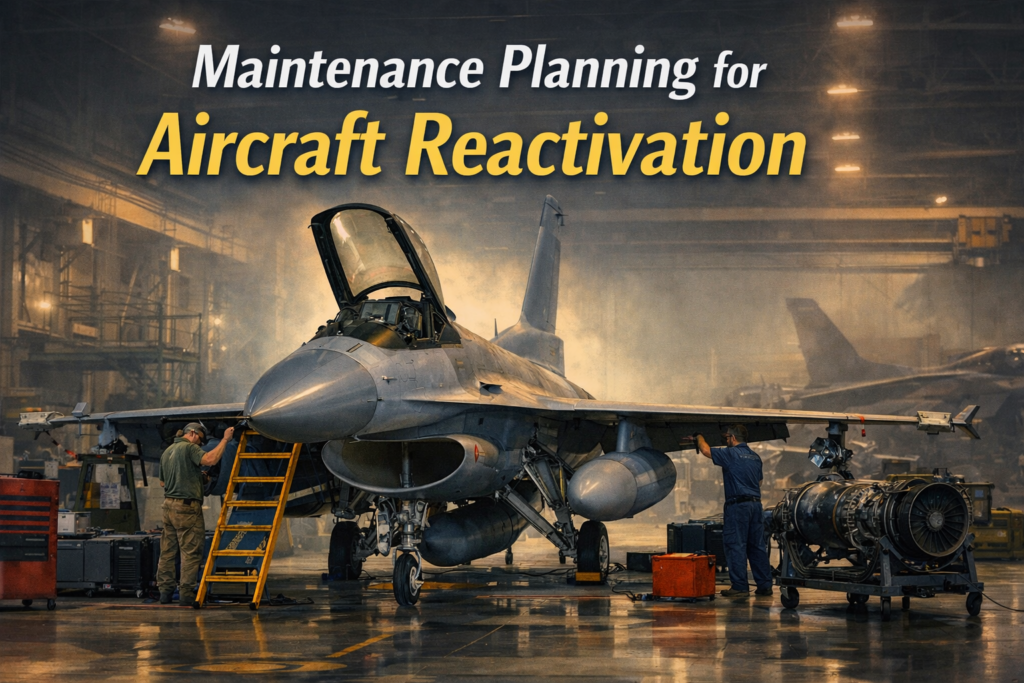
When an aircraft has been placed in storage and an airline decides to bring it back into service, the process involves far more than simply performing a few inspections and preparing the aircraft for flight. Aircraft reactivation requires a carefully structured maintenance plan that ensures every system, component, and regulatory requirement is addressed before the aircraft returns to operational service.
Maintenance planning for aircraft reactivation is a coordinated effort involving engineering teams, maintenance planners, technicians, maintenance repair organizations (MROs), and technical representatives. These stakeholders work together to review the aircraft’s maintenance history, evaluate its storage condition, and schedule the inspections and tasks required for return to service.
Because aircraft are complex systems with thousands of components and strict regulatory requirements, effective planning is essential. Aviation technical service providers such as Air Viper LLC often support these programs by providing technical oversight and coordination throughout the reactivation process.
Understanding how maintenance planning works during aircraft reactivation helps illustrate the level of preparation required to safely return stored aircraft to flight operations.
Why Maintenance Planning Is Critical for Aircraft Reactivation
Aircraft that remain inactive for extended periods must undergo extensive inspections and maintenance before returning to service. Without proper planning, airlines may encounter delays, missed maintenance requirements, or unexpected technical issues.
Maintenance planning ensures that all necessary tasks are identified, scheduled, and completed efficiently.
Ensuring Regulatory Compliance
Aviation authorities require airlines to verify that aircraft meet all airworthiness requirements before returning to flight operations.
Maintenance planning helps confirm that required inspections, service bulletins, and Airworthiness Directives (ADs) are addressed during the reactivation process.
Managing Complex Maintenance Tasks
Aircraft reactivation often involves hundreds of individual maintenance actions. These tasks must be completed in the correct order and within specific timeframes.
Maintenance planning allows airlines to organize these tasks into a structured program that technicians can follow efficiently.
Preventing Operational Delays
Without careful coordination, aircraft reactivation projects can encounter scheduling conflicts, parts shortages, or documentation issues.
A well-organized maintenance plan helps minimize these risks and supports a smoother return-to-service timeline.
Initial Assessment of the Aircraft
The maintenance planning process begins with a detailed assessment of the aircraft’s current condition and maintenance status.
Engineering and planning teams review technical records and storage documentation to understand what maintenance actions will be required.
Reviewing Aircraft Maintenance History
Maintenance planners begin by reviewing the aircraft’s historical maintenance records.
These records provide insight into:
- Previous inspections and repairs
- Component replacement history
- Airworthiness Directive compliance
- Service Bulletin implementation
- Structural maintenance history
Understanding the aircraft’s maintenance history helps planners determine which inspections or maintenance actions may be due.
Evaluating Storage Program Records
Aircraft placed in storage must follow approved preservation procedures to protect systems and components during inactivity.
Maintenance planners review storage records to confirm that these procedures were properly performed.
Storage program documentation may include:
- Engine preservation procedures
- Environmental protection measures
- Periodic inspection records
- System cycling documentation
- Corrosion prevention checks
This information helps determine the condition of the aircraft at the time of reactivation.
Determining Required Maintenance Tasks
Once the aircraft’s maintenance history and storage records have been reviewed, planners determine the specific maintenance tasks required for reactivation.
These tasks are usually defined by manufacturer guidelines and regulatory requirements.
Storage Exit Inspections
Aircraft leaving storage must undergo storage exit inspections to verify that preservation procedures were effective and that the aircraft remained protected during inactivity.
These inspections often include checks of:
- Aircraft structure and external surfaces
- Landing gear assemblies
- Engine nacelles and inlets
- Environmental openings and seals
- Cabin and cargo compartments
Storage exit inspections help identify potential issues such as corrosion, contamination, or environmental damage.
System Reactivation Procedures
Aircraft systems that were deactivated during storage must be carefully reactivated.
Maintenance planning ensures that these procedures are performed in the correct order.
Systems commonly included in reactivation procedures include:
- Hydraulic systems
- Electrical systems
- Fuel systems
- environmental control systems
- avionics systems
Technicians must verify that each system operates correctly before moving on to the next stage of reactivation.
Engine Reactivation and Inspection
Aircraft engines require special attention during reactivation.
During storage, engines are preserved using protective oils and desiccants to prevent internal corrosion.
Reactivation procedures may include:
- Removing preservation materials
- Performing internal inspections
- Conducting lubrication checks
- Starting engines for ground runs
- Monitoring engine performance parameters
Maintenance planners must coordinate these procedures with engineering teams and maintenance technicians.
Scheduling Maintenance Activities
Aircraft reactivation projects often involve multiple maintenance tasks that must be carefully scheduled.
Maintenance planners must coordinate personnel, equipment, and facility availability.
Maintenance Facility Coordination
Many airlines rely on maintenance repair organizations (MROs) to perform reactivation work.
Maintenance planners coordinate with these facilities to schedule aircraft maintenance slots.
Facility coordination may involve:
- Hangar availability
- Technician scheduling
- Specialized equipment requirements
- inspection resources
Effective scheduling ensures that the aircraft can move through the reactivation process without unnecessary delays.
Workforce Planning
Reactivation programs require specialized maintenance personnel.
Maintenance planners must ensure that qualified technicians are available for tasks involving:
- avionics systems
- engines
- hydraulics
- structural inspections
- electrical systems
Workforce planning helps ensure that the right technical expertise is available at each stage of the reactivation program.
Parts and Component Planning
Aircraft returning from storage may require replacement parts such as:
- batteries
- tires
- filters
- hydraulic seals
- avionics components
Maintenance planners must verify that these parts are available before maintenance begins.
Supply chain delays can significantly impact aircraft reactivation timelines, so early parts planning is essential.
Coordinating Engineering and Technical Oversight
Aircraft reactivation programs involve coordination between multiple technical teams.
Engineering departments provide guidance on maintenance procedures, while technical representatives may provide oversight throughout the project.
Engineering Support
Engineering teams evaluate technical issues discovered during inspections and determine appropriate corrective actions.
They may also review:
- structural findings
- system performance issues
- component replacement requirements
- regulatory compliance considerations
Engineering oversight helps ensure that maintenance decisions align with manufacturer guidelines and regulatory standards.
Technical Representative Oversight
Technical representatives often assist airlines and asset owners by monitoring maintenance activities and verifying that procedures are followed correctly.
Their responsibilities may include:
- observing inspections
- reviewing maintenance documentation
- monitoring project progress
- coordinating communication between stakeholders
Independent oversight helps improve transparency and accountability during the reactivation process.
Companies such as Air Viper LLC provide experienced technical representatives who support aircraft operators and asset managers during aircraft reactivation programs.
Documentation and Recordkeeping
Accurate documentation is a critical component of aircraft reactivation maintenance planning.
Every inspection, maintenance task, and system test must be properly recorded.
Maintenance documentation may include:
- work orders and task cards
- inspection reports
- maintenance logbook entries
- component installation records
- system test documentation
Maintenance planners must verify that documentation is complete before the aircraft can return to service.
Incomplete records can delay regulatory approval and operational release.
Functional Testing and System Verification
Once maintenance tasks are completed, the aircraft undergoes functional testing to confirm that systems operate correctly.
Maintenance planning must include time for these tests and ensure that qualified personnel are available to perform them.
Examples of functional tests include:
- flight control movement checks
- landing gear extension and retraction tests
- hydraulic system pressure checks
- avionics system testing
- cabin pressurization verification
These tests confirm that aircraft systems function according to manufacturer specifications.
Operational Readiness Checks
Before returning the aircraft to operational service, airlines perform final readiness checks.
These checks may include:
- engine ground runs
- aircraft taxi tests
- navigation system verification
- safety equipment inspections
Some aircraft reactivation programs may also involve operational evaluation flights.
These flights allow pilots and engineers to assess aircraft performance under real operating conditions.
Challenges in Aircraft Reactivation Maintenance Planning
Aircraft reactivation projects can present several logistical and technical challenges.
Unexpected Maintenance Findings
Inspections may reveal issues such as corrosion, system faults, or component degradation.
These findings may require additional maintenance actions that were not included in the original plan.
Supply Chain Delays
Obtaining replacement parts can sometimes take longer than expected.
Maintenance planners must monitor parts availability to avoid delays.
Resource Constraints
Maintenance facilities may have limited hangar space or technician availability.
Careful scheduling helps mitigate these constraints.
Air Viper LLC Technical Services
Air Viper LLC provides technical services that support aircraft operators, leasing companies, and aviation asset managers during aircraft return-to-service programs.
Their services may include:
- technical representation during aircraft reactivation
- inspection oversight and coordination
- maintenance planning support
- aircraft records review
- lease transition technical services
By providing experienced technical professionals, Air Viper LLC helps stakeholders manage aircraft reactivation programs with improved technical visibility and coordination.
This support can help reduce delays, improve documentation accuracy, and ensure that maintenance activities align with industry standards.
Conclusion
Maintenance planning is a critical component of aircraft reactivation programs. Without detailed planning and coordination, returning aircraft from storage to operational service can become complicated and time-consuming.
Effective maintenance planning ensures that inspections, system reactivation procedures, component replacements, and regulatory requirements are addressed in a structured and efficient manner.
From reviewing aircraft maintenance history to scheduling maintenance tasks and coordinating engineering support, each step in the planning process contributes to the safe return of the aircraft to service.
Technical oversight from experienced aviation service providers such as Air Viper LLC can help airlines and aircraft owners manage these complex reactivation programs more effectively.
With careful planning, coordination, and technical expertise, stored aircraft can safely transition back into active flight operations while maintaining the highest standards of safety and compliance.
Contact Air Viper, LLC
Air Viper, LLC provides independent aircraft technical representation, maintenance oversight, aircraft records support, and lease transition services for aircraft owners, operators, and leasing companies. We help ensure aircraft maintenance events, inspections, and technical projects are completed correctly while protecting the long-term value of the asset.
To discuss your aircraft project, contact our team:
Phone: +1 (918) -524-9380
Email: [email protected]
Air Viper, LLC’s Founder

Forrest Ludwig is a dynamic entrepreneur with a passion for aviation parts supply, customer service, and business innovation. With a keen eye for efficiency and precision, he has dedicated his career to connecting operators, MROs, and aviation professionals with the right parts at the right time—minimizing downtime and maximizing operational success.
A true believer in customer-first solutions, Forrest has built a reputation for delivering exceptional service, transparency, and reliability in the aviation industry. His expertise spans aviation parts sourcing, logistics, supply chain optimization, and aircraft sales & leasing, ensuring clients receive cost-effective and high-quality solutions tailored to their needs.
With a forward-thinking approach and a commitment to excellence, Forrest continues to revolutionize aviation parts supply by streamlining processes, enhancing customer experience, and creating innovative solutions for a rapidly evolving industry.
Passionate about aviation. Dedicated to service. Committed to keeping fleets in the air.
Learn More About The Rest Of Our Team!
Why Airlines, Lessors, and MROs Choose Air Viper, LLC
Air Viper, LLC provides aviation parts sourcing, aircraft inspection services, and aircraft transaction support for operators worldwide. Customers work with Air Viper, LLC because the company focuses on efficiency, reliability, and industry expertise.
1. Global Aircraft Parts Sourcing
Air Viper, LLC helps operators locate aircraft components through an international supplier network, including hard-to-find parts.
2. Efficient Direct Shipping
Components can be shipped directly to customers using their preferred courier, reducing handling time and delivery delays.
3. Access to Critical Aircraft Components
Air Viper, LLC assists with sourcing major components such as aircraft engines, auxiliary power units (APUs), and landing gear.
4. Global Supplier Network
Through relationships with aviation suppliers worldwide, Air Viper, LLC helps customers access inventory across multiple markets.
5. Aircraft and Engine Inspection Services
Air Viper, LLC provides on-site aircraft and engine inspection support for aircraft purchases, lease transitions, and technical evaluations.
6. Aircraft Sales and Leasing Support
Air Viper, LLC connects buyers, sellers, and lessors to help facilitate aircraft sales and leasing opportunities.
7. Aviation Logistics Coordination
Air Viper, LLC helps coordinate the logistics of aircraft components, simplifying the procurement and delivery process.
8. Aviation Industry Experience
With experience in aviation parts sourcing, logistics, and aircraft inspections, Air Viper, LLC understands the operational needs of airlines, lessors, and maintenance organizations.
9. Faster Response for Time-Sensitive Needs
When aircraft operators need parts or inspection support quickly, Air Viper, LLC focuses on providing efficient responses and sourcing solutions.
10. Supporting Aircraft Operations Worldwide
Air Viper, LLC works with aviation operators around the world to help support safe and efficient aircraft operations.