
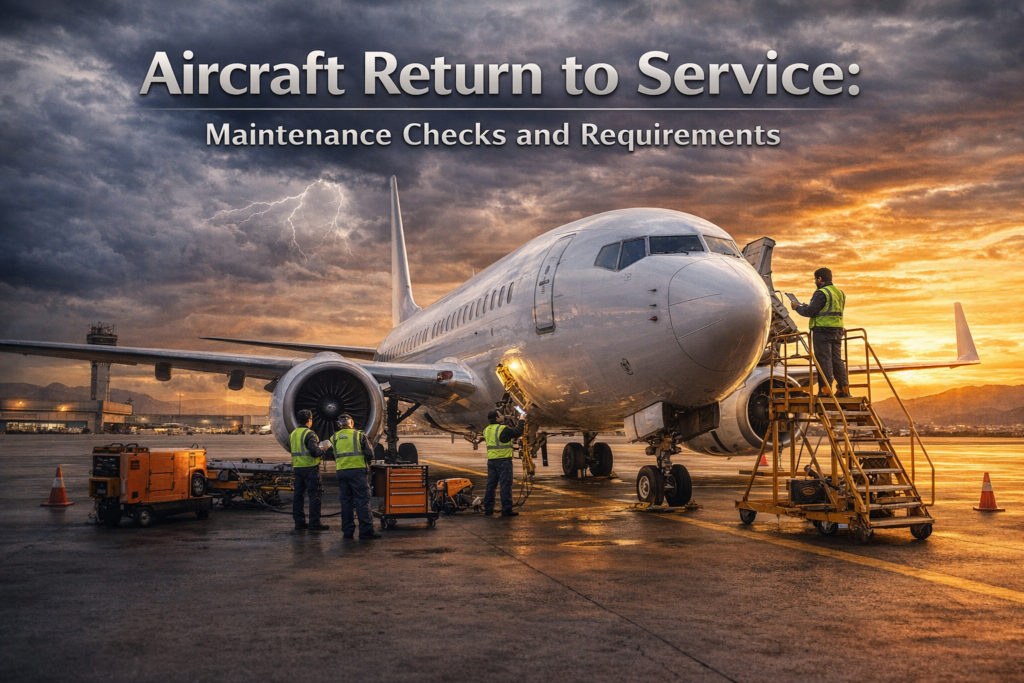
Aircraft that have been placed into storage cannot simply be returned to operational service without undergoing a structured maintenance process. Whether an aircraft has been inactive for a few weeks or several months, storage conditions and system inactivity require careful inspection, system verification, and maintenance activity before the aircraft can safely reenter service.
Returning an aircraft to operational status involves a series of maintenance checks designed to confirm that the aircraft meets airworthiness standards, operational requirements, and regulatory compliance obligations. These tasks vary depending on the duration of storage, the preservation procedures performed, and the aircraft’s operational history.
The return-to-service process typically involves maintenance organizations, airline technical departments, and oversight from aircraft owners or lessors. In many cases, aircraft technical services providers such as Air Viper, LLC support these programs by assisting with maintenance coordination, technical oversight, documentation review, and communication between stakeholders throughout the reactivation process.
Understanding the maintenance checks and requirements involved in aircraft return-to-service programs helps operators plan reactivation efforts more effectively and avoid operational delays.
Understanding Aircraft Storage and Preservation
Before examining the maintenance checks involved in returning an aircraft to service, it is important to understand how aircraft are preserved during storage.
Aircraft that are removed from active service undergo preservation procedures intended to protect systems, structures, and components from deterioration while the aircraft remains inactive.
Preservation procedures vary depending on the expected storage duration and environmental conditions. Storage may occur in humid coastal environments, dry desert locations, or controlled maintenance facilities, each of which introduces different preservation considerations.
Typical aircraft preservation actions include:
- Engine preservation procedures
- System fluid protection
- Installation of protective covers on sensors and openings
- Sealing of air inlets and outlets
- Periodic system inspections during storage
These preservation procedures help maintain aircraft condition while inactive, but they must be carefully reversed and verified during the return-to-service process.
Maintenance Planning Before Aircraft Reactivation
Aircraft reactivation begins long before technicians start working on the aircraft itself. Maintenance planning is a critical step that determines the scope of work required to return the aircraft to service.
Maintenance planning typically involves reviewing several key factors:
- Aircraft storage duration
- Environmental exposure during storage
- Preservation procedures performed
- aircraft maintenance status prior to storage
- upcoming maintenance checks or component limits
Maintenance teams also review aircraft maintenance documentation, including the manufacturer’s maintenance planning document (MPD), aircraft maintenance manual (AMM), and applicable regulatory requirements.
Based on this information, maintenance planners develop a return-to-service work scope that outlines required inspections, system checks, and maintenance tasks.
Aircraft technical services providers such as Air Viper, LLC may assist operators or aircraft owners by helping coordinate maintenance planning activities and monitoring reactivation progress.
Reversing Aircraft Preservation Procedures
The first technical step in returning an aircraft to service is reversing the preservation measures implemented during storage.
This process is sometimes referred to as de-preservation or preservation removal.
Typical preservation reversal tasks include:
- Removing protective coverings from sensors and air inlets
- Reconnecting previously disconnected electrical systems
- Reinstalling removed components
- Refilling drained hydraulic or lubrication fluids
- Removing engine preservation materials
Technicians must follow manufacturer maintenance documentation carefully when performing these tasks to ensure that all systems are restored to their operational configuration.
Improper removal of preservation materials can lead to system malfunctions or operational delays during later phases of the return-to-service process.
Aircraft Structural and Corrosion Inspections
Aircraft structures are exposed to environmental conditions even when the aircraft is preserved during storage. Moisture, temperature fluctuations, and contaminants can lead to corrosion or deterioration if not properly monitored.
As part of the return-to-service process, maintenance teams perform structural inspections to evaluate the aircraft’s physical condition.
Structural inspection tasks may include:
- Visual inspection of the fuselage and wings
- Examination of structural joints and fasteners
- inspection of control surface hinges
- corrosion detection in susceptible areas
- evaluation of sealants and protective coatings
Aircraft stored in humid environments or near coastal regions often receive additional corrosion inspections.
If corrosion is identified, maintenance personnel must address the issue in accordance with manufacturer repair procedures before the aircraft can return to operational service.
Landing Gear System Inspection
Landing gear systems require detailed inspection during aircraft reactivation because these components support the aircraft during taxi, takeoff, and landing operations.
During storage, landing gear components may experience pressure loss, fluid degradation, or environmental exposure.
Return-to-service maintenance tasks often include:
- Inspection of landing gear struts and actuators
- Verification of hydraulic system pressure
- brake system inspection
- tire condition and pressure verification
- inspection of wheel assemblies
Technicians also verify proper operation of landing gear extension and retraction systems during functional tests.
Landing gear system reliability is critical to aircraft safety, making these inspections an essential part of the return-to-service maintenance process.
Aircraft Engine Inspection and Reactivation
Aircraft engines receive special attention during return-to-service maintenance programs because engines are highly sensitive to inactivity.
When aircraft engines remain idle for extended periods, internal corrosion or contamination can occur despite preservation procedures.
Engine reactivation typically includes several steps.
Engine Internal Inspection
Technicians may perform borescope inspections to examine internal engine components such as:
- compressor stages
- turbine blades
- combustion chambers
These inspections help identify corrosion, foreign object damage, or abnormal wear that may have developed during storage.
Fluid System Servicing
Engine lubrication and fuel systems must be inspected and serviced during reactivation.
Technicians verify:
- oil system integrity
- fuel system cleanliness
- filtration system condition
Any degraded fluids or contaminants must be addressed before engine operation begins.
Ground Engine Runs
After inspections and servicing are completed, engines are started and operated on the ground.
Ground runs allow technicians to verify:
- stable engine operation
- normal temperature readings
- absence of unusual vibrations
- proper engine control system response
These tests are critical for confirming that engines are ready for operational use.
Avionics and Electrical System Testing
Modern aircraft rely heavily on avionics and electrical systems for navigation, communication, flight control, and safety.
During aircraft storage, electrical components may be disconnected or protected to prevent damage.
Return-to-service maintenance includes comprehensive testing of avionics systems.
Typical avionics checks include:
- flight management system testing
- navigation system verification
- communication system operation
- radar and surveillance system checks
- cockpit display system verification
Electrical power systems are also tested to confirm proper power distribution throughout the aircraft.
These checks ensure that flight crews can rely on all required electronic systems during flight operations.
Functional Testing of Aircraft Systems
After inspections and system servicing are completed, technicians perform functional tests to confirm that aircraft systems operate as intended.
Functional testing may include several types of system checks.
Flight Control System Checks
Technicians verify the movement and responsiveness of flight control surfaces such as:
- ailerons
- elevators
- rudder
These tests confirm proper operation of control linkages and hydraulic systems.
Hydraulic System Verification
Hydraulic systems power numerous aircraft components including landing gear, brakes, and flight controls.
Hydraulic system testing ensures proper pressure levels and system functionality.
Environmental Control System Checks
Environmental control systems regulate cabin pressure, temperature, and airflow.
These systems are tested to confirm that they provide a safe and comfortable environment for passengers and crew.
Brake System Testing
Brake performance is tested to verify that the aircraft can safely operate during taxi and landing operations.
These functional tests provide confirmation that the aircraft is ready for operational use.
Maintenance Records and Documentation Verification
One of the most important aspects of aircraft return-to-service programs is ensuring that technical documentation is complete and accurate.
Maintenance records demonstrate that all required tasks have been completed and that the aircraft complies with regulatory requirements.
Documentation reviews typically include verification of:
- maintenance logbook entries
- inspection completion records
- component installation documentation
- airworthiness directive compliance
- service bulletin status
Incomplete documentation can delay the return-to-service process even if all physical maintenance tasks have been completed.
Aircraft technical service providers such as Air Viper, LLC may assist with documentation reviews to help ensure that aircraft records are properly organized before the aircraft is returned to operational service.
Coordination of Maintenance Activities
Aircraft return-to-service programs involve coordination between multiple organizations and technical teams.
These stakeholders often include:
- airline maintenance departments
- maintenance repair organizations (MROs)
- aircraft lessors or owners
- regulatory authorities
- technical service providers
Effective communication between these groups helps ensure that maintenance tasks are completed in the proper sequence and that any technical issues are addressed quickly.
Technical representatives may help monitor maintenance progress, review inspection findings, and assist with issue resolution during aircraft reactivation programs.
Final Steps Before Aircraft Return to Service
Once inspections, maintenance tasks, and functional testing have been completed, the aircraft undergoes final verification before being released for operational service.
Final steps may include:
- confirming completion of all required maintenance tasks
- reviewing technical records and documentation
- verifying system functionality
- preparing the aircraft for operational use
In some cases, operators may perform a functional check flight to confirm aircraft performance under real operating conditions.
Once all technical and regulatory requirements are satisfied, the aircraft can be returned to the airline’s operational fleet.
The Importance of Structured Return-to-Service Maintenance
Aircraft return-to-service programs are complex technical operations that require careful planning, maintenance execution, and coordination across multiple organizations.
Thorough maintenance checks help ensure that aircraft systems remain reliable and that the aircraft meets operational safety requirements before returning to service.
Because of the technical complexity involved, many operators and aircraft owners rely on experienced technical services organizations to assist with oversight and coordination.
Providers such as Air Viper, LLC support return-to-service programs by helping coordinate maintenance activities, reviewing technical documentation, and assisting stakeholders throughout the aircraft reactivation process.
Through structured maintenance planning and detailed system verification, aircraft that have been stored can be successfully returned to service and safely reintegrated into active fleet operations.
Contact Air Viper, LLC
Air Viper, LLC provides independent aircraft technical representation, maintenance oversight, aircraft records support, and lease transition services for aircraft owners, operators, and leasing companies. We help ensure aircraft maintenance events, inspections, and technical projects are completed correctly while protecting the long-term value of the asset.
To discuss your aircraft project, contact our team:
Phone: +1 (918) -524-9380
Email: [email protected]
Air Viper, LLC’s Founder

Forrest Ludwig is a dynamic entrepreneur with a passion for aviation parts supply, customer service, and business innovation. With a keen eye for efficiency and precision, he has dedicated his career to connecting operators, MROs, and aviation professionals with the right parts at the right time—minimizing downtime and maximizing operational success.
A true believer in customer-first solutions, Forrest has built a reputation for delivering exceptional service, transparency, and reliability in the aviation industry. His expertise spans aviation parts sourcing, logistics, supply chain optimization, and aircraft sales & leasing, ensuring clients receive cost-effective and high-quality solutions tailored to their needs.
With a forward-thinking approach and a commitment to excellence, Forrest continues to revolutionize aviation parts supply by streamlining processes, enhancing customer experience, and creating innovative solutions for a rapidly evolving industry.
Passionate about aviation. Dedicated to service. Committed to keeping fleets in the air.
Learn More About The Rest Of Our Team!
Why Airlines, Lessors, and MROs Choose Air Viper, LLC
Air Viper, LLC provides aviation parts sourcing, aircraft inspection services, and aircraft transaction support for operators worldwide. Customers work with Air Viper, LLC because the company focuses on efficiency, reliability, and industry expertise.
1. Global Aircraft Parts Sourcing
Air Viper, LLC helps operators locate aircraft components through an international supplier network, including hard-to-find parts.
2. Efficient Direct Shipping
Components can be shipped directly to customers using their preferred courier, reducing handling time and delivery delays.
3. Access to Critical Aircraft Components
Air Viper, LLC assists with sourcing major components such as aircraft engines, auxiliary power units (APUs), and landing gear.
4. Global Supplier Network
Through relationships with aviation suppliers worldwide, Air Viper, LLC helps customers access inventory across multiple markets.
5. Aircraft and Engine Inspection Services
Air Viper, LLC provides on-site aircraft and engine inspection support for aircraft purchases, lease transitions, and technical evaluations.
6. Aircraft Sales and Leasing Support
Air Viper, LLC connects buyers, sellers, and lessors to help facilitate aircraft sales and leasing opportunities.
7. Aviation Logistics Coordination
Air Viper, LLC helps coordinate the logistics of aircraft components, simplifying the procurement and delivery process.
8. Aviation Industry Experience
With experience in aviation parts sourcing, logistics, and aircraft inspections, Air Viper, LLC understands the operational needs of airlines, lessors, and maintenance organizations.
9. Faster Response for Time-Sensitive Needs
When aircraft operators need parts or inspection support quickly, Air Viper, LLC focuses on providing efficient responses and sourcing solutions.
10. Supporting Aircraft Operations Worldwide
Air Viper, LLC works with aviation operators around the world to help support safe and efficient aircraft operations.