
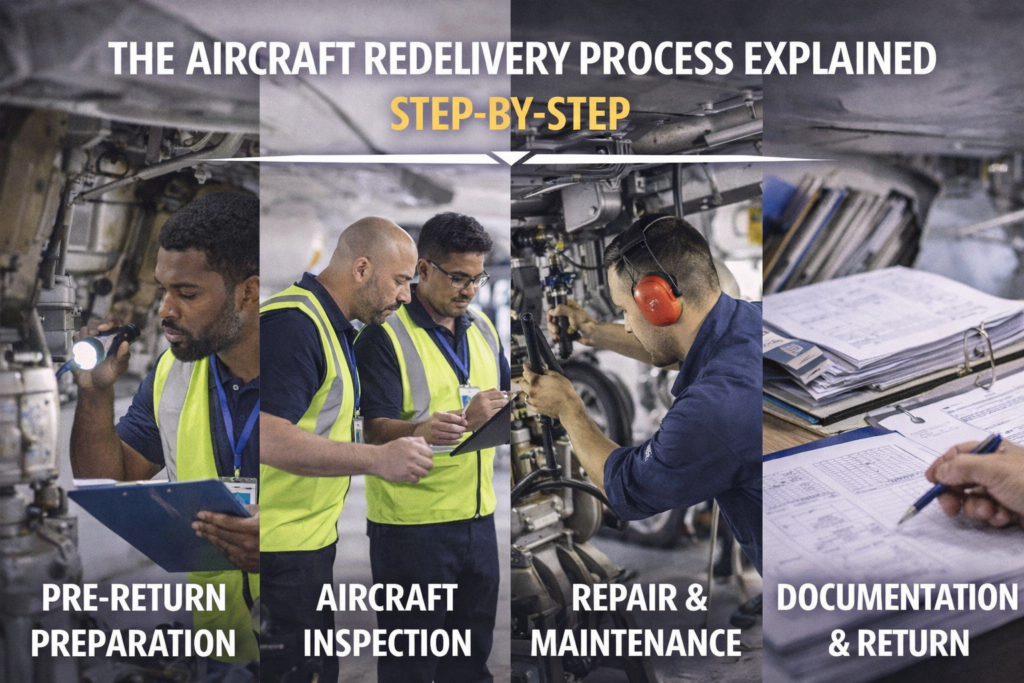
Aircraft redelivery is one of the most important technical events in the lifecycle of a leased aircraft. When an airline’s lease term is coming to an end, the aircraft must be returned to the lessor in accordance with the technical and contractual conditions defined in the lease agreement. This is not a simple administrative handoff. It is a detailed process that involves inspections, maintenance planning, records review, compliance verification, coordination with maintenance providers, and final acceptance by the owner or lessor.
For airlines, lessors, and asset managers, understanding the aircraft redelivery process is essential because delays, missing records, maintenance gaps, or disagreements over return conditions can create significant cost and risk. A well-managed redelivery program helps protect asset value, reduce disputes, and keep the aircraft moving efficiently into its next phase of service, storage, or remarketing.
Below is a step-by-step explanation of how the aircraft redelivery process typically works.
Step 1: Review the Lease Agreement and Return Conditions
The redelivery process begins with a detailed review of the lease agreement. The lease defines the return conditions the aircraft must meet before it can be accepted by the lessor. These conditions are often highly detailed and cover the aircraft’s physical condition, maintenance status, records, components, and configuration.
The technical team must identify exactly what the lessor expects at redelivery. This usually includes requirements related to:
- airframe maintenance status
- engine condition and remaining life
- landing gear status
- cabin and paint condition
- modification configuration
- compliance with airworthiness directives
- completeness of technical records
This step is critical because the lease agreement becomes the roadmap for the entire redelivery project. If the return conditions are misunderstood early on, the operator may discover expensive problems much later in the process.
Why this step matters
Aircraft leases can contain highly specific technical language. Even small misunderstandings can create disagreements over what is required. A clear interpretation of the return conditions helps align all parties before major work begins.
Step 2: Build the Redelivery Workscope
Once the lease return conditions have been reviewed, the next step is turning those requirements into a practical redelivery workscope. This means identifying what inspections, maintenance tasks, repairs, records actions, and component planning will be needed to return the aircraft in the required condition.
The workscope should account for:
- due or upcoming maintenance checks
- component replacements
- cabin or cosmetic refurbishment
- records corrections or reconstruction
- structural inspections
- potential storage or return-to-service tasks if applicable
This stage often involves collaboration between engineering, technical records, maintenance planning, supply chain teams, and any external technical representatives supporting the project.
Redelivery planning versus routine maintenance planning
Routine maintenance planning focuses on keeping the aircraft operational. Redelivery planning focuses on meeting lease conditions and protecting acceptance at return. While the two overlap, redelivery planning requires a more contract-driven approach.
Step 3: Conduct an Initial Technical Assessment
Before major decisions are made, the aircraft usually undergoes an initial technical assessment. This assessment gives the operator and lessor a realistic view of the aircraft’s current status relative to the lease return requirements.
The assessment may include:
- a records review
- a physical condition inspection
- an open items list
- a maintenance forecast
- a component life status review
This is the stage where the team identifies possible redelivery risks such as incomplete records, corrosion findings, cabin condition issues, overdue tasks, or engine condition shortfalls.
Typical questions answered during the assessment
Is the aircraft currently aligned with the return conditions?
The team compares the aircraft’s actual condition to the contractual requirements.
What maintenance will likely be required?
The team identifies checks, repairs, replacements, and inspections needed before redelivery.
Are the records complete?
The records team begins identifying missing documents, traceability gaps, or inconsistencies.
Step 4: Audit the Aircraft Technical Records
One of the most important parts of aircraft redelivery is the technical records audit. Lessors need confidence that the aircraft has been maintained properly and that the maintenance history is fully traceable. Incomplete or disorganized records can delay acceptance even if the aircraft itself is physically in good condition.
The records audit typically includes review of:
- airframe logbooks
- engine logbooks
- component histories
- removal and installation records
- life-limited part status
- airworthiness directive compliance
- service bulletin compliance
- repair documentation
- modification records
The goal is to confirm that the records package is complete, accurate, and organized in a way that supports redelivery acceptance.
Common records issues
Missing back-to-birth data for certain components
If traceability is incomplete, the lessor may require additional support before accepting the aircraft.
Inconsistent maintenance entries
Discrepancies between systems, logbooks, and work packages must be reconciled.
Unclear modification status
The configuration of the aircraft must match both regulatory requirements and lease expectations.
Step 5: Perform Physical Aircraft Inspections
After the records review is underway, physical aircraft inspections help verify the actual condition of the aircraft. These inspections compare the aircraft’s current state to both regulatory standards and the lease return conditions.
The inspection may evaluate:
- fuselage and exterior condition
- paint and markings
- corrosion or structural damage
- cabin seats, bins, panels, and flooring
- galleys and lavatories
- landing gear condition
- engine external condition
- avionics and installed equipment
- deferred defects or open maintenance items
These inspections often reveal items that were not obvious from records alone. The findings then feed back into the redelivery workscope and maintenance planning.
Why physical inspections are essential
An aircraft can appear compliant on paper while still having physical issues that affect redelivery. Inspection findings help avoid surprises near the handback date.
Step 6: Identify Gaps and Negotiate Open Items
As the records audit and physical inspections progress, the operator and lessor begin identifying gaps between the aircraft’s current condition and the contractual return requirements. These gaps may involve technical work, records corrections, or commercial discussions.
Examples include:
- shortfalls in engine remaining life
- missing records
- cosmetic wear beyond agreed limits
- overdue maintenance tasks
- corrosion repair needs
- unclear responsibility for certain modifications or cabin changes
Some issues can be corrected through maintenance action. Others may require negotiation between the operator and lessor, especially if there is disagreement over interpretation of the lease terms.
The importance of early issue visibility
The sooner open items are identified, the more options the team has. Early visibility supports better budgeting, better maintenance planning, and fewer last-minute disputes.
Step 7: Schedule Redelivery Maintenance
Once the main redelivery gaps are understood, the operator schedules the necessary maintenance work. This may occur during an existing heavy maintenance event or during a dedicated redelivery check.
The maintenance plan may include:
- structural inspections
- routine due tasks
- repairs
- component changes
- interior refurbishment
- exterior paint touch-ups or repainting
- defect rectification
- required testing and operational checks
Scheduling is a major factor in redelivery success. If MRO slots are limited or parts are not available, the aircraft may miss its return timeline.
Why maintenance timing matters
Redelivery projects are often deadline-driven. Maintenance delays can affect lease extensions, transition planning, and the next placement of the aircraft.
Step 8: Coordinate Parts, Materials, and Logistics
Redelivery is not only a maintenance event. It is also a supply chain and logistics project. Replacement components, consumables, tooling support, and documentation all need to be available at the right place and time.
This coordination may include:
- sourcing serviceable parts
- verifying traceability paperwork
- arranging shipping and customs support
- ensuring component eligibility
- supporting AOG or urgent needs during maintenance
If a required part is delayed, the maintenance event may stall. That is why parts planning and redelivery planning are closely connected.
Materials support as part of redelivery control
Strong materials support reduces downtime, prevents maintenance bottlenecks, and keeps the redelivery schedule moving.
Step 9: Monitor the Maintenance Event
During the maintenance event, active technical oversight is often necessary. Lessors, asset managers, and owners frequently use on-site technical representatives to monitor progress and verify that the work is being completed correctly.
Oversight during this stage may include:
- reviewing daily progress
- verifying compliance with the approved workscope
- monitoring inspection findings
- checking quality and workmanship
- tracking schedule risks
- confirming records are being updated properly
This is especially important when the aircraft is in a third-party MRO environment and the owner wants independent visibility into the event.
What technical representatives contribute
Independent reporting
They provide direct updates to owners and lessors rather than relying only on the maintenance provider’s perspective.
Early escalation of issues
If a major finding or delay appears, it can be addressed before it becomes a larger acceptance problem.
Step 10: Close Records, Compliance, and Documentation
As maintenance work is completed, the documentation generated during the event must be incorporated into the records package. This includes updated work cards, inspection findings, component changes, compliance sign-offs, and release documentation.
The team must confirm that:
- all completed work is properly recorded
- all compliance items are closed
- all component documentation is included
- all technical records are aligned
- all required lease return documents are ready
A physically completed aircraft is not enough. The paperwork must support the maintenance status and aircraft condition clearly.
Final document readiness
The lessor or its representative will usually expect a clean and reviewable records package before formal acceptance. This is one of the final gates before handback.
Step 11: Conduct the Final Redelivery Inspection
Once the aircraft and records package are believed to be complete, the final redelivery inspection takes place. This is the last major technical review before acceptance.
The final inspection typically verifies:
- completion of the agreed redelivery workscope
- aircraft physical condition
- records package completeness
- compliance with the lease return conditions
- closure of previously identified open items
If issues are still found, they must be corrected or commercially resolved before acceptance can occur.
What the lessor wants at this stage
The lessor wants confidence that the aircraft is in the expected condition, the documents support the technical status, and there will be no hidden surprises after handback.
Step 12: Complete Formal Aircraft Handback
After the aircraft passes the final inspection and any remaining commercial items are resolved, the aircraft is formally handed back to the lessor. This handback may involve signed acceptance documentation, transfer of records, transfer of physical possession, and final lease closure activities.
At this point, the aircraft may move into one of several next steps:
- transition to a new operator
- go into storage
- undergo reconfiguration
- enter a sale process
- move into another maintenance event
The redelivery project is complete only when both the aircraft and its records have been accepted according to the agreed terms.
Common Problems That Disrupt the Redelivery Process
Even well-planned aircraft redelivery events can face disruptions. Some of the most common issues include incomplete records, late maintenance findings, component shortages, MRO delays, and differing interpretations of lease terms.
Missing technical documentation
Records gaps can be difficult to resolve quickly, especially for older components or historic maintenance events.
Unexpected structural findings
Corrosion, damage, or additional repairs can expand the workscope and affect timing.
Parts delays
A single missing component can delay aircraft release from maintenance.
Schedule pressure
If planning starts too late, the project may have limited room to absorb unexpected setbacks.
Why Technical Oversight Improves Redelivery Outcomes
Aircraft redelivery involves contract interpretation, engineering, maintenance, records, logistics, and stakeholder coordination. Because so many moving parts are involved, technical oversight plays a major role in keeping the process under control.
Independent oversight helps by:
- keeping the project aligned with lease conditions
- identifying risks early
- improving communication across parties
- tracking maintenance quality and schedule
- supporting a cleaner acceptance process
For lessors and owners, technical representatives help protect asset value. For operators, strong oversight can reduce delays and make the handback process more predictable.
Conclusion
The aircraft redelivery process is a structured, multi-step project that begins long before the lease end date. It starts with understanding the return conditions and building a redelivery plan, then moves through records audits, inspections, maintenance execution, logistics coordination, final review, and formal handback.
Each step matters because aircraft redelivery is not just about returning an aircraft. It is about returning a high-value aviation asset in a condition that satisfies regulatory requirements, contractual obligations, and future operational needs.
When managed properly, aircraft redelivery becomes a controlled and efficient transition rather than a rushed and expensive event. Clear planning, strong records discipline, timely maintenance coordination, and independent technical oversight all help ensure that the aircraft is returned smoothly and that asset value is protected throughout the process.
Contact Air Viper, LLC
Air Viper, LLC provides independent aircraft technical representation, maintenance oversight, aircraft records support, and lease transition services for aircraft owners, operators, and leasing companies. We help ensure aircraft maintenance events, inspections, and technical projects are completed correctly while protecting the long-term value of the asset.
To discuss your aircraft project, contact our team:
Phone: +1 (918) -524-9380
Email: [email protected]
Air Viper, LLC’s Founder

Forrest Ludwig is a dynamic entrepreneur with a passion for aviation parts supply, customer service, and business innovation. With a keen eye for efficiency and precision, he has dedicated his career to connecting operators, MROs, and aviation professionals with the right parts at the right time—minimizing downtime and maximizing operational success.
A true believer in customer-first solutions, Forrest has built a reputation for delivering exceptional service, transparency, and reliability in the aviation industry. His expertise spans aviation parts sourcing, logistics, supply chain optimization, and aircraft sales & leasing, ensuring clients receive cost-effective and high-quality solutions tailored to their needs.
With a forward-thinking approach and a commitment to excellence, Forrest continues to revolutionize aviation parts supply by streamlining processes, enhancing customer experience, and creating innovative solutions for a rapidly evolving industry.
Passionate about aviation. Dedicated to service. Committed to keeping fleets in the air.
Learn More About The Rest Of Our Team!
Why Airlines, Lessors, and MROs Choose Air Viper, LLC
Air Viper, LLC provides aviation parts sourcing, aircraft inspection services, and aircraft transaction support for operators worldwide. Customers work with Air Viper, LLC because the company focuses on efficiency, reliability, and industry expertise.
1. Global Aircraft Parts Sourcing
Air Viper, LLC helps operators locate aircraft components through an international supplier network, including hard-to-find parts.
2. Efficient Direct Shipping
Components can be shipped directly to customers using their preferred courier, reducing handling time and delivery delays.
3. Access to Critical Aircraft Components
Air Viper, LLC assists with sourcing major components such as aircraft engines, auxiliary power units (APUs), and landing gear.
4. Global Supplier Network
Through relationships with aviation suppliers worldwide, Air Viper, LLC helps customers access inventory across multiple markets.
5. Aircraft and Engine Inspection Services
Air Viper, LLC provides on-site aircraft and engine inspection support for aircraft purchases, lease transitions, and technical evaluations.
6. Aircraft Sales and Leasing Support
Air Viper, LLC connects buyers, sellers, and lessors to help facilitate aircraft sales and leasing opportunities.
7. Aviation Logistics Coordination
Air Viper, LLC helps coordinate the logistics of aircraft components, simplifying the procurement and delivery process.
8. Aviation Industry Experience
With experience in aviation parts sourcing, logistics, and aircraft inspections, Air Viper, LLC understands the operational needs of airlines, lessors, and maintenance organizations.
9. Faster Response for Time-Sensitive Needs
When aircraft operators need parts or inspection support quickly, Air Viper, LLC focuses on providing efficient responses and sourcing solutions.
10. Supporting Aircraft Operations Worldwide
Air Viper, LLC works with aviation operators around the world to help support safe and efficient aircraft operations.